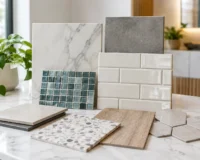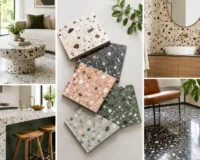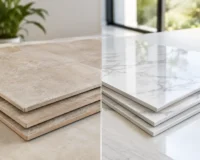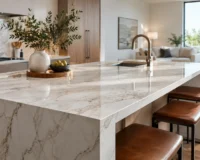
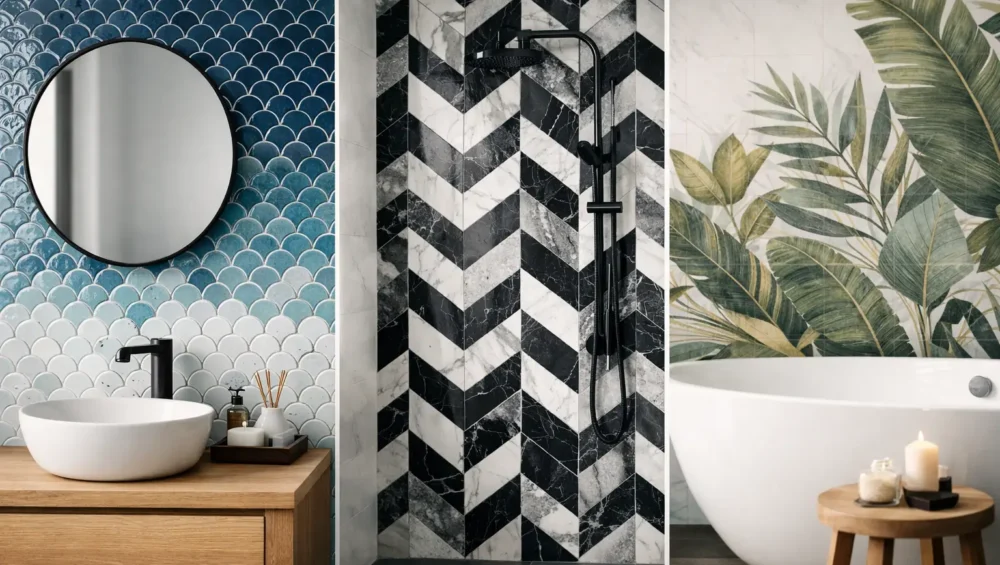
A feature tile can turn a standard vanity wall into the focal point of the room, give a compact shower real depth, or introduce the sense of crafted luxury that makes a bathroom feel considered rather than simply finished. This guide to bathroom feature tiles will help you choose a surface that delivers visual impact while meeting the practical demands of a wet, regularly used space.
Start With the Surface You Want to Highlight
Feature tiles work best when they have a clear role. Rather than treating them as a decorative afterthought, decide what architectural element deserves attention first. In many bathrooms, that is the wall behind the vanity, where a tiled feature creates an elegant frame for a mirror, lighting, and tapware. In others, it is the shower wall, a recessed niche, the freestanding bath zone, or even the floor.
A vanity splashback is a refined choice for smaller bathrooms because it creates a strong visual moment without overwhelming the room. Extending the tile from the countertop to the ceiling makes the space feel taller and more bespoke. A shower feature wall can be more immersive, particularly in an ensuite or large family bathroom, but it should be balanced with quieter surrounding surfaces.
The best placement depends on sightlines. Stand at the bathroom entrance and consider where your eye naturally lands. That is often the most valuable surface in the room. A beautiful tile deserves to be seen, not hidden behind a door or broken up by too many fittings.
Choose a Material That Suits Bathroom Conditions
A premium finish should be as practical as it is beautiful. Bathrooms experience moisture, temperature changes, soap residue, and frequent cleaning, so material selection matters as much as color or pattern.
Porcelain is one of the most versatile choices for bathroom feature tiles. It is durable, low-porosity, and available in an exceptional range of stone looks, decorative finishes, fluting, concrete effects, and dramatic large-format designs. Porcelain also offers consistency across larger projects, which can be especially useful when coordinating a bathroom with a laundry, powder room, or adjoining space.
Ceramic wall tile is another excellent option, particularly for glazed colors, handmade-look finishes, and dimensional profiles. Its lighter weight and broad design range make it ideal for vanity walls and vertical surfaces. A gloss ceramic tile can bounce light around a compact bathroom, while a satin or matte glaze introduces a softer, more architectural mood.
Natural stone brings unmistakable movement and individuality. Marble, travertine, and limestone can create a quiet, luxurious statement, especially when the slabs or tiles are selected with careful attention to veining and tonal variation. Stone does require appropriate sealing and maintenance, however, and some finishes may be better suited to walls than shower floors. It is a worthwhile trade-off for homeowners seeking a genuinely one-of-a-kind surface.
Mosaic tiles are particularly effective in shower niches, curved walls, borders, and compact feature areas. Their smaller format allows them to follow detailed shapes and create texture that a large tile cannot. For wet floors, mosaics also provide more grout lines underfoot, which can support slip resistance when the right product and finish are chosen.
Build the Design Around Color, Texture, and Scale
A feature tile does not need to be loud to be memorable. Often, the most elevated bathrooms rely on tonal contrast, a tactile finish, or a carefully chosen layout rather than a bold pattern alone.
For a calm, spa-inspired bathroom, consider soft stone-look porcelain, warm neutrals, muted sage, dusty blue, or creamy off-white tiles with subtle texture. Pairing a textured feature wall with smooth surrounding tiles creates depth while keeping the palette restrained. Fluted, finger, kit kat, and ridged tiles are particularly effective behind a vanity because they catch light throughout the day and bring gentle movement to the wall.
If the goal is more dramatic, darker shades such as charcoal, deep green, rich blue, or burgundy can give the room a boutique-hotel quality. These colors work especially well with warm metallic fixtures, timber vanities, and layered lighting. In a small bathroom, use a dark feature tile on one wall rather than every surface so the design still has room to breathe.
Scale deserves just as much attention. Large-format tiles with minimal grout lines can make a room feel expansive and polished, particularly when used in a marble or limestone look. Smaller tiles create rhythm and detail, but excessive changes in size, color, and pattern can make a bathroom feel visually busy. As a general design principle, let one element lead. If the feature tile is patterned, keep the main wall and floor tile quiet. If the floor has strong movement, choose a more restrained wall feature.
Consider the Grout as Part of the Finish
Grout has a significant effect on the final look. A closely matched grout creates a more continuous, sophisticated surface and is often ideal for stone-look or large-format tiles. A contrasting grout outlines every tile, emphasizing geometric layouts and handmade character.
For example, white subway tiles with dark grout create a graphic, classic look, while a tonal grout produces a softer and more contemporary result. In shower areas, choose a grout system suited to wet environments and follow the manufacturer’s care guidance. The cleanest design is only successful if it remains easy to maintain.
Use Layout to Make a Simple Tile Feel Custom
The same tile can look entirely different depending on how it is installed. Layout is where a well-chosen product becomes a distinctive design feature.
Vertical stack bonding draws the eye upward and suits modern bathrooms with clean-lined vanities. Horizontal stacking can make a narrow room feel wider. Herringbone brings movement and timeless sophistication, particularly with slim rectangular tiles, while a basketweave or checkerboard pattern can introduce heritage character without feeling dated when paired with contemporary fixtures.
For a slab-like look, large porcelain panels or oversized tiles create dramatic continuity behind a vanity or inside a shower. Fewer grout joints allow the veining or surface pattern to take center stage. This approach requires precise planning, experienced installation, and thoughtful handling around cuts, niches, and fixtures, but the finished effect is exceptionally refined.
Always ask for samples before finalizing a feature tile. A tile can appear lighter, darker, warmer, or more textured in person than it does on a screen. View samples in the actual bathroom at different times of day, alongside the vanity finish, paint, stone countertop, and tapware. This small step can prevent costly surprises and gives you greater confidence in the overall palette.
Match the Feature Tile to the Room’s Practical Needs
Not every striking tile belongs in every location. A highly textured tile may be beautiful behind a vanity but more difficult to clean in a shower. A glossy finish can make a dark powder room feel luminous, yet may show water spotting more readily around a bath or shower. Similarly, natural stone delivers distinctive character but requires a maintenance commitment that may not suit a high-use family bathroom.
For shower floors, prioritize products rated for the application and consider slip resistance, drainage, and grout maintenance. For walls near vanities, think about splash exposure and how easily the surface will wipe clean. In commercial bathrooms or high-traffic hospitality settings, durability, replacement availability, and consistent batch selection should be part of the specification from the beginning.
A feature tile should also relate to the larger home. You do not need to repeat the exact same tile throughout every room, but an echo of the palette or materiality creates a more cohesive result. A warm travertine-look bathroom tile can sit beautifully alongside timber flooring, while a deep green ceramic feature may connect to cabinetry or garden views beyond the room.
Create a Bathroom With a Point of View
The most successful bathroom feature tiles are chosen with intention, not simply because they are on trend. They reflect how the room will be used, what it should feel like, and which details deserve to be noticed every day. Whether you prefer sculptural texture, expressive pattern, or the quiet luxury of natural stone, begin with samples and let the tile guide the palette around it. A considered surface can give even the smallest bathroom a lasting sense of place.