
Kitchen Tile Buying Guide
Create a Kitchen That Looks Beautiful and Works Hard
Kitchen tiles need to handle spills, heat, moisture, foot traffic and everyday cleaning while still complementing your cabinetry, benchtops and overall interior style.
This Kitchen Tile Buying Guide will help you compare tile materials, finishes, sizes, colours and layouts so you can choose the right tiles for your kitchen floor, splashback and feature areas.
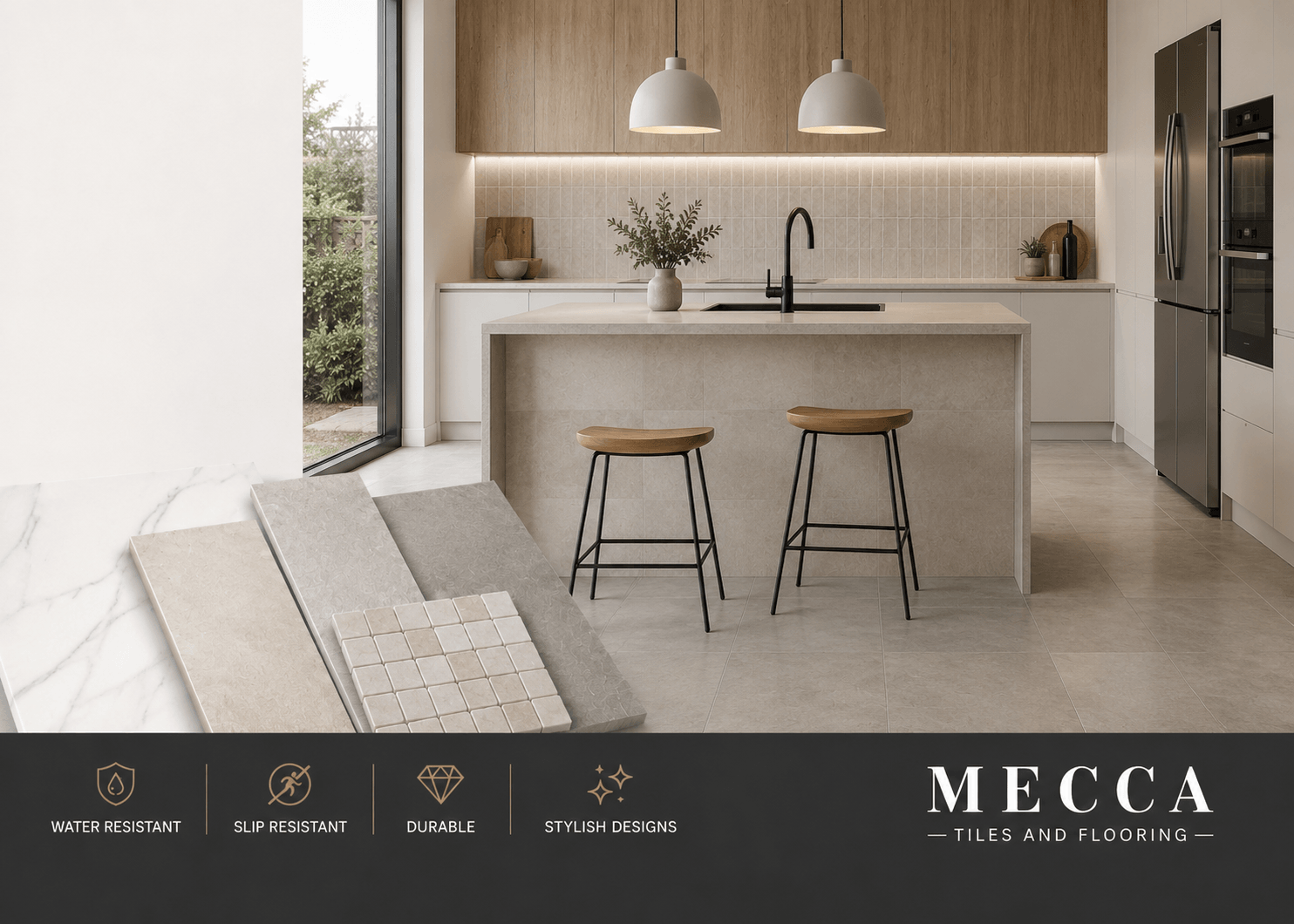
Why Tiles Are Ideal for Kitchens?
Tiles are one of the most practical and versatile surface options for busy kitchens.
Durable for Everyday Living
Quality kitchen tiles can withstand regular foot traffic, dropped utensils, food preparation and frequent cleaning.
Easy to Clean
Most tiled surfaces can be maintained with simple sweeping, vacuuming and damp mopping. Tiled splashbacks also make it easier to clean cooking splashes and grease.
Resistant to Moisture
Porcelain and ceramic tiles are suitable for areas exposed to moisture, making them practical for floors, splashbacks and spaces near sinks.
Wide Range of Styles
Choose from stone-look, marble-look, concrete-look, timber-look, patterned and solid-colour designs to match almost any kitchen style.
Where Can Kitchen Tiles Be Used?
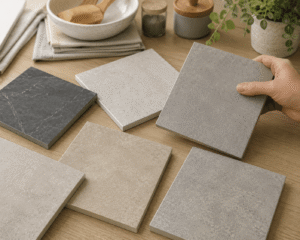
Kitchen Floors
Kitchen floor tiles should provide durability, comfort, easy maintenance and suitable slip resistance.
- Porcelain tiles
- Stone-look tiles
- Concrete-look tiles
- Timber-look tiles
- Large-format tiles
- Natural stone tiles
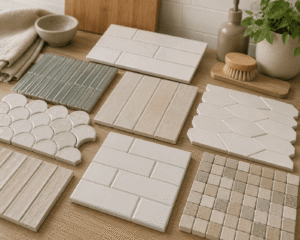
Kitchen Splashbacks
A tiled splashback protects the wall behind your cooktop, sink and preparation areas while adding colour, pattern and texture.
- Subway tiles
- Kit Kat tiles
- Mosaic tiles
- Herringbone layouts
- Handmade-look tiles
- Marble-look tiles
- Patterned feature tiles
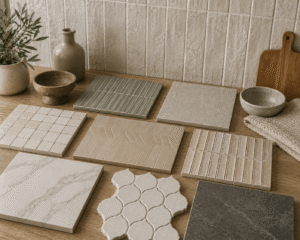
Kitchen Feature Walls
Tiles can also be used beyond the traditional splashback. A full-height tiled wall can create a strong architectural feature and make the kitchen feel more refined.
Best Tile Materials for Kitchens
Porcelain Tiles
Porcelain is an excellent option for kitchen floors because it is dense, durable and highly resistant to moisture.
- Busy family kitchens
- High-traffic floors
- Open-plan living areas
- Low-maintenance homes
- Strong and long-lasting
- Easy to maintain
- Available in many designs
- Suitable for walls and floors
- Can replicate stone, timber or concrete
Ceramic Tiles
Ceramic tiles are commonly used on kitchen walls and splashbacks. They are available in a broad range of colours and finishes.
- Splashbacks
- Feature walls
- Decorative areas
- Budget-conscious renovations
- Versatile and affordable
- Easy to clean
- Available in many colours
- Ideal for decorative layouts
Always confirm whether a ceramic tile is rated for floor use before installing it on a kitchen floor.
Natural Stone Tiles
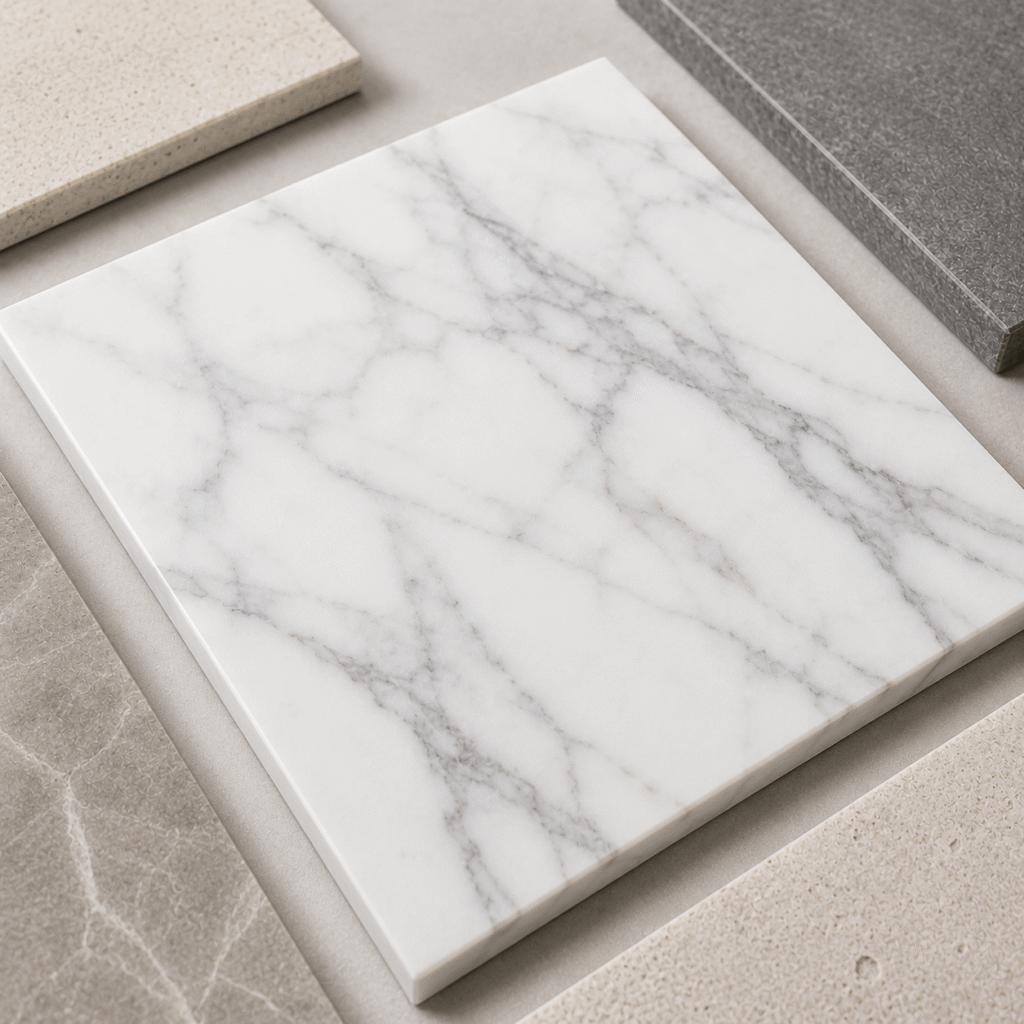
Natural stone can add texture, warmth and individuality to a kitchen. Popular materials include marble, slate and granite.
- Premium kitchens
- Feature splashbacks
- Traditional interiors
- Natural and organic designs
Natural stone may require sealing and specialised maintenance. Because every piece is unique, variation in colour and pattern should be expected.
Mosaic Tiles
Mosaics are ideal for kitchen splashbacks, niches and decorative borders.
- Glass
- Ceramic
- Porcelain
- Marble
- Natural stone
- Mixed materials
Mosaics can introduce texture and detail without overwhelming the entire kitchen.
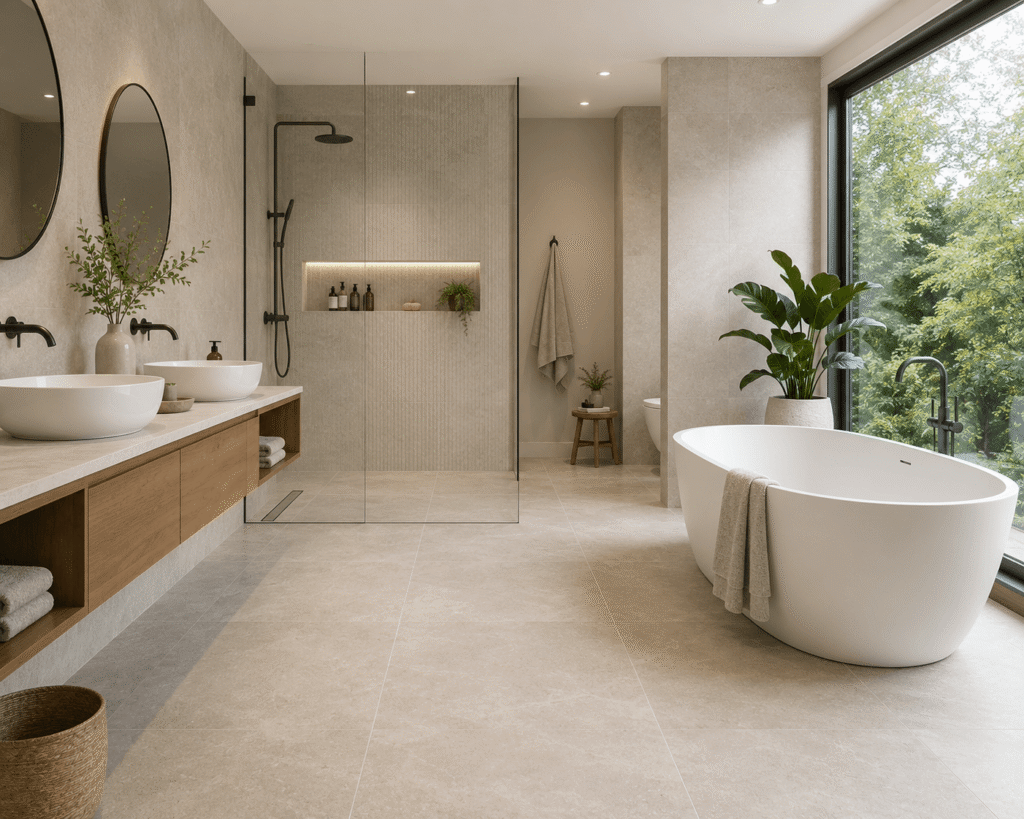
How to Choose Bathroom Tiles?
- Room Size
- Tile Finish
- Slip Rating
- Colour
- Maintenance
- Budget
Which Tile Size Works Best?
Small Bathrooms
- 300x600mm
- 600x600mm
- Fewer grout lines
- Makes spaces feel larger
Large Bathrooms
- 600x1200mm
- Statement walls
- Large-format porcelain
- Luxury appearance
Trending Bathroom Tile Colours
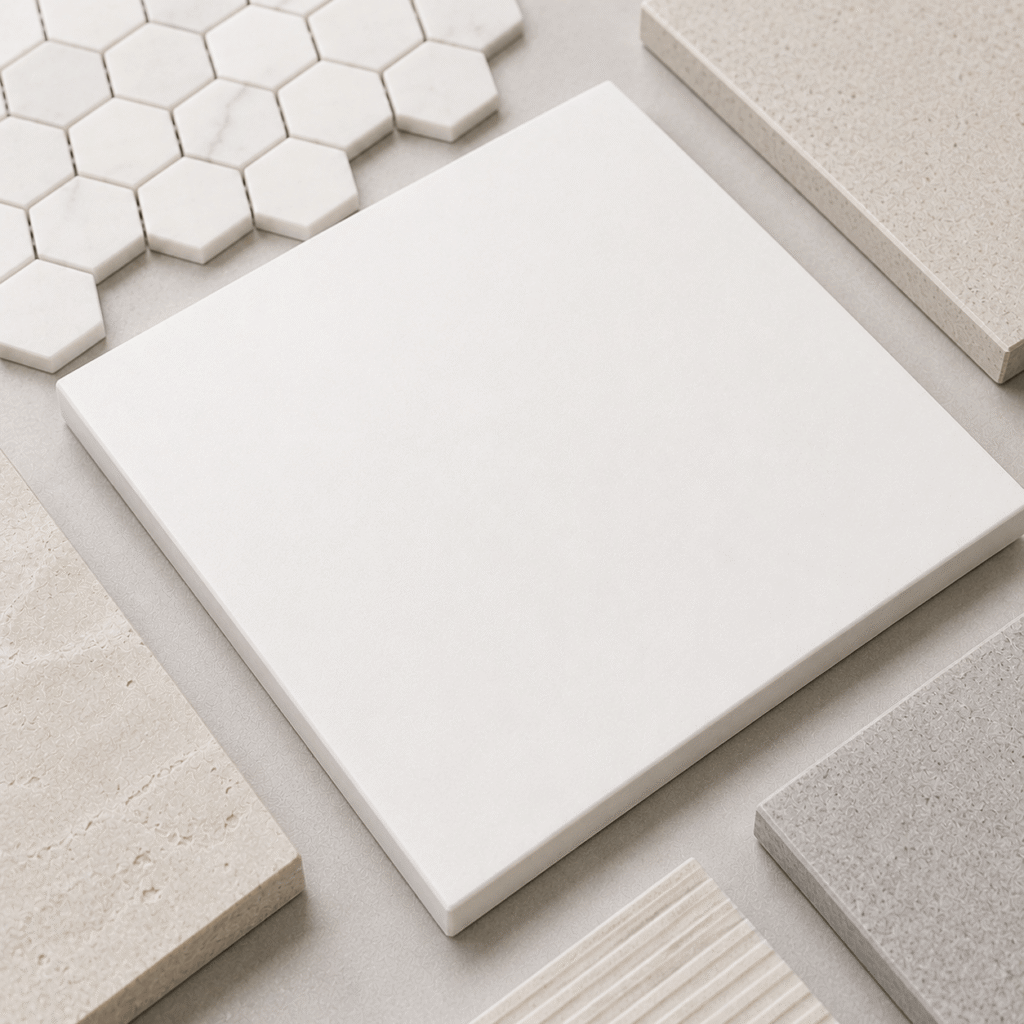
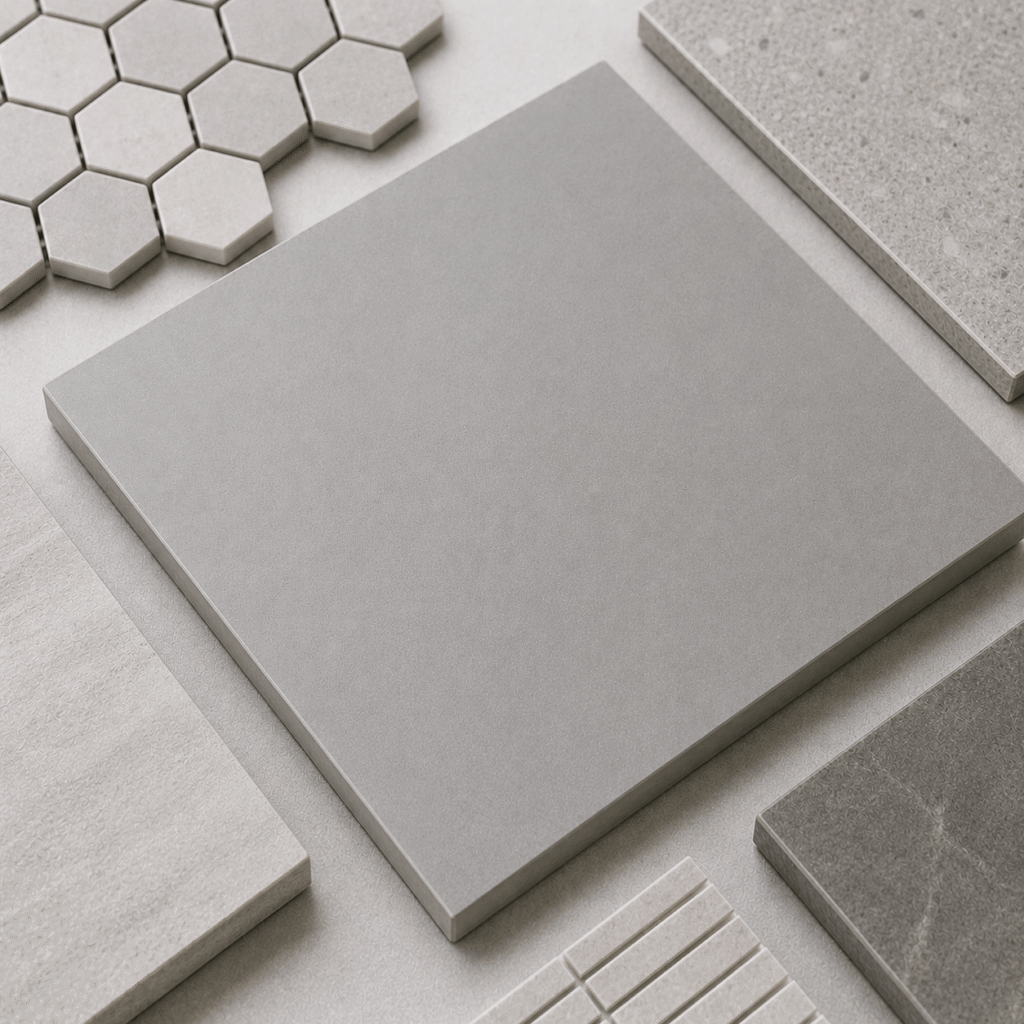
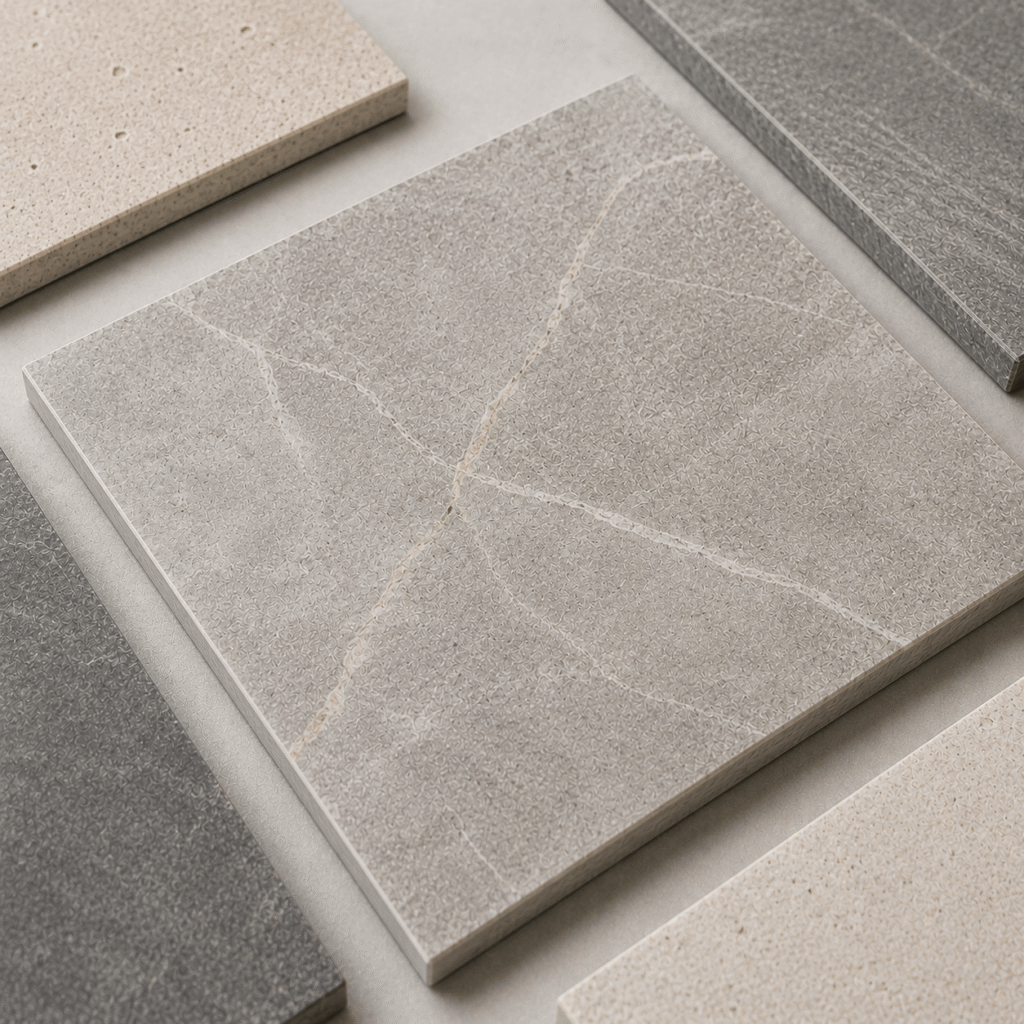
- Choose porcelain or ceramic
- Check slip rating
- Measure your area
- Order 10% extra
- Match grout colour
- Consider maintenance
Frequently Asked Questions (FAQs)
Porcelain tiles are among the most popular options because they are durable, moisture-resistant and available in many styles. The correct choice will also depend on slip resistance, room usage and maintenance preferences.
Not unless the manufacturer specifically rates them for floor use. Wall tiles may not be strong enough to withstand foot traffic.
Glossy tiles can become slippery when wet and may show marks more easily. Matte or textured finishes are generally more practical for kitchen floors.
Mid-tone greys, warm neutrals and subtly patterned tiles can disguise dust and everyday marks better than very dark or highly polished surfaces.
Subway tiles, mosaics and medium-format tiles are all popular. Large-format tiles can also create a seamless appearance with fewer grout lines.
They do not need to match exactly. They should coordinate through colour, tone, texture or style to create a cohesive design.
Allow around 10% extra for cutting, breakage and future repairs. Herringbone, diagonal and patterned layouts may require a higher allowance.