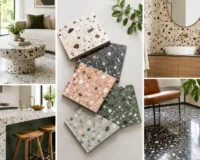
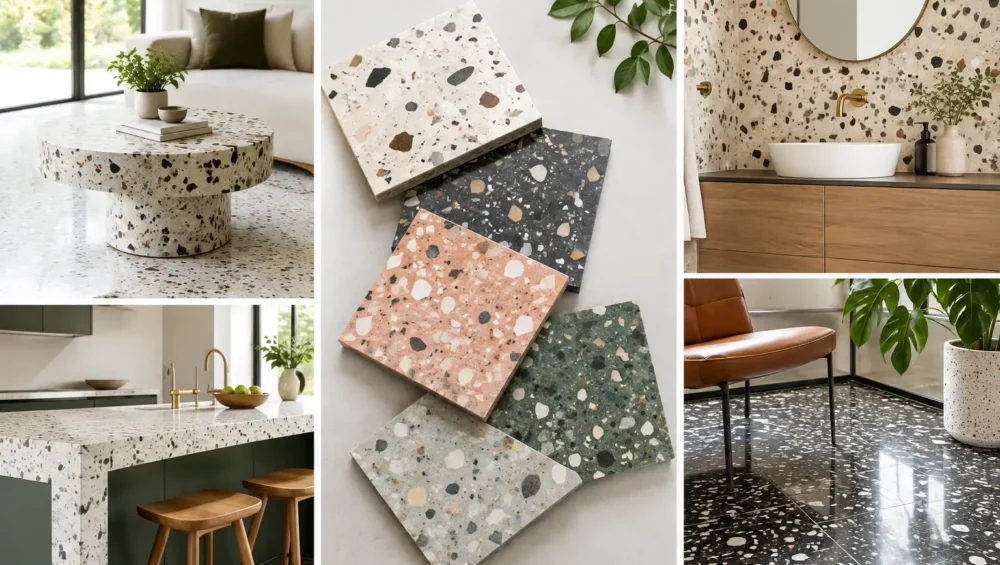
A terrazzo surface can do more than introduce color. It can set the entire visual rhythm of a room, pulling together cabinetry, stone, paint, and metal finishes with a finish that feels distinctly considered. The best terrazzo tile ideas balance the material’s expressive aggregate with the practical demands of the space, whether that means a serene primary bathroom, a hardworking kitchen, or a memorable commercial entry.
Terrazzo has a rich, speckled character, but it is far more versatile than the bold, retro look many people expect. Today’s collections range from quiet, tone-on-tone neutrals to large-format designs with dramatic chips, enabling a luxurious result that can feel classic, contemporary, playful, or architectural.
Terrazzo Tile Ideas That Define the Room
1. Create a hotel-inspired bathroom floor
A terrazzo floor brings immediate polish to a bathroom without relying on ornate detail. Choose a light base with soft gray, ivory, or warm beige aggregate for a calm, elevated foundation, then pair it with timber cabinetry, brushed nickel, or aged brass fixtures. Large tiles with fine chips create a more expansive feel in compact rooms, while a denser aggregate adds visual interest to larger primary bathrooms.
For shower areas, suitability matters as much as style. Select a finish with appropriate slip resistance for wet floors, and use a tile format that allows enough grout joints to support traction where required. A matching terrazzo-look wall tile can create a refined, enveloping effect, but keep the shower niche or vanity wall simpler if the floor has especially prominent chips.
2. Use terrazzo as the kitchen’s unexpected focal point
In a kitchen filled with plain cabinetry, terrazzo can provide the layer of personality that makes the design feel custom. Consider it for a backsplash behind a cooktop, a full-height wall behind open shelving, or a floor that anchors a generous island. A pale terrazzo with charcoal and warm stone fragments works beautifully with oak, walnut, matte black, and creamy painted cabinets.
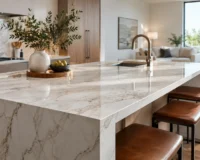
The key is proportion. A highly varied terrazzo backsplash is often enough in a smaller kitchen, especially when paired with a restrained countertop. If the terrazzo is going underfoot, choose cabinetry and counters with fewer competing patterns. The room will still feel richly finished, just not visually crowded.
3. Frame an entry with a border or rug effect
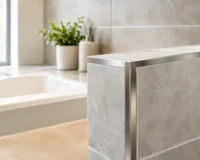
An entry is one of the strongest places to use a distinctive surface. Terrazzo tile can establish a luxurious first impression while handling the daily movement of shoes, bags, pets, and visitors. Instead of covering the whole area in one field, create a tile “rug” by framing terrazzo with a contrasting porcelain or stone-look border.
This approach suits heritage homes, Mediterranean-inspired renovations, and contemporary spaces that need a touch of ceremony. Keep the border narrow for a tailored look, or go wider when the foyer is large enough to carry a more graphic composition. Select durable, easy-care tile finishes for entrances exposed to dirt and moisture.
4. Carry one terrazzo through connected living zones
Open-plan homes benefit from materials that create continuity without becoming bland. A warm neutral terrazzo across the kitchen, dining, and living zones gives the floor a unified appearance while adding more depth than a plain concrete-look tile. It is a particularly effective choice for homes with abundant natural light, where the chips catch subtle shifts in tone throughout the day.
For this application, look for a collection in a larger format and a restrained palette. Fine or medium aggregate in limestone, sand, mushroom, or soft gray tones feels sophisticated across broad floor areas. Strong black-and-white contrast can be striking, but it demands a more deliberate furniture and lighting scheme.
5. Make a powder room memorable
Small spaces give you permission to be bolder. A powder room floor is an ideal canvas for terrazzo with cobalt, burgundy, forest green, or black chips, particularly when balanced with a simple wall finish and a sculptural basin. Because the footprint is compact, the finish reads as a crafted detail rather than an overwhelming pattern.
For a more immersive treatment, run the same terrazzo tile from the floor partway up the wall behind the vanity. Add a painted upper wall and a single statement mirror to keep the composition crisp. This is one of the most effective terrazzo tile ideas for a renovation that needs a high-impact result without reworking an entire home.
6. Pair soft terrazzo with fluted or handmade-look tile
Texture makes terrazzo feel even more considered. A terrazzo floor with a fine, neutral aggregate pairs beautifully with fluted wall tile, zellige-inspired ceramic, or a handmade-look subway tile. The contrast works because one surface delivers pattern through mineral fragments while the other brings shadow and movement.
Keep the color connection intentional. For example, pull the warm white base of the terrazzo into the wall tile, then repeat one darker aggregate tone in tapware or joinery hardware. A room with multiple tactile finishes needs a shared palette to feel collected rather than accidental.
7. Design a contemporary laundry that works hard
Laundry rooms are practical spaces, but that does not mean they should be visually forgettable. Terrazzo flooring can lift utility cabinetry and make a compact room feel like a designed extension of the home. Choose mid-tone colors that are forgiving around everyday dust and water marks, then combine them with flat-panel cabinetry in white, sage, navy, or natural wood.
A small-format terrazzo tile is especially useful where floor falls and drainage must be considered. Discuss layout, grout selection, and wet-area detailing with your installer before ordering, as the right tile size can make installation cleaner and more functional.
8. Bring resort character to an outdoor entertaining area
Terrazzo-inspired porcelain can deliver a refined resort look around covered patios, outdoor kitchens, and pool-adjacent entertaining zones. Look for products specifically rated for exterior use, with the correct slip resistance for the location. Outdoor conditions demand more than a beautiful pattern: sun exposure, drainage, climate, and the transition from indoor to outdoor flooring all influence the right selection.
For a cohesive architectural finish, choose an outdoor terrazzo look that echoes the interior palette without matching it exactly. A slightly deeper or more textured finish outside can help define the shift in function while maintaining a clear design connection.
9. Use oversized chips as an artful feature wall
Large-chip terrazzo makes a confident statement in commercial reception areas, hospitality settings, retail interiors, and generous residential spaces. Used on one wall, it can function almost like a mural, creating scale and movement behind a reception desk, bar, or freestanding tub.
Let it lead. Surround a bold terrazzo feature wall with simple plaster, smooth cabinetry, and clean-lined lighting. When every finish is competing for attention, even premium materials lose their impact. A focal surface needs visual space around it.
10. Choose monochrome terrazzo for a tailored look
Not every terrazzo design needs a broad spectrum of color. Black, white, and gray terrazzo creates a sharp, architectural mood that suits contemporary kitchens, boutique retail spaces, and minimalist bathrooms. It pairs naturally with chrome, black hardware, smoked glass, and veined marble.
Monochrome is also forgiving when you want a timeless scheme with enough character to avoid looking flat. The aggregate provides detail at close range, while the limited palette keeps the room calm from a distance.
11. Use grout as part of the composition
Grout changes the finished appearance more than most people expect. A close grout match creates a continuous, monolithic field that lets the terrazzo pattern take center stage. A contrasting grout makes the tile grid more visible and can suit geometric, vintage-inspired, or smaller-format layouts.
There is no universal right answer. In a large-format living area, matching grout usually feels more luxurious and expansive. In a powder room or entry with a playful checkerboard or border detail, a subtle contrast may reinforce the design intention.
12. Mix terrazzo with natural materials, not more pattern
Terrazzo looks its most premium when balanced by materials with visual calm. Timber, plaster, linen-textured finishes, honed stone, and matte metals all give it room to shine. If you introduce another patterned tile, keep it confined to a small zone and make sure at least one color connects the two surfaces.
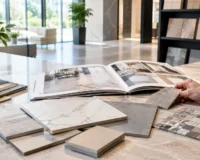
This is especially relevant when selecting samples. View terrazzo alongside your cabinet finish, paint swatches, countertop material, and fixture samples under the room’s actual lighting. Daylight can reveal warmer or cooler undertones that are not obvious in a showroom or on a screen.
Choosing the Right Terrazzo Tile for Daily Life
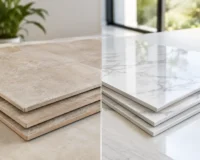
A beautiful terrazzo design should also suit how the room will be used. Porcelain terrazzo-look tile is a practical choice for many residential and commercial applications because it offers the visual depth of terrazzo with dependable durability and straightforward maintenance. Natural terrazzo and terrazzo-based materials can deliver exceptional authenticity, but their sealing, care, and installation requirements may be more involved.
Consider traffic, water exposure, and cleaning habits before making a final decision. A polished finish may be ideal for a low-moisture feature wall, while a textured or matte finish is often the wiser choice for floors, entries, bathrooms, and exterior areas. Tile size matters too: larger formats reduce grout lines in open spaces, while smaller formats can be better suited to detailed layouts, slopes, and tight rooms.
Order samples before committing to a full surface. Terrazzo is beautifully variable by nature, and seeing its scale, undertone, and chip mix in your own space is the best way to select with confidence.
The most successful terrazzo rooms do not treat the tile as an afterthought. Give it a clear role, pair it with materials that complement rather than compete, and let its texture bring a lasting sense of character to the space.