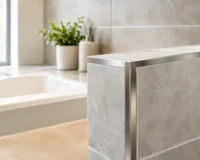
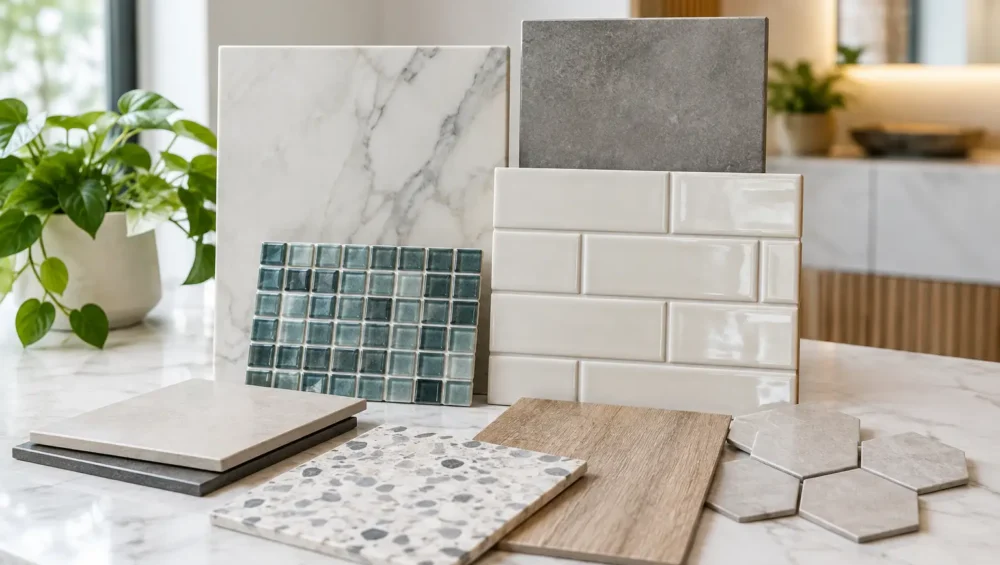
A tile can have the right color, scale, and material, yet still feel completely wrong once it is installed. The difference is often the surface itself. This guide to tile finishes helps you look beyond the sample’s pattern and choose a finish that brings the right balance of light, texture, maintenance, and underfoot confidence to your interior.
A glossy marble-look porcelain can create the visual drama of a hotel bathroom. A soft matte tile can make the same room feel calm, architectural, and effortless to live with. Neither is automatically better. The considered choice is the one that suits how the room is used, how much natural light it receives, and the atmosphere you want to create.
What a tile finish changes
A tile finish describes the final character of its surface: how it reflects light, feels underfoot, responds to water, and reveals everyday marks. It is not merely a visual detail. In kitchens, bathrooms, entryways, and commercial spaces, finish has a direct effect on performance as well as style.
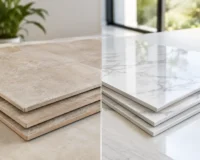
Light-reflective finishes tend to make colors appear richer and rooms feel more expansive. They can also show water spots, fingerprints, and dust more readily. Matte and textured finishes absorb or diffuse light, creating a quieter appearance while offering a more forgiving surface for busy households. The right decision starts with an honest view of the room, not just a beautiful display board.
Material matters too. Porcelain can be manufactured in an extensive range of finishes, from mirror-like polished surfaces to tactile stone looks. Natural stone has its own inherent variation and is commonly honed, tumbled, brushed, or polished. Ceramic wall tile often uses a glazed finish that gives color and depth its distinctive presence.
Guide to tile finishes: the main options
Polished and glossy finishes
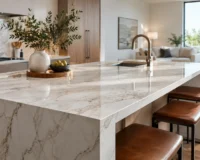
Polished porcelain and glossy glazed tile have a smooth, highly reflective surface. They are an elegant choice when you want to amplify light, highlight veining, or bring a sense of luxury to a space. Think marble-look large-format tile in a powder room, a luminous glazed subway tile backsplash, or a polished porcelain slab on a statement wall.
This finish is especially effective on walls, where there is no concern about wet-foot traction. On floors, polished tile is best reserved for lower-risk dry areas or selected with careful attention to the product’s rated suitability. A glossy surface can reveal smudges and standing water more easily, so it may require more frequent wiping in a family bathroom or active kitchen.
Matte finishes
Matte tile has little to no visible shine, giving rooms a composed, contemporary look. It is one of the most versatile choices for floors because it disguises minor dust, footprints, and water marks better than high-gloss surfaces. Its restrained appearance also allows stone-inspired texture, handmade variation, and earthy colors to feel particularly authentic.
A matte finish works beautifully in modern kitchens, relaxed bathrooms, laundry rooms, and open-plan living spaces. It pairs naturally with timber cabinetry, brushed metal fixtures, and textured textiles. Matte does not always mean rough, however. Some matte tiles are smooth to the touch, so always confirm the product’s specific grip and application recommendations before using it in a wet zone.
Satin, lappato, and semi-polished finishes
For clients who want more light play than matte but less reflectivity than polished, satin and lappato finishes offer a sophisticated middle ground. Satin is soft and low-sheen, while lappato porcelain is partially polished to catch light across raised areas of the design. Both can add visual depth without turning every reflection into a focal point.
These finishes are well suited to refined living areas, kitchen floors, and feature walls where you want a premium surface with a subtle glow. Because lappato finishes can vary by collection, assess each tile closely. The balance of smoothness, texture, and maintenance is product-specific rather than universal.
Textured and grip finishes
Textured tile is designed for greater traction and tactile interest. It may replicate split stone, brushed concrete, timber grain, or finely structured mineral surfaces. This makes it a strong choice for shower floors, mudrooms, laundry areas, pool surrounds, patios, and commercial entries where moisture or frequent foot traffic is part of daily use.
The trade-off is cleaning. Deeper texture can hold onto dirt more readily than a smooth surface, particularly in kitchens or outdoor areas exposed to debris. Choose a texture that is practical for the location rather than assuming the roughest option is always best. A finely textured porcelain often provides the elevated look and dependable grip many projects need.
Honed, tumbled, and brushed natural stone
Natural stone finishes bring a level of depth that manufactured surfaces can emulate but never duplicate exactly. Honed stone is smooth with a low sheen and feels tailored and contemporary. It is a popular choice for limestone, marble, and travertine in elegant interiors. A tumbled finish has softened edges and a timeworn appearance, making it ideal for Mediterranean, farmhouse, and heritage-inspired spaces.
Brushed stone reveals texture and movement, with a more tactile, relaxed character. These finishes can create extraordinary floors and walls, but stone must be selected with its care requirements in mind. Porosity, sealing needs, acid sensitivity, and finish durability differ across stone types. A finish that feels perfect for a powder room may need more planning in a hard-working kitchen or outdoor setting.
Match the finish to the room
The most successful tile schemes often use more than one finish. A bathroom might feature glossy wall tile to brighten the room, a matte floor tile for a grounded look, and a smaller mosaic with extra grip on the shower floor. The result feels layered rather than overly matched, while every surface has a clear purpose.
In a kitchen, backsplashes are an opportunity for gloss, handcrafted glaze, or dimensional texture because they are vertical and easy to wipe. For floors, matte porcelain is often the practical luxury choice, especially in homes with children, pets, or frequent entertaining. If your kitchen receives intense afternoon light, test the tile at different times of day. Sheen that looks subtle in a showroom can appear much stronger in direct sun.
For bathrooms, safety deserves equal weight with aesthetics. Smooth polished tile can be striking on walls, but floor selections should suit wet conditions. Shower floors also benefit from smaller-format tile or mosaic because the additional grout lines can improve underfoot grip and allow the surface to follow drainage falls more precisely.
In entryways and commercial interiors, choose with traffic in mind. Matte, textured, and stone-look porcelain finishes are often better at maintaining a polished appearance through daily wear. A pale polished floor may look spectacular at installation, but it can demand a level of ongoing care that does not suit every busy setting.
Use samples to judge more than color
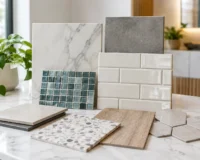
A sample is the most reliable way to understand a finish before committing to a full order. Place it where the tile will be installed and look at it in morning light, evening light, and artificial light. Hold it beside cabinetry, paint, fixtures, and flooring transitions. A finish can read warmer, cooler, flatter, or more reflective once surrounded by the materials that define the room.
Touch the surface with dry and damp hands. Walk on a floor sample in the shoes you normally wear at home. If it is for a bathroom, consider how it will feel with bare feet and how easily you can imagine maintaining it after a busy week. At Mecca Tiles, ordering samples is a simple way to move from a beautiful idea to a decision made with confidence.
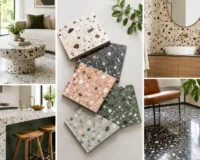
Also consider grout early. A closely matched grout creates a more continuous, quiet surface, especially with large-format matte porcelain. Contrasting grout emphasizes pattern and tile shape, which can be effective with glossy subway tile, encaustic designs, or mosaics. On textured tile, grout selection can influence how easy the finished surface feels to clean and how much visual movement it carries.
Let the finish support the design
The finest tile finish is not necessarily the shiniest, the most textured, or the most expensive. It is the one that makes the room feel intentional while meeting the realities of its use. A polished finish can bring grandeur to a small wall, a matte floor can anchor an open living space, and tactile stone can give an outdoor area a sense of permanence.
Choose the surface that you will enjoy seeing, touching, and living with every day. When finish, format, and setting work together, tile becomes more than a backdrop – it becomes the element that gives the entire space its character.