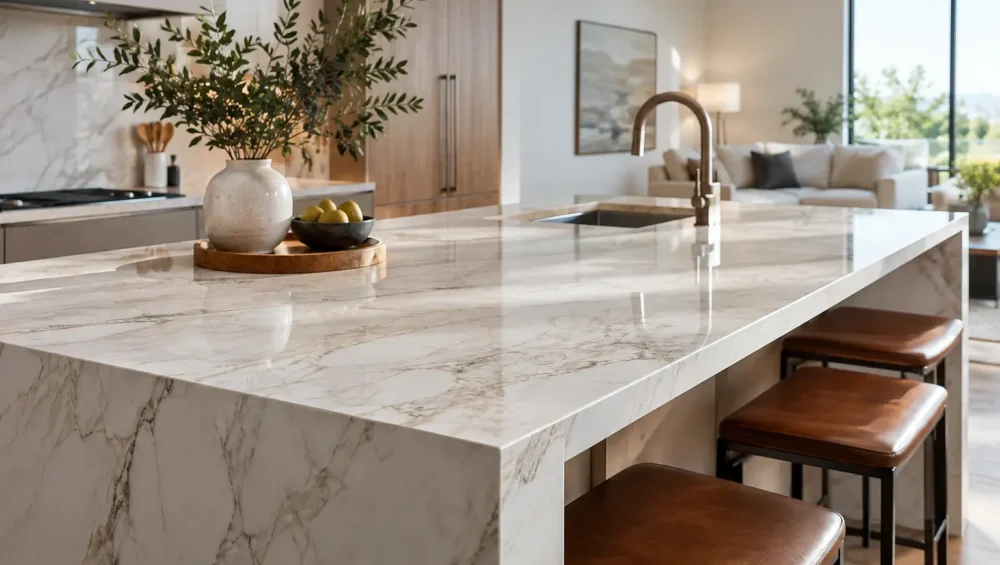
A porcelain slab can give a kitchen island the quiet drama of veined marble, the depth of natural stone, or the tailored look of concrete, without asking you to treat it like a fragile showpiece. But are porcelain slabs durable enough for the realities of cooking, entertaining, young families, busy bathrooms, and commercial interiors? In most well-specified applications, the answer is yes.
Porcelain slabs are engineered for performance as much as visual impact. Their dense, low-porosity composition makes them a compelling choice for surfaces that need to look elevated while standing up to daily wear. The key is understanding where their strengths shine, where careful fabrication matters, and how to select the right finish and thickness for the space.
Are Porcelain Slabs Durable in High-Use Areas?
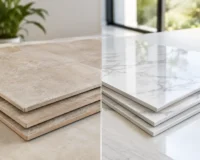
Porcelain slabs are exceptionally durable because they are made from refined clay, minerals, and natural pigments compressed under high pressure and fired at very high temperatures. This process creates a hard, dense surface with very low water absorption. Unlike more porous materials, porcelain does not readily take in moisture, cooking spills, or everyday stains.
For kitchens, bathrooms, laundry rooms, hospitality settings, and retail spaces, this translates into a surface that remains composed under pressure. A properly installed porcelain slab can resist the common culprits of surface damage: coffee rings, oil splatters, makeup, soap residue, humidity, and frequent cleaning.
Durability does not mean indestructibility, however. Porcelain is very hard but can be vulnerable to chipping at an exposed edge or cracking if it is poorly supported during fabrication or installation. The slab itself is high-performing; the details around it determine how confidently it performs over time.
What Porcelain Slabs Resist Best
The appeal of porcelain is not simply that it lasts. It is that it maintains its finish with relatively little intervention, even in spaces where life is not carefully curated.
Heat and cooking temperatures
Porcelain handles heat extremely well, which is one reason it is so well suited to kitchen countertops, backsplashes, fireplace surrounds, and outdoor entertaining areas. A hot pan is less likely to leave a burn mark or heat ring than it would on many resin-based surfaces.
Even so, using trivets remains good practice. Sudden, concentrated temperature changes can place stress on any surface and the cabinetry or adhesives beneath it may have different heat tolerances than the slab itself.
Stains, spills, and household products
Because porcelain has very low porosity, most everyday spills stay on the surface instead of soaking in. Red wine, lemon juice, olive oil, tomato sauce, cosmetics, and cleaning products are generally easy to wipe away. This is a meaningful advantage for households that love the character of marble but prefer a lower-maintenance material.
Unlike many natural stones, porcelain typically does not need routine sealing. That makes it especially attractive for busy kitchens, shared bathrooms, and commercial spaces where a polished presentation needs to be easy to maintain.
Scratches and abrasion
Porcelain is highly resistant to scratching and surface wear. It is an excellent option for walls, floors, countertops, vanity tops, tabletops, and other high-contact applications. A quality porcelain slab will retain its color and pattern because the decoration is fired into the material rather than applied as a delicate surface coating.
There is still a practical distinction between scratch resistance and damage resistance. Avoid dragging heavy metal objects across the surface, and take care with abrasive tools or materials during installation. On countertops, cutting boards are still essential. They protect both the slab edges and your knives, which can dull against a porcelain surface.
Moisture, UV exposure, and weather
Porcelain’s low water absorption makes it a natural fit for wet areas. It performs beautifully in bathrooms, shower walls, laundry rooms, pool surrounds, and outdoor kitchens when the selected product and installation system are suitable for the setting.
Many porcelain slab designs are also UV resistant, so their color remains stable in sunlit rooms and exterior spaces. This makes large-format porcelain an elegant way to carry a refined stone-look finish from indoors to outdoors with visual continuity.
The Details That Affect Long-Term Performance
A premium slab needs premium planning. The durability of porcelain depends not only on the material but also on the application, slab thickness, structural support, and installer expertise.
Countertops and islands require a stable, level substrate and careful support around cutouts for sinks, cooktops, and faucet holes. These areas create narrower sections of material, so accurate fabrication is essential. Large unsupported overhangs may need engineered reinforcement, depending on the slab thickness and design.
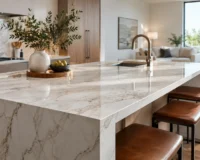
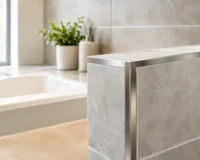
Edges deserve attention as well. A mitred edge can create the appearance of a substantial stone block while preserving the slim profile and lightness of porcelain. It is a sophisticated detail, but it should be produced by experienced fabricators who understand porcelain handling and adhesives.
For flooring, choose a finish designed for foot traffic and the relevant slip-resistance requirements. A highly polished slab can look striking in a low-traffic powder room or feature wall, while a matte, textured, or grip finish may be the more considered choice for entryways, wet zones, pool areas, and commercial projects.
Porcelain Slabs Compared With Natural Stone and Quartz
Porcelain slabs offer a distinct balance of luxury aesthetics and practical resilience. Natural stone has unmatched geological character, with variation that cannot be replicated. It can also require more regular sealing and more mindful care, particularly with marble, limestone, and other acid-sensitive stones.
Quartz is a popular engineered surface with reliable color and strong stain resistance, but it is generally less comfortable around high heat and is not usually the first choice for outdoor exposure. Porcelain, by contrast, performs particularly well where heat, moisture, sunlight, and low maintenance are priorities.
That does not make porcelain the automatic answer for every project. If you want a richly textured, tactile surface that develops a lived-in patina, natural stone may be the more emotionally satisfying choice. If a project involves intricate curves, deeply profiled edges, or unusually complex joinery, discuss the design early with a qualified fabricator to confirm porcelain is the right material.
Where Porcelain Slabs Make the Most Sense
Porcelain slabs are especially compelling when a project calls for large-scale visual impact with fewer grout lines. A continuous backsplash and countertop, a dramatic full-height shower wall, or a floor-to-fireplace installation can make a room feel more expansive and intentional.
In kitchens, a marble-look porcelain slab brings graceful veining to benchtops and splashbacks without the anxiety of frequent spills. In bathrooms, it creates a calm, hotel-inspired finish that handles humidity with ease. In commercial settings, it offers a polished surface solution for reception areas, restroom walls, café counters, and boutique retail fit-outs where appearance and durability must work together.
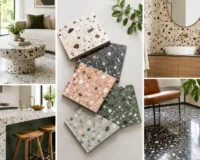
The broad design range is equally valuable. From luminous Calacatta-inspired veining to moody basalt, soft travertine, industrial concrete, and contemporary solid tones, porcelain enables a highly tailored look without sacrificing day-to-day practicality.
Caring for Porcelain Slabs
Maintenance is refreshingly simple. Wipe spills with a soft cloth or sponge, use a pH-neutral cleaner for routine cleaning, and avoid harsh abrasive pads that may affect the finish or grout around the installation. For countertops, treat the surface with the same basic care you would give any premium finish: use cutting boards, avoid striking exposed edges, and clean up spills rather than letting residue build up.
If you are selecting slabs for a specific application, request a sample and view it in the actual light of the room. A sample helps you assess the color movement, sheen, texture, and how the material sits alongside cabinetry, paint, timber, and hardware before committing to a full surface.
Porcelain slabs are not merely durable in the technical sense. Chosen thoughtfully and installed by skilled professionals, they give everyday spaces the confidence to be lived in fully while still looking beautifully considered.