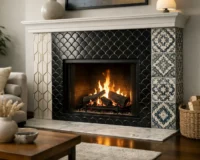
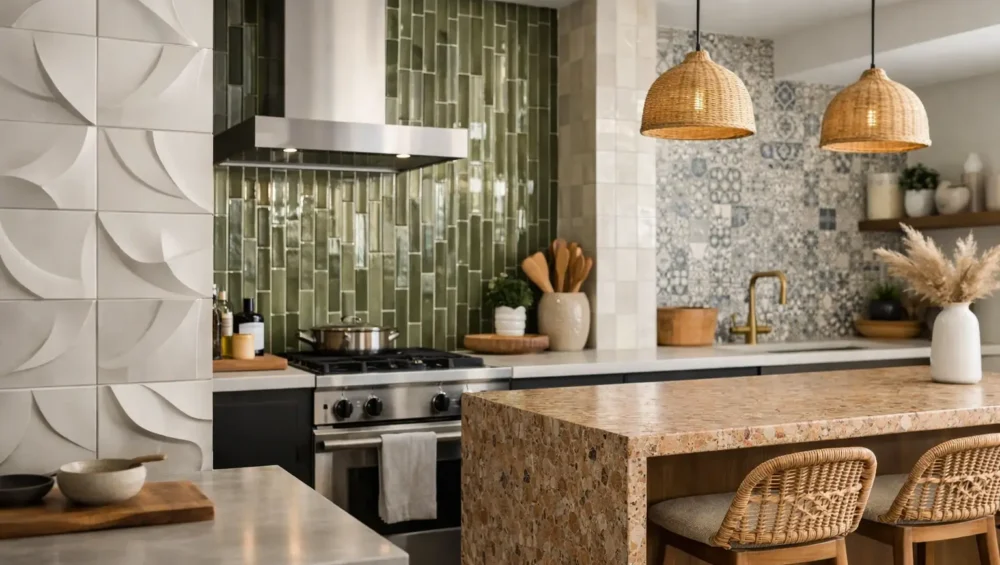
The kitchen is becoming less about a single statement backsplash and more about creating a considered, layered surface story. Kitchen tile trends 2027 point toward materials with warmth, texture, and visual depth – finishes that feel tailored to the architecture rather than selected as an afterthought. For a room expected to handle heat, spills, movement, and daily life, this shift is as practical as it is beautiful.
The strongest kitchens will balance expressive design with materials that earn their place over time. Think soft mineral color, tactile glazes, generous-scale porcelain, and details that make a hardworking room feel quietly luxurious.
Kitchen Tile Trends for 2027: The Defining Direction
The polished all-white kitchen is giving way to spaces with more dimension. This does not necessarily mean maximalism. Instead, the 2027 approach favors nuanced surfaces: stone-look porcelain with natural variation, handmade-look ceramics, tonal mosaics, and grout colors chosen to support the design rather than interrupt it.
A useful starting point is to decide what role tile should play. A calm floor can anchor richly grained cabinetry or dramatic natural stone. A full-height backsplash can become the feature in a kitchen with simple millwork. The right choice depends on light, layout, cabinetry finishes, and how much visual activity the room can comfortably carry.
1. Warm Stone-Look Porcelain
Cool gray is no longer the default neutral. In its place, limestone, travertine, and pale sandstone looks bring a more relaxed, enduring character to kitchen floors and walls. Porcelain is especially compelling here because it delivers the soft variation and movement of natural stone with a low-maintenance surface suited to busy households and commercial settings.
Look for creamy ivory, almond, sand, tobacco, and muted taupe rather than overly uniform beige. A honed or matte finish keeps the effect sophisticated and is generally more forgiving underfoot than a highly polished floor. For open-plan homes, continuing the same stone-look tile from kitchen to dining area can make the entire space feel more expansive.
2. Earthy Ceramic in Soft, Complex Color
Color is returning, but it is more grounded than glossy. Clay pink, olive, deep mushroom, mineral blue, butter yellow, and dusty terracotta are appearing in kitchen backsplashes with a restrained confidence. These colors work particularly well in homes where timber, painted cabinetry, or brushed metal hardware already brings warmth.
The appeal lies in variation. A subtly uneven glaze catches light differently across each tile, creating a surface that feels collected and considered. This is a beautiful choice for a backsplash, where close viewing allows the finish to shine. For a full wall, choose a restrained palette and simpler tile shape so the look remains elegant rather than busy.
3. Larger Formats With Fewer Grout Lines
Large-format porcelain continues to gain ground in 2027, particularly for kitchen floors. Fewer grout joints create a cleaner visual field and allow marble, concrete, and stone-inspired designs to read more naturally. This makes large tiles a strong option for contemporary kitchens, coastal homes, and projects where an open, architectural feel is the goal.
Scale matters. A large format can make a compact kitchen appear calmer, but it requires careful planning around cuts, floor levels, and room proportions. In an irregularly shaped space, a medium-format tile may produce less waste and a more balanced installation. A skilled installer is essential, especially where a flat finish and narrow grout joint are desired.
4. Handmade-Look Subway Tile
The subway tile is not disappearing. It is simply becoming more expressive. In 2027, expect elongated proportions, softened edges, irregular surfaces, and rich glaze variation to replace the flat, high-gloss white tile seen in countless kitchens.
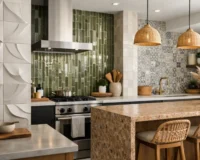
A handmade-look ceramic in cream, olive, smoky blue, or warm white can provide a sense of craft without overwhelming the room. Stacked vertically, it gives height to a low-ceilinged kitchen. Installed in a horizontal running bond, it offers a more familiar, relaxed rhythm. Matching the grout closely to the tile creates a quiet, textural finish; contrast grout makes every joint part of the pattern.
5. Mosaics With a Tailored Feel
Mosaic is moving beyond the small hexagon and penny round. Fine linear mosaics, finger tiles, petite squares, and tonal natural stone mosaics bring precision and texture to backsplashes, beverage stations, and butler’s pantries. They are ideal for adding a layer of detail in areas where a larger tile might feel too broad or plain.
The most refined mosaic applications are often tonal. A palette of cream, tobacco, and bone can add movement without demanding attention from every corner of the room. For a more distinctive result, pair a mosaic backsplash with large-format floor tile in a related warm neutral. The contrast in scale gives the kitchen a professionally resolved finish.
6. Patterned Tile Used With Restraint
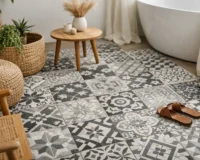
Pattern is best treated as a focal point, not a room-wide rule. Encaustic-inspired porcelain and geometric tiles can introduce character to a kitchen floor, especially in a period renovation, Mediterranean-style home, or hospitality setting. The key is to give the pattern visual space.
Pair a decorative floor with plain cabinetry and a quieter backsplash. If the cabinetry is bold, reserve pattern for a small pantry, mudroom-adjacent kitchen zone, or feature wall. Porcelain versions offer an especially practical choice where moisture, foot traffic, and easy cleaning are priorities.
7. Full-Height Backsplashes
The backsplash is stretching higher in 2027. Running tile from countertop to upper cabinets, range hood, or ceiling turns a functional splash zone into an architectural finish. It also protects more of the wall in hardworking cooking areas, which is a welcome benefit for serious home cooks.
This approach works beautifully with slab-look porcelain, elongated ceramics, and natural stone mosaics. Keep the transition details crisp around shelves, windows, and outlets. A full-height backsplash has a strong presence, so it is worth ordering samples and viewing them against cabinetry, countertops, and lighting before finalizing the selection.
8. Indoor-Outdoor Surface Continuity
For kitchens that open onto patios or entertaining areas, a coordinated tile story is increasingly desirable. A stone-look porcelain floor that continues from the kitchen toward an outdoor dining zone can visually enlarge the home and make transitions feel intentional. The indoor and outdoor tiles do not need to be identical, but they should share a compatible color and material character.
Performance requirements change outdoors. Select a finish with suitable slip resistance, weather performance, and thickness for the intended installation. This is one trend where technical specifications matter as much as appearance.
How to Choose a Kitchen Tile That Will Last
Trends are useful when they sharpen your point of view, not when they force a decision. Before falling for a finish, consider the kitchen’s daily demands. A busy family kitchen benefits from porcelain flooring with a matte or textured finish that helps disguise crumbs, splashes, and light wear. Natural stone offers unmistakable depth and luxury, but it may require sealing and more mindful maintenance depending on the material.
For backsplashes, cleanability is central. Glossy and glazed ceramics are generally easy to wipe down, while highly textured surfaces can collect cooking residue near a range. If you love a handmade texture, use it behind a lower-splash zone or ensure the finish is appropriate for the location. Grout deserves equal attention: a mid-tone or tile-matched grout is often more forgiving than crisp white in a high-use kitchen.
Samples are not a minor detail in a premium project. View them morning, afternoon, and evening, because under-cabinet lighting and natural daylight can shift a tile’s color dramatically. Place your sample beside cabinet doors, countertop materials, hardware, and paint. What looks perfectly neutral in isolation may read pink, gray, or yellow once it sits within the full scheme.
Also consider longevity in a more personal sense. A distinctive tile does not have to be neutral to last. It simply needs a connection to the home’s architecture and the materials around it. An olive handmade-look backsplash can feel timeless in a warm timber kitchen, while a dramatic black-and-cream pattern may be exactly right for a character-filled renovation.
The most successful 2027 kitchen will not chase every new finish. It will choose one or two surfaces with real presence, then let quality materials, thoughtful proportions, and practical performance transform the room into a space you will enjoy using every day.