If your project mood board still leans cool gray and perfectly uniform, tile trends 2026 are ready to shift the conversation. The new direction is richer, warmer, and more tactile, with surfaces chosen not just for color but for atmosphere. For homeowners, designers, and builders, that means a stronger focus on materials that feel considered, elevated, and durable enough to justify the investment.
What stands out most this year is not one single style. It is a broader move toward character. Clean contemporary spaces are still relevant, but they are being softened with texture, natural variation, and layouts that feel more tailored than standardized. The result is a more luxurious kind of restraint – one that looks polished without feeling flat.
Tile trends 2026 favor warmth over stark minimalism
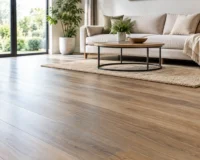
For several years, cooler palettes dominated kitchens, bathrooms, and commercial interiors. In 2026, the market continues to move toward warmer neutrals and grounded tones. Think soft limestone beiges, creamy whites, mushroom grays, sand, clay, walnut, olive, and muted terracotta. These shades bring depth without overwhelming a room, which is why they work so well in both modern and classic settings.
This warmer palette is especially effective in spaces where people want a calm, refined finish rather than a highly decorative statement. In bathrooms, it creates a spa-like feel. In kitchens, it pairs beautifully with timber cabinetry, brushed metal finishes, and natural stone countertops. In hospitality or retail spaces, it helps create an environment that feels premium and welcoming at once.
That said, warm tones are not automatically easier. They need balance. Too much beige can fall flat if there is no textural contrast, and clay-based colors can feel heavy in rooms with limited light. The strongest schemes use tonal variation, layered finishes, and thoughtful grout selection to keep the palette sophisticated.
Large-format tile stays strong, but with a softer look
Large-format porcelain remains a defining choice because it delivers visual continuity and a distinctly high-end finish. Fewer grout lines make a room feel more expansive, and in practical terms, they simplify cleaning in many applications. In 2026, however, the appeal is less about stark minimalism and more about calm visual flow.
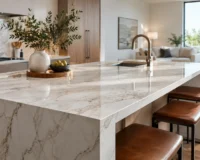
Stone-look porcelain in larger sizes is leading this shift. Instead of crisp, high-contrast marble effects alone, buyers are leaning toward softer veining, subtle movement, and mineral-inspired surfaces that mimic travertine, limestone, and concrete with more nuance. These finishes suit walls and floors alike, making them particularly attractive for cohesive bathroom schemes and open-plan living areas.
There is a trade-off to consider. Large-format tile can look exceptional, but installation quality matters even more at scale. Surface preparation, leveling, and pattern planning all become more critical. For smaller rooms, oversized tile can still work beautifully, though it depends on the layout and the installer’s ability to minimize awkward cuts.
Slabs and oversized surfaces gain momentum
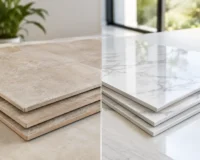
Porcelain slabs are also becoming more influential in premium residential and commercial design. Their appeal is obvious: streamlined surfaces, fewer joins, and a dramatic architectural finish. They suit bathrooms, feature walls, fireplaces, and kitchen applications where a cleaner, more monolithic look is the goal.
This is one of the clearest examples of luxury meeting practicality. You get visual impact, but you also need the right product for the right setting, plus experienced handling and installation. Slabs are not a casual choice. They are a design decision that pays off when the execution is right.
Texture is one of the biggest tile trends 2026 is pushing forward
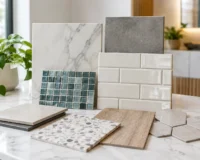
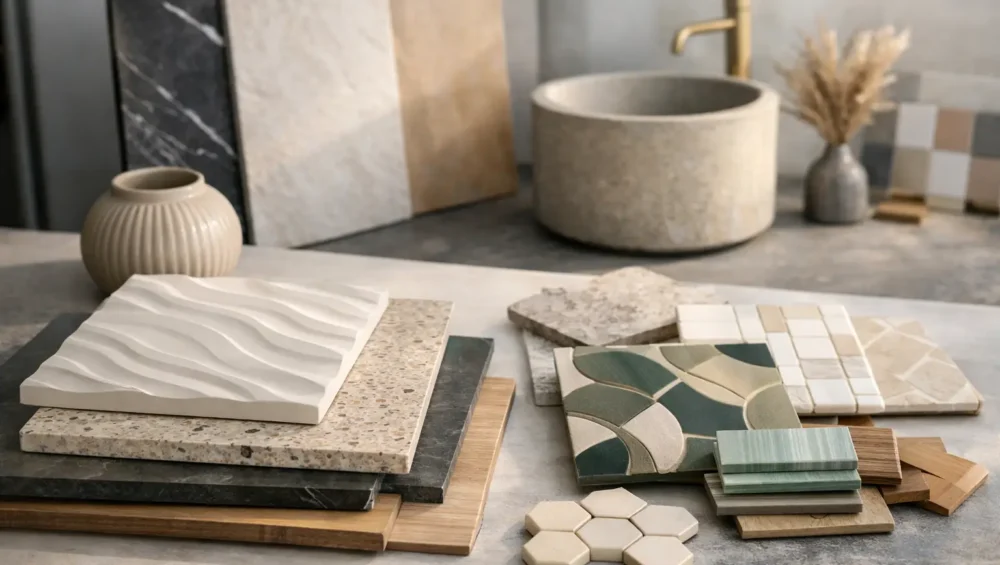
Flat, purely visual tile is giving way to surface texture that can actually be seen and felt. Fluted tiles, finger mosaics, handmade-look ceramics, ribbed finishes, and softly undulating wall tiles are becoming central to feature design. They catch light differently across the day and add a layer of depth that paint simply cannot deliver.
This matters because many contemporary interiors now rely on a restrained palette. When the color story is quiet, texture becomes the detail that keeps the room interesting. A softly ridged tile behind a vanity, a stacked mosaic splashback, or a tactile wall finish in a powder room can transform a simple scheme into something far more memorable.
Not every textured tile belongs everywhere, though. Deeply profiled surfaces can require more maintenance, especially in greasy kitchen zones or busy commercial settings. In wet areas, slip resistance and cleaning practicality should always be weighed alongside appearance. The most successful applications use texture intentionally rather than everywhere at once.
Stone looks become more authentic
Natural stone influence is everywhere in 2026, but the shift is not limited to classic marble. Travertine visuals, limestone-inspired porcelain, terrazzo finishes, and earthy stone interpretations are all gaining traction because they feel timeless without being predictable.
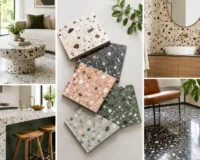
Travertine in particular is having a strong moment. Its layered movement and warm undertone give spaces an architectural softness that suits both minimalist and Mediterranean-inspired interiors. Limestone looks offer a quieter alternative for clients who want subtle elegance. Terrazzo continues to appeal where a more playful yet still premium finish is wanted, especially in powder rooms, bars, laundries, and commercial projects.
For many buyers, porcelain versions of these looks are the sweet spot. They offer the visual richness of natural materials with lower maintenance and broader application flexibility. Natural stone still has unmatched authenticity, but it is not always the most practical choice for every household or every project timeline.
The return of artisanal detail
At the same time, perfectly uniform surfaces are losing ground to tiles with handcrafted character. Zellige-inspired gloss, variation in edge and tone, encaustic patterns, and artisanal ceramics all bring individuality into a scheme. These styles work best when they are given room to speak.
A full room in heavily varied tile can feel busy, but a kitchen backsplash, fireplace surround, niche, or small feature wall can carry that handcrafted energy beautifully. The appeal is emotional as much as visual. These surfaces feel collected and intentional, which is exactly what many premium projects are aiming for.
Pattern is more selective and more architectural
Pattern has not disappeared. It has simply become more disciplined. Rather than using bold decorative tile across entire floors, many designers are choosing patterned or mosaic tile in more curated ways. Borders, insets, shower floors, niches, and compact statement zones are replacing the all-over motif.
This gives pattern greater impact. It also helps a design age better. Highly decorative tile can be stunning, but if it dominates a major surface area, it may narrow future styling options. A more focused application preserves flexibility while still delivering personality.
Layout is playing a larger role too. Straight stack, vertical stack, herringbone, kit-kat arrangements, and mixed-format compositions are being used to create interest even when the tile itself is restrained. In other words, shape and installation pattern are becoming as influential as color.
Outdoor and wellness spaces drive new surface choices
Another important shift in tile trends 2026 is the growing connection between indoor style and outdoor living. Homeowners want pool surrounds, patios, alfresco kitchens, and transitional thresholds to feel integrated with the interior palette. That means more demand for pavers and exterior tiles in coordinated tones and finishes.
Slip resistance, heat performance, and durability remain essential outdoors, but clients no longer want to compromise on appearance to get them. They want the same elevated stone looks, warm neutrals, and architectural presence outside as they do inside.
Wellness-led design is shaping bathrooms in a similar way. Spaces are becoming calmer, more layered, and more immersive. This is where textured wall tile, spa-toned porcelain, mosaics, and natural-looking surfaces really come into their own. The visual goal is luxury, but the emotional goal is relief.
How to choose from the top tile trends 2026 offers
The smartest way to approach trend-led tile is to separate lasting direction from short-term novelty. Warmth, texture, stone-inspired movement, and larger formats all have staying power because they answer how people want spaces to feel now – comfortable, elevated, and quietly distinctive.
What matters most is suitability. A dramatic handmade gloss may be perfect for a powder room and less practical for a hard-working family kitchen. A porcelain slab may look extraordinary in a primary bath but be unnecessary in a compact remodel with budget constraints. Trend awareness is useful, but project context should always lead.
That is where a curated product selection makes the process easier. Brands like Mecca Tiles help narrow the field by offering premium surfaces that align design ambition with real-world performance, so the decision feels inspiring rather than overwhelming.
The most compelling interiors in 2026 will not chase every new idea. They will choose tile with confidence, using color, texture, and scale to create spaces that feel refined on day one and still look right years later.