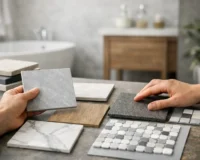
A small bathroom can feel sharper, brighter, and far more luxurious than its square footage suggests – but tile choice decides almost everything. The best tiles for small bathrooms do more than look attractive on a sample board. They shape how light moves, how wide the room feels, and how refined the finished space appears day after day.
That is why the right answer is rarely just “use white tile” or “go large format.” In a compact room, scale, grout lines, finish, slip resistance, and layout all work together. A tile that looks elegant in a showroom can feel busy in a powder room, while a simpler option can make a modest footprint feel calm and considered.
What makes the best tiles for small bathrooms?
The most successful small bathroom tiles create visual continuity. Fewer interruptions across the floor or wall usually make the room feel more open, which is why many designers lean toward larger formats, soft tonal palettes, and rectified edges with tighter grout joints. The goal is not to make the bathroom plain. It is to make it feel composed.
At the same time, practicality matters just as much as appearance. Bathroom tiles need to handle moisture, regular cleaning, and foot traffic without losing their finish. In wet areas, slip resistance becomes a non-negotiable, especially on the floor. This is where premium porcelain often stands out. It offers the elevated look of stone, concrete, or marble with excellent durability and easier maintenance.
Large-format tiles often work best
If there is one category that consistently performs well in compact bathrooms, it is large-format tile. A 12×24 or 24×24 tile can make a small room feel less segmented because there are fewer grout lines breaking up the surface. That cleaner visual field helps walls appear taller and floors feel broader.
This does not mean oversized tile is always the answer. In a very tight bathroom with multiple corners, niches, or awkward cuts, excessively large pieces can create more waste and a less balanced layout. The most polished result comes from choosing a format that suits the room dimensions rather than forcing the biggest tile available.
Large-format porcelain is especially effective when used on both floor and wall in a similar tone. That continuity creates a calm, architectural finish that feels premium rather than cramped.
Best large-format looks for small spaces
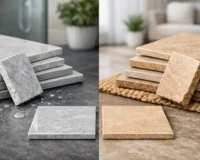
Stone-look porcelain in soft beige, warm greige, pale gray, or off-white is a strong choice when you want understated luxury. These tones reflect light well without the starkness that some bright white tiles can create. Concrete-look porcelain also suits modern bathrooms beautifully, particularly when paired with brushed metal fixtures and simple joinery.
Marble-look porcelain remains a favorite for clients who want a more elevated finish. In a small bathroom, the key is restraint. A subtle vein pattern usually works better than a dramatic, high-contrast design that can overwhelm the space.
Small tiles are not wrong – they just need purpose
There is a common assumption that small bathrooms should avoid small tiles altogether. That is not quite true. Mosaic tiles, kit-kat tiles, and other smaller formats can look exceptional in compact rooms when they are used with intention.
The issue is visual noise. Small tiles create more grout lines, and more grout lines mean more pattern and movement. On every surface, that can make a bathroom feel crowded. Used selectively, though, small tiles add texture, detail, and a tailored finish that larger tiles cannot always achieve.
A practical approach is to keep the main surfaces visually quiet and use smaller tiles in a feature zone, such as a shower niche, a vanity splashback, or one shower wall. This gives the room personality without sacrificing spaciousness.
Where mosaics work best
Mosaics are particularly useful on shower floors because they offer more grout joints underfoot, which can improve slip resistance on sloped surfaces. They also suit curved details or more intricate design moments. If you love mosaic, choose a tone that blends with the surrounding tile so the effect feels refined rather than busy.
Color matters more than people think
The best tiles for small bathrooms are often lighter, but lighter does not have to mean flat or clinical. Warm whites, soft sand, pale taupe, light greige, and muted stone tones tend to create a more inviting and expensive look than cooler, harsher whites.
Light colors help bounce natural and artificial light around the room, which immediately makes the space feel more open. They also allow premium details – brushed brass, matte black, timber vanities, sculptural basins – to stand out cleanly.
That said, dark tile is not off limits. A deep charcoal or moody stone-look porcelain can feel dramatic and luxurious in a small bathroom, especially if the lighting is well considered and the design is intentionally immersive. The trade-off is that dark finishes generally make a room feel more enclosed. If you choose them, commit to the mood rather than expecting the room to feel larger.
Gloss, matte, and texture
Finish changes the entire reading of a tile. Gloss tiles reflect more light, so they can help brighten a small bathroom, particularly on walls. They are often a smart option in powder rooms or bathroom walls where a crisp, luminous effect is the priority.
Matte finishes feel more contemporary and grounded. They are also popular for premium stone-look and concrete-look collections because they mimic natural materials more convincingly. On floors, matte or slip-rated finishes are usually the safer choice.
There is a balance to strike here. High-shine floor tiles may look elegant, but if they become slippery when wet, they are the wrong specification. Likewise, an overly textured wall tile may catch grime and require more effort to clean. The most successful bathrooms combine beauty with ease of living.
Layout can make a bathroom feel bigger
The tile itself matters, but layout is what gives it impact. Running rectangular tiles lengthwise can visually extend a narrow bathroom. Taking wall tile all the way to the ceiling can create height and a more custom finish. Continuing the same tile into the shower area reduces visual breaks and makes the footprint feel more generous.
Grout color also deserves attention. A grout that closely matches the tile creates a smoother, more expansive look. Strong grout contrast highlights every tile edge, which can be effective in some styles but often makes a small bathroom feel busier.
If you are choosing a patterned tile, use scale carefully. Delicate patterns can be elegant, but large repeats or high contrast designs may dominate the room. In compact spaces, quieter pattern usually has more longevity.
The best tile materials for small bathrooms
Porcelain is often the leading choice because it brings together durability, low maintenance, and design flexibility. It performs beautifully on both floors and walls and is available in premium looks that range from limestone and terrazzo to marble and concrete.
Ceramic can also work well on walls, especially when a decorative finish or glossy surface is part of the design direction. It is often slightly less dense than porcelain, so material placement matters.
Natural stone offers unmistakable character, but it does require more care. In a small bathroom where every surface is on show, that authenticity can be stunning. Still, it is best chosen by those who are comfortable with sealing and ongoing maintenance. For many homeowners and design professionals, stone-look porcelain delivers the same visual richness with a more practical outcome.
Smart combinations that consistently look premium
Some pairings simply work. A soft stone-look porcelain floor with matching walls creates a calm, spacious envelope. White or warm ivory wall tile with a pale terrazzo floor brings interest without clutter. A marble-look porcelain wall paired with a subtle mosaic shower floor feels timeless and high-end.
Vertical stack bond in a glossy subway-style tile can also suit small bathrooms, but the color and grout need to stay controlled. This is where premium selection matters. Better tile bodies, more refined glazing, and cleaner edges produce a sharper result.
For clients sourcing design-led finishes, Mecca Tiles offers the kind of curated selection that makes this process easier – luxury surfaces that feel elevated, practical, and ready to transform compact bathrooms into spaces with real presence.
What to avoid in a small bathroom
The biggest mistake is choosing tile in isolation. A beautiful sample can still be wrong if the scale fights the room, the finish is hard to maintain, or the pattern competes with the vanity, lighting, and fittings.
It is also worth being cautious with too many feature moments. A patterned floor, textured walls, contrasting grout, bold niche tile, and statement stone vanity may each be attractive on their own, but together they can make a small room feel crowded. In compact bathrooms, editing is what creates sophistication.
If you want the room to feel larger, keep transitions minimal, tones cohesive, and materials intentional. Let one element lead, then support it with quieter surrounding surfaces.
The best small bathrooms are not necessarily the palest or the simplest. They are the ones where every finish feels considered, and nothing interrupts the sense of flow. Choose tile with that in mind, and even the smallest room can feel calm, expansive, and unmistakably premium.