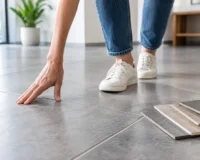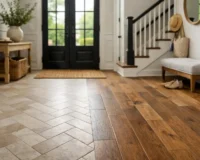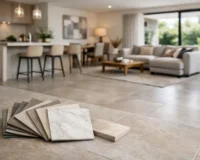
A beautiful floor should feel as considered underfoot as it looks from across the room. Tile slip ratings provide the practical detail behind that confidence, helping you balance a surface’s visual finish with the grip needed for its setting. Whether you are selecting limestone-look porcelain for a spa-like bath or architectural pavers for a pool terrace, the right rating helps turn a refined design decision into a safer long-term investment.
Slip resistance is not a one-size-fits-all specification. A tile that performs beautifully in a dry living area may not be suitable beside a pool, while a highly textured exterior paver can feel unnecessarily aggressive in a formal dining space. The aim is not simply to choose the highest possible rating. It is to choose a premium surface with the right level of traction for the way the space will actually be used.
What Tile Slip Ratings Measure
Slip resistance describes how much friction a tile surface provides when someone walks on it. Ratings are determined through controlled testing, but the test method matters. A number on a specification sheet is useful only when you understand what it measures and where it applies.
For many US projects, the most familiar measure is the Dynamic Coefficient of Friction, often shown as DCOF. This assesses a wet tile surface under a standardized test and is commonly used when specifying level interior floors that may become wet. A DCOF AcuTest value of 0.42 or higher is widely referenced for interior, level walking surfaces expected to be wet in use.
That threshold is a practical benchmark, not a blanket guarantee against slips. Footwear, cleaning products, water volume, slope, drainage, maintenance, and the user’s movement all affect real-world performance. It also does not automatically determine suitability for ramps, exterior stairs, pool surrounds, or commercial settings with demanding traffic patterns.
You may also see an R rating, particularly on porcelain tile and pavers. This European ramp-test classification runs from R9 to R13. In simple terms, higher R values indicate greater slip resistance for shod foot traffic on inclined surfaces. R9 is often used for lower-risk dry areas, while R10 and R11 are common choices for spaces where more dependable traction is needed. R12 and R13 are typically reserved for very demanding commercial, industrial, or wet-work environments.
Because DCOF and R ratings are created through different tests, they should not be treated as direct equivalents. Rather than trying to convert one figure into another, review the stated test method and discuss the tile’s intended application with your designer, builder, or project professional.
Tile Slip Ratings by Room and Setting
The most successful specifications begin with the room, not the rating. Consider how often the surface will get wet, whether people are likely to be barefoot, the type of shoes commonly worn, and how quickly spills or rain can be managed.
Bathrooms and laundries
Bathrooms call for a thoughtful middle ground. Floors need enough grip for damp bare feet, yet the finish should still support the calm, elevated look of the room. Matte porcelain, softly textured stone-look tile, and smaller-format mosaics are strong options. Mosaic sheets create additional grout joints, which can add traction in shower floors and other wet areas.
A polished large-format tile can make a striking statement on a bathroom wall, but it is usually better reserved for vertical surfaces or dry zones. For the main floor, choose a tile with a finish and documented rating suited to wet interior use. Shower floors deserve separate attention because they are regularly wet, often soapy, and usually sloped toward a drain.
Laundry rooms experience intermittent spills rather than constant water exposure, but a matte finish remains a sensible choice. It pairs everyday practicality with a polished, design-led appearance.
Kitchens and living spaces
Residential kitchens need durability and easy care, but they do not always require the same level of texture as a shower or pool deck. A quality matte or satin porcelain tile offers a sophisticated balance: refined enough for an open-plan interior, yet more forgiving around the occasional splash or dropped glass.
In living rooms, dining rooms, and bedrooms, the surface is generally dry. Here, visual continuity may lead the selection process. A low-slip matte finish can still be a wise choice in homes with young children, pets, aging residents, or direct access from an outdoor entertaining area. The best luxury interiors account for the life happening in them.
Pool decks, patios, and exterior paths
Outdoor tile selection demands a more rigorous view of slip resistance. Rain, pool water, sunscreen, bare feet, and changing temperatures all influence performance. Look for exterior-rated porcelain pavers or tiles with an appropriately textured finish and a rating specified for the conditions of the project.
Barefoot pool areas require more than a rating designed around shoes. Ask specifically whether the product is recommended for wet, barefoot applications. Surface temperature, drainage, edge detailing, and the transition from indoor to outdoor flooring matter just as much. A beautifully textured paver with standing water around it is not a complete safety solution.
For covered patios, the exact requirement may differ from an exposed deck. Even so, wind-driven rain and wet shoes should be considered. Selecting the same collection in a smoother indoor finish and a higher-grip outdoor finish can create a cohesive indoor-outdoor scheme without forcing one surface to do every job.
Commercial entrances and hospitality spaces
Commercial projects have more variables: traffic volume, cleaning schedules, footwear, weather exposure, accessibility requirements, and local building codes. An entry vestibule may face rain and grit from the street, while a restaurant dining room must balance serviceability with a welcoming atmosphere.
For these settings, do not specify by appearance alone. Confirm test results, installation conditions, and code requirements early in the design process. A professional installer or architect can also advise on transitions, drainage, entrance matting, and stair nosings – details that support safer circulation beyond the tile itself.
Finish, Texture, and the Design Trade-Off
A higher slip rating often comes from added surface texture. That can be ideal outdoors, but texture may also hold dirt more readily and require closer attention during cleaning. In a luxury home or boutique commercial interior, the right answer may be a finely textured porcelain rather than an aggressively rough surface.
Finish changes the visual character, too. Polished tile reflects light and gives walls a luminous, tailored presence. Matte surfaces have a quieter, more contemporary elegance and tend to disguise water marks and everyday residue. Structured finishes bring tactile depth and outdoor-ready performance, especially in stone-look pavers and architectural porcelain.
Natural stone needs particular care when considering slip resistance. Its variation is part of its appeal, but porosity, finish, and sealing requirements differ from one stone to another. Honed stone may offer more grip than polished stone, yet it can still need a suitable sealer and a maintenance routine designed for the space. Always confirm the recommended use of the individual product rather than assuming every finish of a stone will perform alike.
How to Specify With Confidence
Start by requesting the technical information for the exact tile, color, size, and finish you are considering. A collection may include multiple finishes with different performance characteristics. Do not assume the indoor matte version carries the same rating as its exterior paver counterpart.
Next, assess the installation rather than the room name alone. Is the area level or sloped? Will water drain quickly? Is it an ensuite used by two adults, a busy family pool zone, or a hotel entrance exposed to weather? These details determine whether a standard wet-area specification is sufficient or a more specialized surface is appropriate.
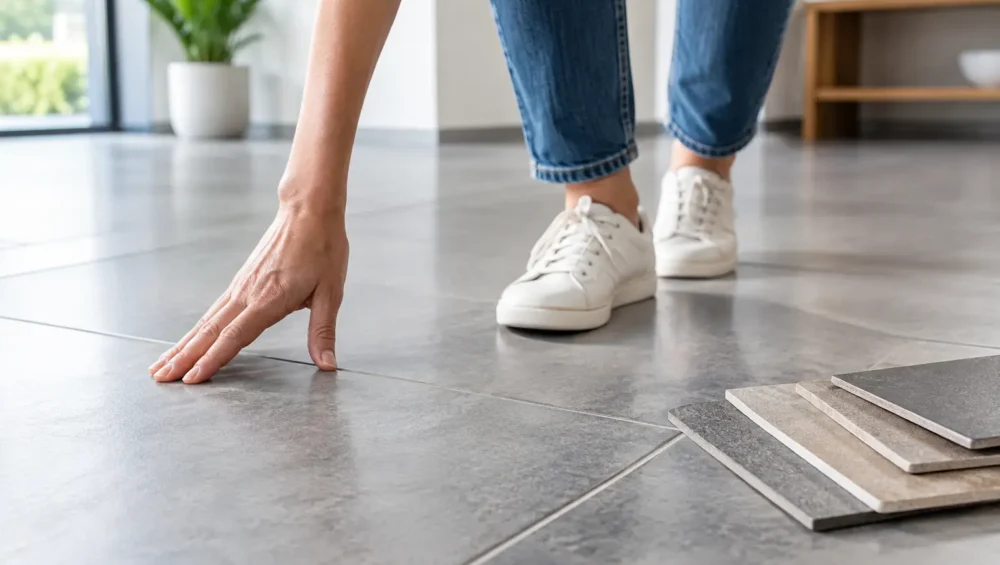
Samples are invaluable at this stage. View them in the project’s actual light, feel the texture underfoot, and compare finishes beside cabinetry, stone, or timber. A sample cannot replace formal test data, but it reveals the qualities a rating cannot: visual depth, tactile comfort, ease of cleaning, and how convincingly a tile supports the wider design.
Finally, treat installation and maintenance as part of the specification. Incorrect slopes, poor drainage, residue left by certain cleaning products, and worn sealers can reduce practical slip resistance over time. Use cleaning methods recommended for the material, keep exterior surfaces clear of algae and debris, and address water-management issues promptly.
A Surface That Feels Beautifully Considered
The most elegant tile choices are never only about appearance. They bring together proportion, texture, durability, and a feeling of ease in daily use. By reading tile slip ratings in context, you can select surfaces that elevate a bathroom, kitchen, terrace, or commercial space while giving every step the considered confidence a premium project deserves.