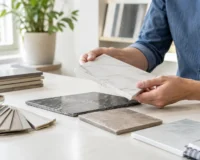
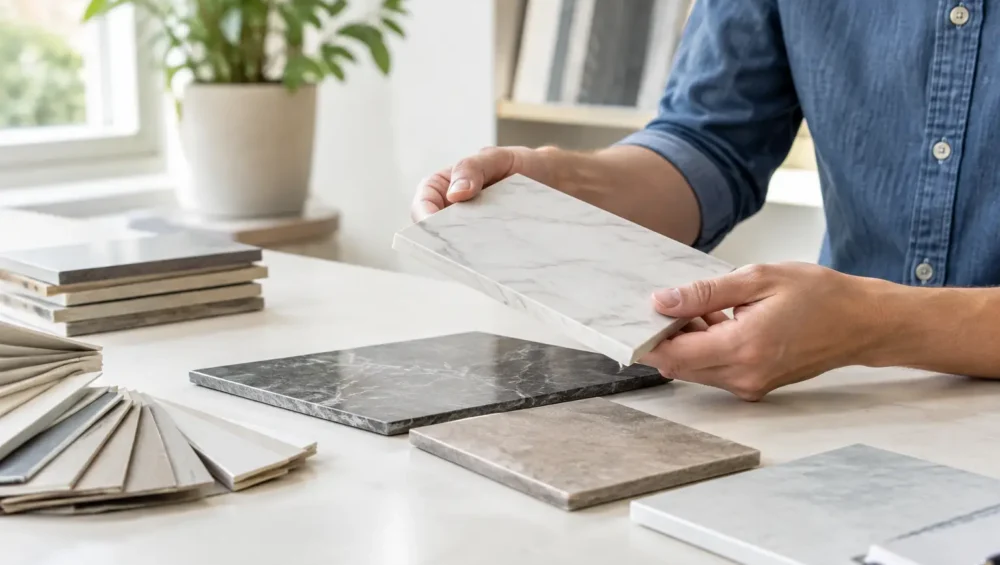
A tile can look extraordinary in a product image, then feel entirely different once it meets the natural light, cabinetry, paint, and proportions of your own space. That is why a thoughtful tile sample review is not a minor step in the selection process. It is how you move from an appealing idea to a finish that feels considered, elevated, and right for everyday living.
A sample gives you something a screen cannot: the chance to see a surface in context. Whether you are specifying a quiet limestone-look porcelain for a bathroom, a richly veined marble for a kitchen, or a statement encaustic tile for an entry, reviewing the material at home helps protect both the design vision and the investment.
Start Your Tile Sample Review in Real Light
Light has a powerful effect on tile color. A warm white that appears creamy in a showroom may read cooler beside crisp white cabinetry. A charcoal porcelain may seem almost black in a dim hallway, while its subtle blue undertones emerge in strong afternoon sun. Even a tile described as beige can range from soft sand to pink taupe depending on its surroundings.
Place your sample in the room where it will be installed and view it at several points during the day. Morning light, direct midday sun, overcast conditions, and artificial evening lighting each reveal something different. Hold the sample vertically against the wall for wall tile, then lay it flat for flooring. The angle changes how the finish catches the light, particularly with gloss, satin, handmade-look, and textured surfaces.
If the project includes both indoor and outdoor areas, review samples in each location. A porcelain paver that feels calm indoors may look much brighter in full sun. Likewise, a pale pool tile deserves to be seen near water, where reflections can shift its apparent color and movement.
Look Beyond Color to Surface Character
The most successful interiors are rarely built on color alone. Texture, variation, edge detail, and finish are what give a tiled surface presence. During your tile sample review, run your hand across the material and look at it from close range as well as from several feet away.
A matte porcelain often creates a soft, architectural foundation that suits contemporary bathrooms, kitchens, and high-traffic floors. Gloss tile reflects more light and can make a compact space feel brighter, but it also makes water marks and fingerprints more visible in certain settings. A natural stone sample may show delicate pitting, veining, or fossil detail – characteristics that make the surface distinctive rather than imperfect.
For handmade-look ceramic, zellige-inspired tile, terracotta, and encaustic designs, variation is part of the appeal. One sample may not show the complete range of shade, texture, or pattern you will receive across an installation. Ask to see the broader visual character of the collection, especially when choosing a tile with intentional tonal movement. This is not a reason to avoid variation. It is a reason to specify it with confidence.
Check the Finish at the Angle You Will See Most
A wall tile behind a vanity is usually seen straight on, while a floor tile is viewed at a shallow angle. This matters. Slight lippage, surface texture, and sheen can become more noticeable on a floor, especially near large windows or under directional lighting.
Lay floor samples where daylight travels across the room. For backsplash tile, position the sample beneath under-cabinet lighting if possible. You are not only evaluating how the tile looks in isolation, but how it will perform as part of the room’s daily rhythm.
Test Scale Before Committing
Tile size changes the visual balance of a room. Large-format porcelain can make a space feel refined and expansive because it creates fewer grout lines. It also requires a suitably flat substrate and careful installation, particularly with oversized formats and porcelain slabs. A smaller tile, meanwhile, can bring detail, grip, and flexibility around drains, curves, niches, and awkward dimensions.
A single sample can make a large tile feel more dramatic than it will be once installed. To understand scale, use painter’s tape to mark the tile dimensions on the wall or floor. Repeat the outline to show several pieces together. This quick exercise reveals whether a format feels generously proportioned or overly dominant in the room.
Pattern direction deserves the same attention. A marble-look porcelain with strong veining can look elegant when the pieces are oriented intentionally, yet busy if the pattern is allowed to compete with an already expressive countertop or cabinetry finish. For patterned tile, consider how much of the room will be covered. A small sample can feel playful, while an entire floor may become the defining visual moment.
Compare the Sample With Fixed Finishes
Bring the tile together with the elements that are least likely to change: cabinet doors, countertop samples, paint swatches, plumbing finishes, timber flooring, and fabric selections. This is where a surface begins to feel like part of a complete scheme rather than a standalone product.
Pay close attention to undertones. Warm oak cabinetry often pairs beautifully with creamy white, clay, olive, or softly veined stone surfaces. Cool gray tile can work with pale ash timber and brushed nickel, but may feel disconnected beside strongly yellow-based whites. Black fixtures are versatile, although they can make a cool tile appear even cooler and sharpen the contrast in a small room.
Do not try to make every finish match exactly. Premium spaces usually feel more layered when materials relate through undertone, scale, or texture rather than identical color. A warm travertine-look floor, for example, can sit beautifully beside off-white cabinetry and antique brass, even though none of those elements are the same shade.
Assess Suitability, Not Just Style
A beautiful tile still needs to be appropriate for its setting. In wet areas, the finish, slip resistance, installation method, and grout selection all shape long-term performance. In busy kitchens, mudrooms, commercial entries, and outdoor entertaining areas, durability and maintenance should carry as much weight as appearance.
Porcelain is often selected for its exceptional practicality. It can offer the look of natural stone, concrete, timber, or terrazzo while delivering a dense, hard-wearing surface suited to many residential and commercial applications. Natural stone offers depth and individuality that is difficult to replicate, but it may require sealing and more tailored care depending on the material and application.
The right choice depends on the project. A honed stone may be perfect for a quiet powder room where atmosphere is the priority. A textured porcelain may be the smarter choice around a pool or in a family entry where wet feet, pets, and daily traffic are expected. Your sample review should include an honest conversation about how the space will be used, not only how it will photograph.
Consider Grout Earlier Than You Think
Grout can soften a tile installation or make every individual piece more pronounced. Place a grout color card, or even painted paper strips, beside your sample to test the effect. A closely matched grout creates a calmer, more continuous surface. A contrasting grout emphasizes shape and layout, which can be especially effective with subway, kitkat, hexagon, or mosaic tile.
Grout width matters too. Large-format rectified porcelain often supports a slimmer joint for a clean, tailored appearance. Handmade-look tile typically benefits from a joint that respects its irregular edges and crafted character. The sample is the ideal place to test this visual relationship before work begins.
Order Enough Samples for a Clear Decision
One sample is useful, but multiple samples can be transformative when you are comparing undertones, formats, or finishes. Order the leading options and place them side by side in the actual room. For a major floor, bathroom, or kitchen project, a few days of observation is far more valuable than a rushed choice made from a browser tab.
At Mecca Tiles, sampling supports a more assured way to shop premium surfaces: one that lets design ideas meet real rooms before the final selection is made. Keep notes as you compare options. Notice which sample still feels considered after several viewings, not just which one makes the quickest first impression.
The best tile choice is often the one that continues to look composed as daylight changes, furnishings arrive, and daily life begins. Give your samples that opportunity, and the finished space will feel less like a compromise and more like the room you intended to create.