A steam room is not simply a wet bathroom with a bench. It is a high-heat, high-humidity environment where every surface is tested by condensation, temperature change, and constant moisture. The best tiles for steam rooms combine very low water absorption with a finish that feels luxurious underfoot and looks considered from every angle.
Tile choice sets the tone for the entire experience. A pale porcelain can create the calm of a private wellness retreat, while jewel-toned glass mosaic brings depth and light to a compact steam enclosure. The right material also makes the practical side of ownership far easier, helping the space stay beautiful long after installation day.
What Steam Room Tile Needs to Handle
Steam does not stay politely contained. It settles on walls, ceilings, benches, grout joints, and fittings, then repeatedly heats and cools. This cycle makes material selection and installation details equally important. A tile may look perfect in a regular bathroom yet be a poor choice for a fully enclosed steam room.
Start with absorption. Dense porcelain and glass are leading choices because they are effectively nonporous, so they do not readily take on moisture. That quality supports hygiene, simplifies cleaning, and reduces the risk of moisture-related deterioration behind the finished surface.
Surface grip matters, too. Floors and benches become wet quickly, particularly in a room designed for relaxation. Select a finish with appropriate slip resistance for a wet interior, without choosing a texture so aggressive that it becomes uncomfortable to sit on or difficult to clean. Small-format tiles and mosaics are especially useful on floors because the extra grout joints add natural traction.
Finally, consider scale. Steam rooms often include curved benches, recessed niches, sloped floors, and sometimes a gently vaulted ceiling. Flexible mosaics suit these details beautifully. Larger tiles can make a more generous room feel calm and expansive, but they require careful cutting and planning around falls, drains, and fittings.
Best Tiles for Steam Rooms by Material
Porcelain tile: the refined all-rounder
Porcelain is often the strongest all-purpose choice for steam room walls, floors, ceilings, and seating surrounds. Its low porosity, strength, and broad design range make it ideal for projects where high performance must sit comfortably beside a polished interior scheme.
A porcelain tile can deliver the soft mineral movement of stone, the warmth of concrete, or a clean architectural solid color without the same maintenance demands as many natural materials. Large-format porcelain brings a quiet, spa-like effect to walls by reducing visual interruption from grout lines. For the floor, a smaller coordinating porcelain or mosaic format gives better traction and makes it easier to form the required slope toward the drain.
The trade-off is visual character. Even exceptional stone-look porcelain is manufactured rather than naturally quarried, so homeowners drawn to one-of-a-kind veining may prefer natural stone. For most steam rooms, however, porcelain offers the best balance of luxury, resilience, and everyday practicality.
Glass mosaic: luminous and made for curves
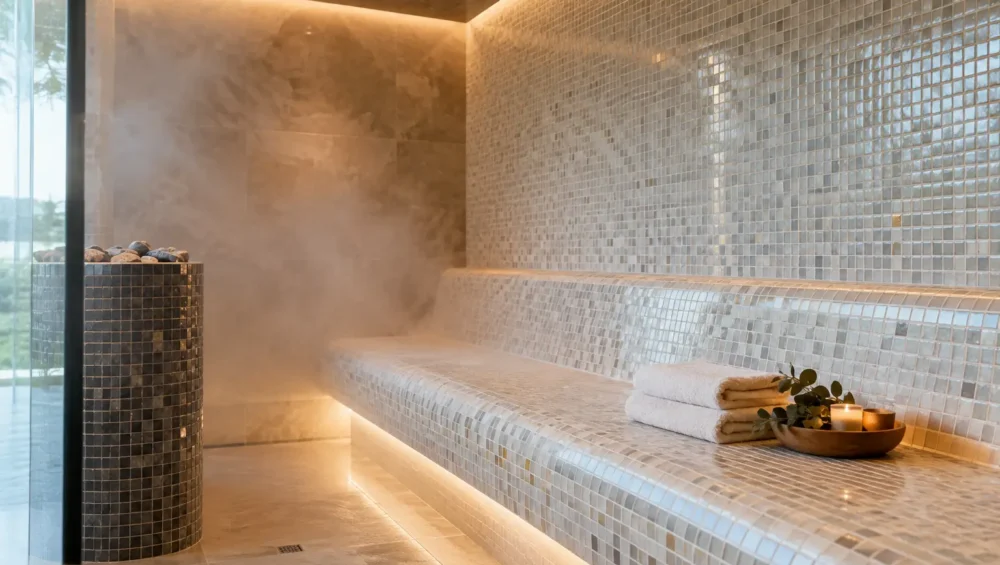
Glass mosaic is a classic steam room finish for good reason. It is nonabsorbent, resistant to staining, and naturally reflective. Light catches its surface and gives the room a watery luminosity that larger matte tiles cannot replicate.
This material is particularly compelling for curved walls, domed ceilings, benches, and feature niches. Its small pieces conform to gentle contours, while its joints provide welcome grip on wet floors. Choose a quality mosaic with a suitable backing and installation system rated for steam applications, rather than assuming every mesh-mounted sheet is appropriate.
Glass does have a more distinctive personality. A full room in iridescent mosaic can feel glamorous and immersive, but it may not suit a restrained, stone-inspired home. It can also show soap film and water spotting more readily than a soft matte porcelain. Pairing glass mosaic with large-format porcelain is an elegant solution: use porcelain for the envelope, then reserve glass for a feature wall, ceiling inset, or niche.
Porcelain mosaic: practical detail with design freedom
Porcelain mosaic provides many of the installation benefits of glass mosaic in a more understated finish. It is an excellent selection for steam room floors, bench tops, and curved details, particularly when a honed, matte, or tactile look is preferred.
Available in penny rounds, kit kat profiles, hexagons, fingers, squares, and geometric patterns, porcelain mosaics can shape the room’s character without compromising performance. A tonal mosaic floor in warm ivory, charcoal, or mineral green makes the floor feel intentional rather than purely functional.
Because mosaics have more grout joints, grout selection deserves extra attention. The look is worth it, but it means more lines to maintain than a large-format wall tile. A high-quality epoxy grout is often favored in steam environments for its resistance to moisture and staining, though it should be installed by an experienced professional due to its demanding working time.
Natural stone: beautiful, but specification matters
Natural stone can give a steam room extraordinary depth. Honed marble, limestone, travertine, and slate each bring variation that cannot be replicated exactly. For a bespoke residential spa, that organic movement can be the entire point.
Yet stone is not a universal answer. Many stones are more porous than porcelain or glass and require sealing, periodic care, and a well-designed waterproofing system. Some varieties are more sensitive to acids, cleaners, or persistent moisture than others. Polished stone may also be too slippery for floors or benches.
If natural stone is central to the design vision, use it thoughtfully. A denser stone on walls can be paired with a slip-conscious porcelain mosaic floor. Honed finishes are generally more forgiving in wet settings than polished finishes, and selecting a stone suited to the application is essential. This is where samples are valuable: assess the color, surface feel, and movement under the lighting planned for the room.
Do Not Treat Grout and Waterproofing as Afterthoughts
The tile is the visible luxury, but the waterproofing assembly is the protection behind it. A steam room should be built as a complete system by a qualified installer familiar with vapor management, waterproof membranes, compatible adhesives, movement joints, and sloped drainage. Tile and grout alone do not make a steam room waterproof.
For grout, epoxy offers excellent stain and moisture resistance and is a strong premium option for many projects. High-performance cementitious grouts can also be suitable when correctly specified. The ideal choice depends on the tile, joint size, desired finish, and installer expertise.
Use color intentionally. Matching grout to the tile creates a serene, continuous look, especially with porcelain or stone. A contrasting grout can elevate a small-format mosaic or graphic layout, though strong contrast makes every alignment decision more visible. In a compact steam room, a tonal palette usually feels more restful.
Choosing the Right Finish for Floors, Walls, and Ceilings
A well-designed steam room does not need one tile everywhere. In fact, combining formats often creates a more refined result. Large-format porcelain on walls minimizes joints and establishes a clean backdrop. A smaller mosaic on the floor handles drainage gracefully and provides grip. The same mosaic can continue over the bench face or into a niche for a tailored, cohesive detail.
For ceilings, prioritize a tile that complements the walls and a system appropriate for the installation. Small mosaics are often a natural fit for curves and arches, while a flat ceiling can carry a larger porcelain format if the substrate and adhesive system are properly specified.
Color changes the perception of heat and space. Warm whites, sand, mushroom, and pale gray create an airy retreat. Deep green, midnight blue, oxblood, or charcoal can turn a small enclosure into a cocooning, hotel-inspired escape. Gloss finishes amplify available light, while matte surfaces bring a softer, more architectural mood.
A More Confident Way to Select Your Tile
Begin with function, then refine the look. Confirm that your preferred tile is suitable for a steam environment, decide where extra grip is needed, and plan your floor format around drainage before falling in love with a wall tile. From there, consider the room as a complete composition: lighting, metal finishes, bench profile, grout color, and whether the tile needs to coordinate with an adjoining shower or bathroom.
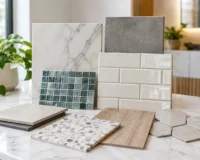
Ordering samples lets you see how a surface responds to your actual lighting and neighboring finishes. Hold the tile against cabinetry, stone, and fixtures. Wet a small portion to understand its depth of color and feel. For designers and renovators balancing a premium vision with real-world performance, this small step can prevent expensive compromises later.
The most successful steam rooms feel effortless because every detail has been chosen with purpose. Whether you prefer quiet porcelain, luminous glass mosaic, or carefully specified natural stone, select a surface that makes relaxation feel beautifully built in.