A laundry room works harder than its size suggests. It sees dripping clothes, detergent splashes, heavy appliance vibration, baskets dragged across the floor, and the occasional minor leak. Yet it is also a room you may pass through every day. The right tile turns this utility space into a polished, purposeful part of the home – one that feels as considered as the kitchen or bath.
Knowing how to choose laundry tiles starts with a simple shift in priorities: select for performance first, then use color, scale, and texture to create the finish you want. A beautiful surface that is difficult to clean or too slippery when wet will quickly lose its appeal. A well-chosen tile, by contrast, can bring lasting style to one of the home’s most practical rooms.
Begin With the Demands of the Room
Laundry tiles need to handle moisture, but this does not mean the room has to look purely functional. Porcelain is often the leading choice for floors and walls because it is dense, low-porosity, and exceptionally easy to maintain. It performs beautifully around washing machines, utility sinks, and drying racks while offering an expansive range of stone, concrete, timber, and handcrafted looks.
Ceramic tile can also be an excellent wall finish, particularly for a backsplash above a counter or sink. It is often a more economical way to introduce gloss, soft color, or decorative detail where foot traffic is not a concern. For floors, however, choose a product rated for the intended use rather than assuming every ceramic tile will stand up to the same level of wear.
Natural stone creates undeniable depth and luxury, from quiet limestone to richly veined marble. It can be an exquisite choice in a carefully designed laundry, especially when the space connects to a mudroom, powder room, or custom cabinetry. The trade-off is maintenance. Stone generally needs sealing and more considered care than porcelain, so it suits homeowners who value its organic character and are comfortable with that commitment.
How to Choose Laundry Tiles for Floors
The floor carries the greatest practical responsibility. Start with slip resistance, particularly if the laundry has an exterior entry, a pet-washing area, or a sink used frequently. Matte and lightly textured finishes usually provide more reassuring grip underfoot than highly polished surfaces. This is especially relevant when water, humidity, or wet shoes are part of the room’s routine.
A tile’s size also affects both appearance and upkeep. Large-format porcelain creates a clean, contemporary plane with fewer grout lines, making it a compelling option for spacious laundries. It can make a compact room feel calmer and more open, particularly in pale stone or concrete-inspired finishes.
Smaller tiles, mosaics, and patterned formats have their own advantages. More grout joints can provide additional traction, while a distinctive pattern can transform a narrow laundry into a memorable design moment. They are also useful where floors have several angles, drains, or complex details. The compromise is that additional grout means more lines to clean, so a quality grout color and finish matter.
For a high-traffic family laundry, a mid-tone floor is often the most forgiving choice. Very dark tile can show lint, pet hair, and detergent residue, while very pale floors may reveal muddy footprints. Warm gray, sand, taupe, muted green, and natural stone variations offer a refined balance between lightness and everyday practicality.
Do not overlook the tile finish
A finish changes how a floor lives, not just how it photographs. Polished tile can deliver a glamorous, light-reflecting effect, but it is generally better reserved for walls or lower-moisture applications. Honed, matte, satin, and structured surfaces tend to be better aligned with a hardworking laundry floor.
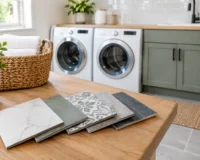
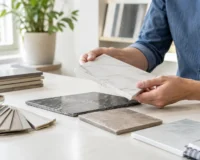
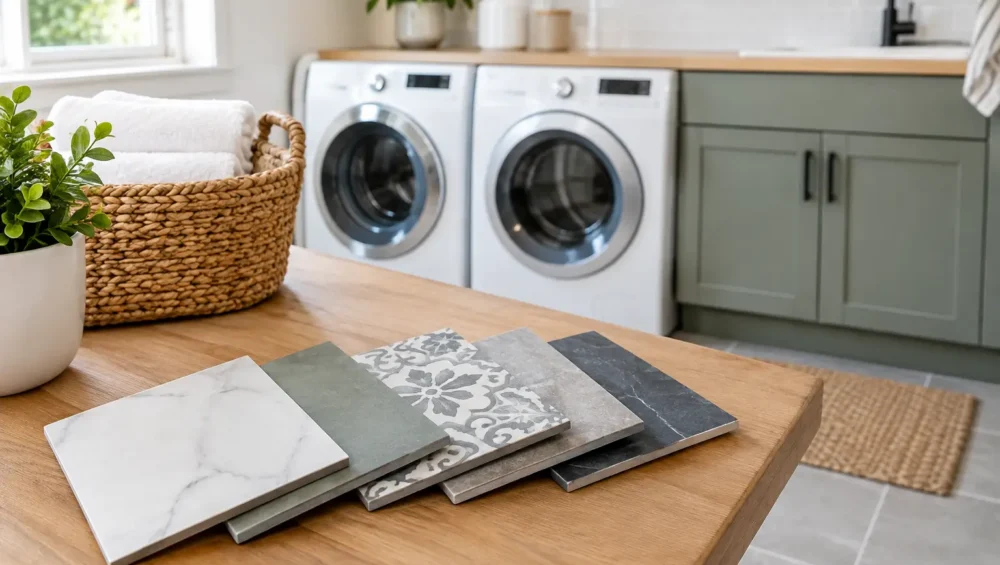
Requesting a sample is worthwhile before making a final decision. View it alongside your cabinetry, countertops, and wall paint in both daylight and artificial light. Run a damp hand over the surface, place it next to the proposed grout, and consider how its texture will feel under bare feet. Premium decisions are easier when the materials are seen in the actual space.
Make Walls Work Harder and Look Better
Wall tile is an opportunity to introduce personality without asking the floor to do everything. A tiled backsplash behind the sink protects plasterboard from water and cleaning products while adding a tailored finish. Extending the tile to the underside of upper cabinets is a classic proportion; taking it to the ceiling creates stronger architectural impact, especially in a compact room.
If your laundry is short on natural light, glossy or softly glazed wall tile can help bounce light around the space. White is timeless, but it is far from the only elegant option. Cream, pale blue, mineral green, and warm clay tones can soften a practical room and complement timber shelving or brass hardware.
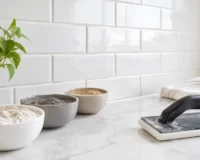
Subway tile remains a versatile choice, although its layout can make it feel distinctly more custom. A vertical stack gives the room height, a herringbone layout adds movement, and a tonal grout produces a quieter, more continuous surface. For a more expressive result, consider a handmade-look ceramic with gentle tonal variation. Its irregularity brings warmth to crisp joinery and industrial appliances.
Coordinate Tile With Cabinets, Counters, and Appliances
The most successful laundry rooms rely on contrast with restraint. If the cabinetry is richly grained timber or a deep painted color, a calm porcelain floor can ground the room without competing for attention. If the cabinetry is simple white or soft neutral, a patterned floor or textured wall tile can introduce character.
Think about the undertone, not only the named color. A cool gray tile beside a warm white cabinet can appear unexpectedly blue, while a beige tile with pink undertones may clash with yellow-based oak. Bring samples together rather than choosing each finish separately. This is particularly important in open-plan utility zones where the laundry floor meets nearby hallway, kitchen, or mudroom finishes.
Continuing the same tile from an adjacent space can create a composed, architectural flow. Alternatively, using a contrasting tile gives the laundry its own identity. Neither approach is automatically better. Continuity suits minimalist homes and small footprints; contrast is ideal when you want this hardworking room to feel intentional and distinct.
Choose Grout as Carefully as the Tile
Grout is not a background detail. It can make a tiled floor look expansive and quiet or graphic and patterned. A closely matched grout minimizes the grid and is generally easier to live with in larger-format floors. Contrasting grout emphasizes shape and layout, which can be striking on a wall but may require more regular cleaning in splash-prone areas.
For laundry floors, avoid choosing bright white grout solely for its fresh showroom appearance. It can show dirt quickly. A warm gray, mushroom, or mid-tone grout is usually a more practical partner for daily use. Ask your installer about grout suitable for the location and about sealing requirements, particularly for natural stone or cement-based decorative tiles.
Plan for Installation Before You Fall in Love With a Tile
Some of the best laundry tile choices depend on details that are decided before installation. Check the floor level, door clearances, appliance alcove dimensions, and whether a floor drain is required. A laundry with a drain may need carefully formed falls, which can influence the best tile size and format. Smaller tiles are often easier to lay neatly on sloped areas than large slabs.
Also consider skirting and transitions. A tiled skirting can offer a crisp, durable finish and protect walls from mops, baskets, and appliance movement. At doorways, a clean transition to timber, carpet, or another tile surface prevents the room from feeling like an afterthought.
For projects that call for a more elevated result, coordinate tile selection with cabinetry and countertop samples early. At Mecca Tiles, curated surface options make it easier to compare refined materials and find a finish that feels connected to the rest of your home.
A Laundry That Earns Its Place in the Home
The best laundry tile is not simply the toughest or the most dramatic. It is the surface that meets the room’s practical demands while reflecting the level of care you bring to the rest of your interiors. Choose a floor with confident grip, walls that protect and brighten, grout that suits real life, and a palette you will still enjoy after countless loads of washing. When every material has a role, even the most utilitarian room can feel quietly luxurious.