White tile can look quietly luxurious or sharply architectural, but the grout line decides which direction it takes. The best grout for white tiles is not automatically white: it is the option that supports your tile size, finish, room conditions, and the level of contrast you want to live with every day.
A white-on-white installation can make a compact bathroom feel expansive. A soft gray grout can give a kitchen backsplash definition without distracting from the tile. Charcoal grout creates a graphic grid that suits a more contemporary scheme, but it asks for precision because every line becomes part of the design. Selecting grout is therefore a finish decision, not an afterthought.
The Best Grout for White Tiles Depends on the Look
Start by deciding whether you want grout to disappear, gently frame each tile, or become a visible design feature. This choice has more influence over the finished room than a small difference in white tile shade.
White grout for a continuous, elevated finish
White grout is the classic pairing for white tiles. It creates a cohesive surface, allowing the scale, texture, and layout of the tile to take center stage. It is particularly effective with large-format porcelain, polished marble-look tile, and simple subway tile when the intention is clean, bright, and timeless.
The trade-off is maintenance. White cement-based grout can show cooking splatters, soap residue, and discoloration more readily than mid-tone or dark grout. In a low-traffic powder room or on a wall, that may be a worthwhile choice. In a busy shower or family kitchen, choose a high-performance stain-resistant formulation and maintain it consistently.
Avoid selecting white grout by name alone. Whites can lean warm, cool, creamy, or bright. Hold a grout sample beside the tile in the room’s natural and artificial light. A grout that appears pure white under showroom lighting may read slightly gray beside a warm ivory tile at home.
Light gray grout for definition without harsh contrast
For many projects, a pale gray is the most forgiving and versatile choice. It outlines white tiles with enough contrast to show the pattern while keeping the overall finish refined. It also conceals everyday marks better than bright white, making it an excellent option for kitchen backsplashes, bathroom walls, laundry rooms, and entry floors.
A warm light gray works beautifully alongside off-white ceramic, beige-veined stone looks, brass, oak, and warmer paint colors. A cooler gray suits crisp white porcelain, chrome fixtures, concrete-inspired finishes, and modern interiors. The difference is subtle, but it helps the whole palette feel considered.
Medium and dark grout for a graphic statement
Medium gray, charcoal, navy, and black grout give white tile a clear grid. This can be striking with square tile, herringbone, stacked subway tile, or a checkerboard-inspired layout. In restaurants, retail settings, and high-character residential spaces, this contrast can turn a simple white tile into an intentional architectural surface.
There are practical advantages too. Dark grout generally hides dirt better than white on floors, although it may reveal mineral residue or soap film in wet areas. The larger consideration is permanence: high-contrast grout makes uneven spacing, lippage, poorly finished cuts, and inconsistent joints more visible. It is best paired with skilled installation and a layout that has been planned with care.
Choose Grout Material for the Room, Not Just the Color
Color sets the mood, but grout performance protects the investment. The right product depends on whether the tiled surface faces moisture, stains, movement, and heavy foot traffic.
High-performance cement grout for most interiors
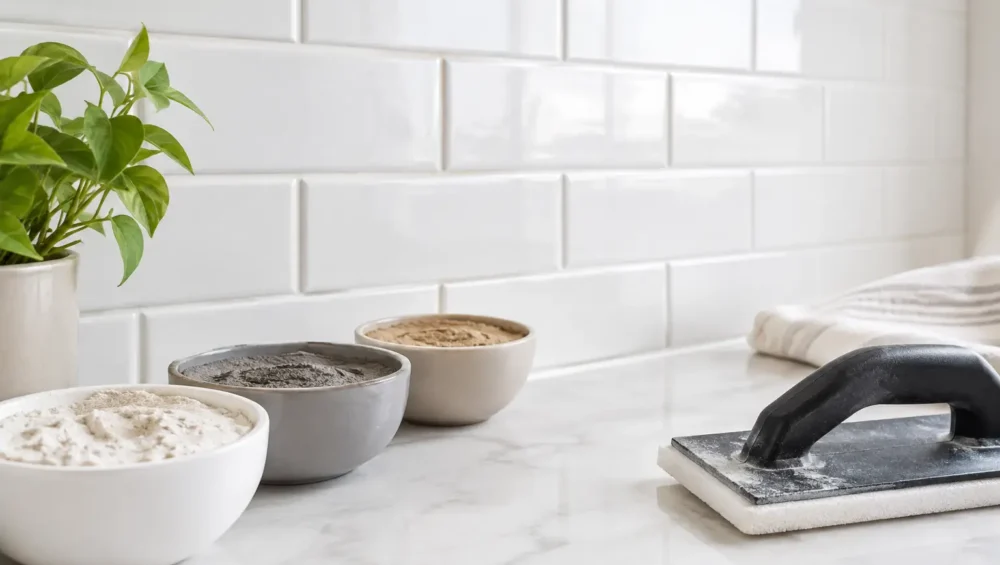
Polymer-modified or high-performance cement grout is a strong all-around choice for many residential tile projects. It is available in a broad color range, including whites and soft grays, and works well for backsplashes, bathroom walls, floors, and general interior applications when installed and sealed according to the product instructions.
This option is often easier to work with than epoxy grout and provides a classic matte grout finish. For white tile, seek a product with color consistency and stain resistance. Cheaper basic grout can dry unevenly, particularly in white or light shades, leaving a patchy appearance that compromises an otherwise premium installation.
Epoxy grout for demanding wet and stain-prone areas
Epoxy grout offers exceptional resistance to stains, moisture, and many household chemicals. It is an excellent contender for shower floors, heavily used showers, kitchen backsplashes exposed to oil, mudrooms, and commercial settings where cleaning demands are higher.
Its performance comes with a trade-off. Epoxy costs more and has a less forgiving installation process, so it is usually best handled by an experienced tile professional. It can also have a slightly different visual character from traditional cement grout. For a pristine white shower with minimum ongoing worry, however, the added investment can be justified.
Premixed grout for selected projects
Premixed grout products can be convenient for smaller wall projects and touch-ups, with good stain resistance and no mixing required. Their suitability varies by product and location. Do not assume that every premixed grout is appropriate for a shower floor, steam shower, exterior installation, or wide joint. Check the manufacturer’s permitted uses before specifying it.
Match Grout Joint Width to the Tile and Style
Grout is most convincing when its width reinforces the tile rather than fighting it. Rectified porcelain tiles, cut with precise edges, can often be installed with narrower joints for a restrained, contemporary appearance. Handmade-look ceramic, zellige-inspired tile, natural stone, and rustic terracotta usually benefit from a slightly wider joint that respects their variation and character.
Narrow joints do not make grout irrelevant. In fact, a small amount of contrast in a narrow joint can look especially polished because it emphasizes clean geometry without overwhelming the surface. Wider joints carry more color visually, so test samples are even more valuable when choosing a gray, colored, or dark grout.
For white mosaic tile, grout can make up a significant portion of the finished surface. White grout creates a luminous, continuous effect, while gray creates pattern and texture. In shower niches, poollines, and feature walls, this difference can change the entire mood of the space.
Consider Tile Finish and Undertone Before Selecting Color
A glossy, bright-white subway tile reflects light and can handle a crisp white grout without looking flat. Matte white porcelain may look more sophisticated with a soft warm gray, especially in a room with natural timber, limestone, or brushed metal finishes. Veined marble-look tile often benefits from grout that picks up one of the quietest veins rather than the dominant color.
With natural stone, use a grout suited to the stone and test it first. Some porous stones can be affected by pigments, moisture, or grout haze. A professional installer can advise on sealing and appropriate application methods so the grout complements the stone rather than creating an avoidable cleanup problem.
The same rule applies to handmade and textured tiles. Their edges and surface variation are part of their appeal, but they may catch more grout during installation. A sample board gives you a realistic view of both the grout color and the cleanup process before the full installation begins.
Practical Choices by Room
In a kitchen, light gray high-performance grout is often the sweet spot: clean enough for a fresh white-tile backdrop, yet practical around cooking splashes. If the backsplash is purely decorative and regularly wiped down, white grout offers a more uninterrupted look.
For shower walls, white or pale gray grout keeps the space open and spa-like. Use a moisture- and stain-resistant option, and remember that ventilation and regular cleaning matter just as much as grout color. On shower floors, a slightly deeper gray can be more practical, particularly with small mosaics and frequent use.
For a white tiled floor, consider a light-to-medium gray rather than pure white unless the space has very low traffic. This is especially relevant in entryways, laundry rooms, and commercial bathrooms. The floor can still feel bright and tailored without requiring constant attention.
Test Before You Commit
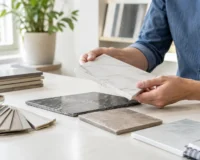
Grout samples are small, but the decision is not. View potential colors against your exact tile under morning light, evening light, and the room’s installed fixtures. If possible, create a sample board with a few tiles and the intended joint width. This reveals undertones, contrast, texture, and how the grout changes once dry.
Also consider the full visual field. A white tile and dark grout combination that looks compelling on one sample sheet may feel too busy across an entire bathroom. Conversely, a nearly invisible white grout may feel calm on a large shower wall but lack definition in a small backsplash. Scale changes perception.
The most successful white-tile spaces balance a clear design intention with the realities of daily use. Whether you choose crisp white, a forgiving gray, or a bold contrasting line, select a quality grout that earns its place beside the tile. Mecca Tiles can help you begin with the surface and sample-led inspiration that makes that final grout decision feel beautifully assured.