A kitchen surface can look exceptional in a showroom and still be wrong for the way you cook, clean, and live. That is why a porcelain slab benchtop review needs to look beyond its elegant stone-inspired finish. Porcelain slabs offer a compelling mix of dramatic design, low porosity, and everyday durability, but their performance depends on the slab specification, fabrication quality, and how the space will be used.
For homeowners, designers, and builders seeking a premium surface without the ongoing sealing demands of many natural stones, porcelain is a serious contender. It can create the quiet sophistication of marble, the depth of natural quartzite, or the bold presence of concrete, all in a large-format surface designed for modern kitchens.
Porcelain Slab Benchtop Review: The Real Appeal
Porcelain slabs are manufactured from refined natural minerals, pressed at high pressure and fired at extremely high temperatures. This production process creates a dense, non-porous surface with a consistent technical profile. In practical terms, it means that common kitchen spills have far less opportunity to penetrate the material than they do with porous stone.
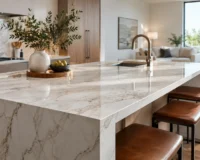
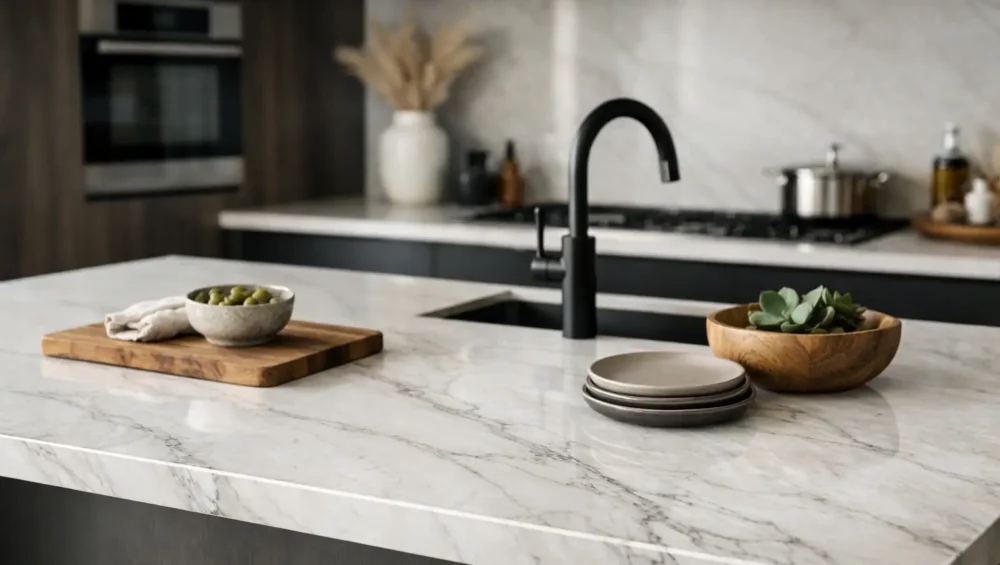
The visual opportunity is equally important. Large porcelain slabs minimize grout lines and visual interruption, allowing veining, movement, and color to read as one continuous architectural surface. A soft white marble-look porcelain can make a compact kitchen feel brighter and more expansive. A charcoal or richly veined slab can anchor a generous island with a more sculptural, luxurious feel.
Unlike a printed laminate or a thin decorative overlay, a quality porcelain slab has the substance and finish required for a high-end application. It is available in polished, matte, textured, and honed-look finishes, giving designers the freedom to match the surface to the room’s lighting, cabinetry, hardware, and overall mood.
That said, porcelain is not a universal substitute for every surface material. Its strengths are clear, but the details matter. The slab thickness, edge treatment, support beneath the material, and experience of the fabricator will have a major influence on the finished result.
How Porcelain Performs in a Working Kitchen
Heat and stain resistance
Porcelain performs exceptionally well around heat and food preparation. The dense, fired surface is highly resistant to heat, making it a confident choice near cooktops and for busy kitchens where hot cookware is regularly handled. It is still wise to follow the manufacturer’s care guidance and use trivets where appropriate, particularly to protect joins, cabinetry, and surrounding finishes rather than the slab alone.
Its non-porous nature is another major advantage. Coffee, red wine, citrus, cooking oil, and sauces are less likely to stain when spills are cleaned promptly. There is typically no need for routine sealing, which is a meaningful benefit for clients who love the look of natural marble but prefer a more relaxed maintenance routine.
Scratches, chips, and impact
Porcelain is highly scratch resistant under normal household use. It stands up well to plates, utensils, and the daily movement of kitchen items, especially compared with softer natural stones. However, scratch resistance does not mean invincibility. Cutting directly on any benchtop can dull knives and is not recommended.
The more realistic consideration is edge impact. A heavy cast-iron pan dropped onto a square or exposed porcelain edge can cause a chip. This is not unique to porcelain, but the material’s hardness can make edge damage more noticeable and more difficult to disguise than it might be on some engineered surfaces. A slightly eased edge profile, careful installation, and sensible use reduce this risk significantly.
Cleaning and maintenance
For most households, daily care is refreshingly simple: wipe with a soft cloth, warm water, and a pH-neutral cleaner. Avoid abrasive pads and harsh chemicals unless the slab manufacturer specifically approves them. While porcelain is resistant to staining and moisture, aggressive cleaning products can affect the appearance of some finishes, nearby grout, silicone, or metal fixtures.
A matte or textured porcelain may be especially forgiving with fingerprints and water marks, while polished finishes deliver more reflection and glamour. The right choice depends on the light in the room and how much daily activity the kitchen sees.
The Design Advantages of Porcelain Slabs
Porcelain earns its place in premium interiors because it can carry a design language across multiple surfaces. A matching island, backsplash, wall cladding, and pantry niche can feel cohesive without becoming visually heavy. Large-format slabs allow the material to do what it does best: create scale, continuity, and a considered sense of finish.
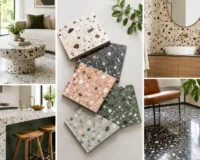
Marble-look designs remain popular for good reason. They deliver the classic appeal of Calacatta-style or travertine-inspired movement with fewer concerns around etching from acidic foods. But the category extends well beyond white veining. Warm limestone looks, smoky gray concrete effects, deep green stone patterns, and understated solid colors can all create a tailored result.
Bookmatching is another reason porcelain appeals to design-led projects. When two slabs are selected and positioned as mirrored panels, the veining can form a dramatic feature on an island face or full-height splashback. Not every pattern or slab layout is suitable for bookmatching, so this decision should be made early, before fabrication begins.
Porcelain also works beautifully when the kitchen is only part of the story. Using the same finish on a fireplace surround, bathroom vanity, or built-in bar can bring a refined continuity to a larger renovation or commercial project.
What to Consider Before Choosing a Porcelain Benchtop
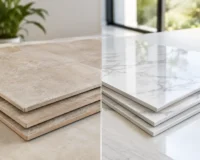
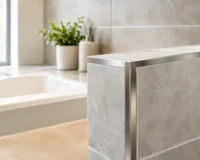
The most important decision is not simply choosing a color. It is choosing the right slab and fabrication approach for the application. Porcelain slabs are often thinner than traditional stone benchtops, so fabricators may use mitered edges to create the appearance of a thicker, more substantial profile. Done well, this produces a crisp, architectural edge. Done poorly, joins can be more apparent.
Support is equally important. Long overhangs, breakfast bars, and floating details may require steel reinforcement or additional substrate beneath the slab. Ask your fabricator how the surface will be supported, particularly around cutouts for sinks and cooktops. These areas need precise handling because porcelain is very strong across its face but can be vulnerable when improperly cut or unsupported at stress points.
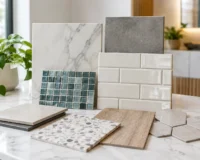
It is also worth viewing a full sample in the intended room. A small swatch is essential for checking color, texture, and cabinet pairing, but large-scale veining can look very different across an entire island. Consider the slab’s directional pattern, where the seams will fall, and whether the design has enough movement for the scale of the space.
Finally, confirm the technical suitability of the exact product. Not all porcelain slabs have the same thickness, finish, or recommended use. A surface selected for a vertical backsplash may not be the right choice for a high-use horizontal worktop. Product specifications and professional fabrication advice should guide the final selection.
Cost and Installation: Where the Budget Goes
A porcelain benchtop is generally positioned as a premium investment. Pricing varies according to slab design, thickness, number of cutouts, edge detailing, access to the site, and the complexity of installation. An expansive waterfall island with a mitered edge and integrated drain grooves will naturally require more labor than a simple straight run.
The material can also demand specialist tools and experienced handling. Porcelain is dense and relatively lightweight for its size, yet slabs are large and must be transported, cut, and installed with care. This is not the place to compromise on fabrication. A skilled professional protects both the slab and the visual integrity of the design, especially where joins, returns, and vein matching are involved.
When comparing quotes, look beyond the headline price. Check whether templating, delivery, cutouts, edge work, installation, and any structural support are included. A clear scope gives you a more accurate view of the finished investment.
Is a Porcelain Slab Benchtop Right for You?
Porcelain is an excellent choice for a kitchen that needs to look elevated while accommodating real life. It suits households that want strong resistance to heat, stains, and moisture without regular sealing. It also suits designers looking for generous slabs, statement veining, and the ability to extend one finish across benchtops, walls, and architectural details.
It may be less suitable if you want the tactile variation, natural aging, and one-of-a-kind patina of genuine stone. Natural marble and quartzite have a material character that porcelain can reinterpret beautifully, but not fully replicate. Likewise, if your project requires unusually complex shaping or unsupported spans, discuss the details with an experienced fabricator before committing.
The best porcelain benchtop feels effortless once installed: a refined surface that elevates cabinetry, handles the rhythm of daily cooking, and lets the rest of the room look beautifully composed. Order samples, study them in your own light, and give the fabrication details the same attention as the slab itself.