The pool is often the most visual part of an outdoor setting. It reflects the sky, frames the landscape, and sets the tone for every terrace, garden, and entertaining area around it. Porcelain pool tiles offer a polished way to give that focal point lasting character, combining refined finishes with the dependable performance needed around water, sun, and daily use.
For a new build, a pool renovation, or a carefully considered spa zone, porcelain creates an opportunity to move beyond purely functional surfaces. The right tile can make water appear brighter, deepen its color, soften a contemporary architectural scheme, or bring a natural stone look to a space that needs easier care.
Why porcelain pool tiles are a premium choice
Porcelain is fired at very high temperatures, producing a dense, low-porosity surface that is well suited to demanding outdoor environments. Its limited water absorption helps it withstand splashing, rain, humidity, and the changing conditions that come with a pool setting. When a product is specifically rated for pool use, it can be an excellent choice for waterlines, surrounds, spas, and selected submerged applications.
That density also supports a practical advantage: porcelain is generally easier to maintain than many porous natural materials. Sunscreen residue, leaf debris, salt spray, and ordinary outdoor dust are part of poolside life. A quality porcelain surface gives homeowners and project teams a finish designed to stay composed without asking for intensive upkeep.
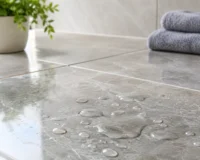
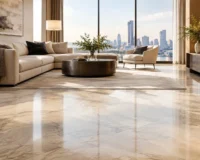
Appearance is just as compelling. Modern porcelain can capture the movement of veined stone, the subtle grain of timber, the calm of concrete, or the depth of hand-finished mineral surfaces. These looks allow a pool design to feel connected to the home rather than treated as a separate outdoor feature. A warm limestone-look porcelain, for example, can extend a relaxed coastal palette from the interior to the terrace. A large-format charcoal tile can give a minimalist poolscape a more architectural edge.
Choosing porcelain pool tiles by location
Not every tile around a pool serves the same purpose. A beautiful material choice becomes a successful project when the finish, format, and installation details suit the exact location.
Pool interiors and waterlines
For submerged areas, always confirm that the selected porcelain tile is approved by its manufacturer for full immersion and compatible with the pool’s installation system. This is particularly important for pools treated with salt, chlorine, or other water-management products. Pool interiors often benefit from smaller formats or mosaics because they can follow curves, steps, and transitions with greater ease.
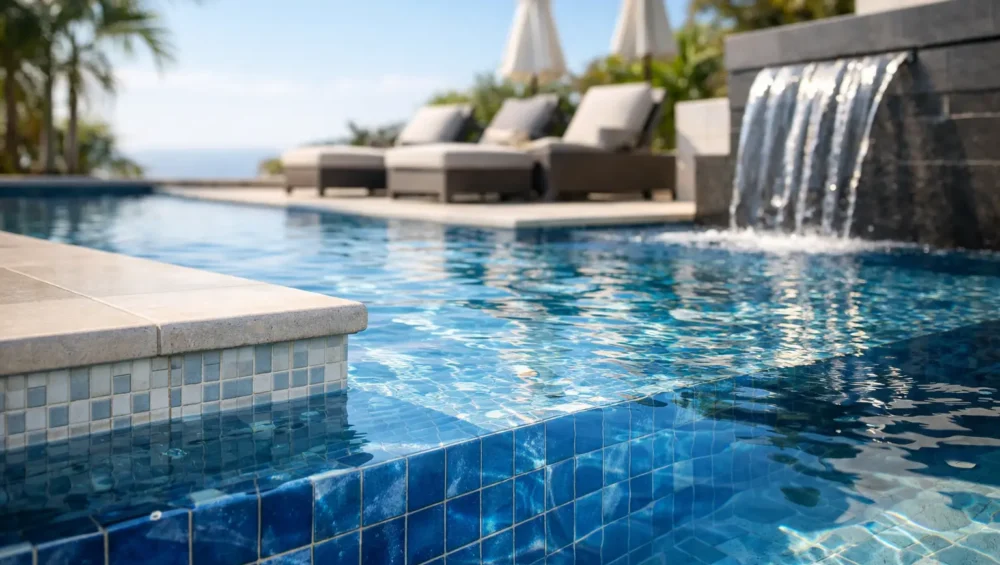
The waterline is where design becomes especially visible. It is the line that catches the eye as the water level shifts, and it can be used to introduce color, texture, or contrast. Deep blue porcelain can create a classic resort feel, while pale aqua, soft gray, and sandy neutrals offer a more contemporary expression. A textured waterline tile can add dimension, though cleaning requirements should be considered before choosing a highly detailed surface.
Pool surrounds and coping zones
Around the pool, slip resistance deserves equal attention to style. Look for an exterior-grade finish with a suitable slip-resistance rating for wet barefoot traffic. A matte, structured, or grip finish often provides more confidence underfoot than a polished surface, particularly on steps, shallow entries, and frequently wet pathways.
Color influences comfort as well as appearance. Very dark tiles can look dramatic and grounding, but they may become hotter in direct sunlight. Light neutral porcelain can feel cooler and make a compact pool area appear more open, although it may show organic debris more readily. Mid-tone grays, taupes, and stone-inspired shades often strike a useful balance between visual warmth and everyday practicality.
Coping is another detail worth resolving early. Purpose-made porcelain coping pieces can provide a clean finished edge and a cohesive transition from the water to the terrace. Where a project uses a mitered edge or custom-cut tile, the installer should assess the tile thickness, edge treatment, drainage, and movement requirements before work begins.
Spas, steps, and outdoor living areas
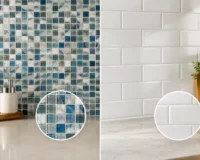
A spa can be finished as a quiet extension of the pool or become a statement feature in its own right. Small-format porcelain mosaics bring shimmer and detail to spa interiors, while larger porcelain tiles can make adjacent walls, benches, and plinths feel tailored and substantial.
For outdoor kitchens, firepit areas, and entertaining terraces beside the pool, continuing the same porcelain collection creates visual calm. It is not necessary for every surface to match exactly. Pairing a smooth wall tile with a coordinating grip-finish paver can add contrast while preserving a considered palette.
Color, format, and the water effect
A pool tile does more than decorate a surface. It shapes the way water reads throughout the day. Sun angle, pool depth, surrounding foliage, and interior finish all affect the result, so a sample viewed dry indoors will not tell the whole story.
Blue and teal porcelain tiles remain popular because they amplify the familiar clarity of pool water. Darker navy or ink tones can create a moody, reflective surface with a sense of depth. Pale blue, white, and soft green tiles tend to produce a brighter, more luminous effect. Neutral stone-look porcelain offers a restrained alternative, allowing the water and landscape to become the color story.
Tile format affects the visual rhythm. Mosaics create movement and sparkle, especially beneath water, while large-format porcelain brings a calmer, more expansive feel to surrounding terraces. Smaller tiles also mean more grout joints, which can improve grip in some applications but require more attention during cleaning. Large tiles reduce grout lines, yet they demand a very well-prepared substrate and skilled installation to achieve crisp alignment and appropriate falls.
Before committing, order samples and view them in the intended outdoor environment. Place them beside landscaping materials, façade finishes, decking, and exterior paint colors. If possible, wet the samples and assess them in morning and afternoon light. This small step can prevent a finish from feeling too cool, too dark, or unexpectedly busy once it is installed at scale.
Installation details that protect the finish
Premium porcelain deserves a premium installation approach. Outdoor and pool environments place significant demands on adhesives, grout, waterproofing, drainage, and expansion joints. The tile itself may be durable, but the system behind it is what helps preserve its performance over time.
Work with an experienced pool tiler or qualified installer who understands the requirements of immersed and exterior tile applications. They should verify substrate preparation, drainage direction, movement joints, adhesive compatibility, grout selection, and any local building requirements. Pool surrounds should drain away from the water where appropriate, reducing the chance of standing water and improving everyday safety.
Grout choice also shapes the finished look. A closely matched grout can make a large-format porcelain surface feel continuous and restrained. A contrasting grout can emphasize geometric layouts and mosaics, but it will make every joint more visible. For waterlines and heavily used zones, choose a grout system appropriate to the environment and follow the supplier’s cleaning and maintenance recommendations.
Caring for a porcelain pool surface
Porcelain is low maintenance, not maintenance-free. Regular rinsing and gentle cleaning help prevent sunscreen, mineral deposits, and airborne debris from building up, particularly around waterlines and on textured outdoor tiles. Use a cleaner suitable for porcelain and grout, and avoid harsh acidic products unless they are specifically recommended for the installation.
A soft brush is often more useful than aggressive scrubbing on structured finishes. Keep nearby planting beds maintained, clear leaves promptly, and inspect grout and movement joints as part of seasonal pool care. If the pool uses saltwater or specialized chemical treatment, follow the product and installer guidance for that specific system.
The strongest pool designs are not built around a single trend. They begin with the feeling you want the space to hold: bright and coastal, quiet and mineral, sleek and architectural, or richly layered for entertaining. Start with porcelain pool tiles that suit the water, the climate, and the way the area will be used, then let samples guide the final decision. A considered surface choice can make every swim feel like part of a more complete home.