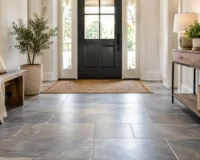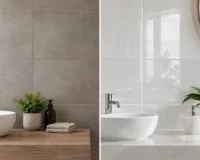
The entry is where wet shoes, bags, pets, and first impressions all arrive at once. The best entryway floor tile ideas meet that reality beautifully: they establish the mood of the home while offering a hardwearing surface that is easy to live with. Whether your style is quietly tailored or richly expressive, tile gives this hardworking space the presence it deserves.
Entryway floor tile ideas that set the tone
An entryway does not need to be large to feel memorable. In fact, a smaller footprint can support a more considered material choice, whether that means a beautifully veined stone look, a graphic pattern, or a mosaic border that frames the arrival experience. The key is balancing visual character with the practical demands of a high-traffic threshold.
1. Choose large-format porcelain for a calm, contemporary entry
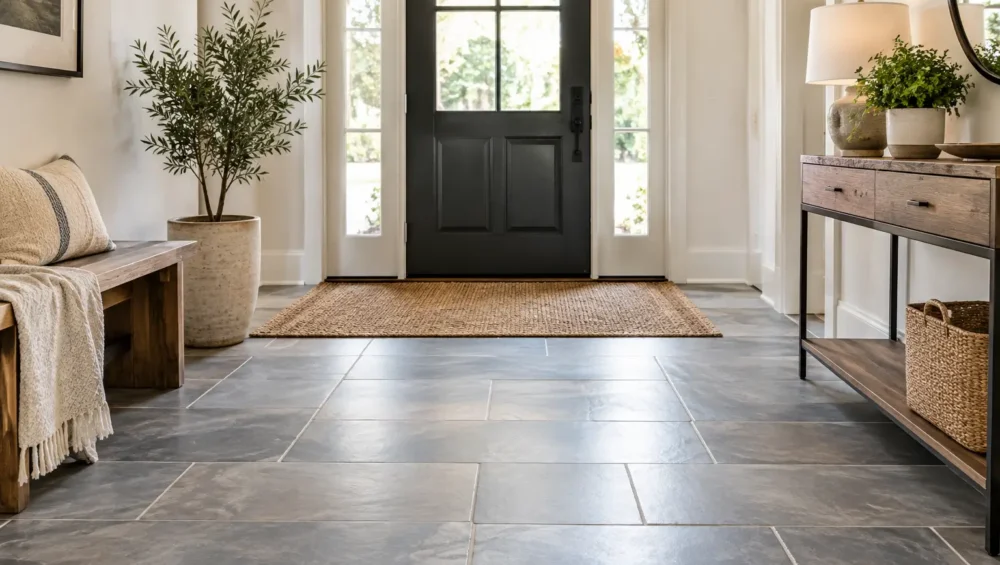
Large-format porcelain creates a refined, uninterrupted floor with fewer grout lines. In an open-plan home, this can make the entryway feel more expansive and connected to the surrounding living spaces. Soft limestone looks, warm concrete finishes, and pale travertine-inspired porcelain are particularly effective when the aim is understated luxury.
For a compact foyer, a large tile can work exceptionally well, but layout matters. Avoid leaving a narrow, awkward-looking cut tile directly at the front door if possible. A professional layout plan can shift the tile grid so the field feels intentional from the moment someone steps inside.
2. Create a statement with patterned encaustic-look tile
Patterned tile brings instant identity to an otherwise simple entry. A black-and-white geometric design feels tailored and timeless, while clay, blue, green, or saffron accents offer a more collected, Mediterranean-inspired character. It is an ideal choice for a heritage renovation, a bungalow, or a home that needs a strong visual transition between outside and in.
Porcelain patterned tiles offer the look of traditional encaustic surfaces with straightforward everyday maintenance. They also give you the freedom to use bold pattern in a location exposed to grit and moisture. Keep walls and nearby finishes more restrained so the floor remains the focal point rather than competing with every surface around it.
3. Use checkerboard tile for enduring elegance
Checkerboard floors have a rare ability to feel both classic and current. Black and white is the familiar choice, but softer pairings can be even more versatile: cream with charcoal, warm white with sage, or ivory with terracotta create a layered palette without feeling overly formal.
Scale changes the effect. Small squares look intricate and traditional, while larger squares create a bolder, more architectural statement. If the entry leads into a hallway, continuing the checkerboard pattern can create a confident visual line that draws the eye through the home.
4. Warm up the threshold with terracotta
Terracotta offers warmth that many contemporary interiors are missing. Its earthy variation and tactile finish make an entry feel established, welcoming, and individual, especially alongside timber joinery, plaster walls, or aged brass hardware. It suits Spanish, coastal, farmhouse, and relaxed contemporary settings equally well.
Natural terracotta requires appropriate sealing and care, so it is best for homeowners who appreciate the evolving character of real clay. For a similar look with less maintenance, terracotta-look porcelain provides a practical alternative. The choice depends on whether you want the authenticity and variation of natural material or the easier care of porcelain.
5. Bring depth with natural stone
Natural stone gives an entryway a level of material richness that is difficult to replicate. Honed marble can create a polished, formal arrival, while travertine, limestone, and slate offer a more relaxed, architectural mood. Each piece has its own movement and variation, allowing the floor to feel genuinely one of a kind.
The finish matters as much as the stone selection. A honed or textured surface is generally a better fit for an entry than a high-polish finish, particularly where rain, snow, or wet footwear are common. Stone also needs the right sealing program, so factor maintenance into the selection process rather than treating it as an afterthought.
6. Add character with terrazzo
Terrazzo is a confident option for design-focused homes and commercial-style entries. Its aggregate flecks can pick up colors from nearby cabinetry, paint, or artwork, creating a custom-looking surface with real depth. Fine-chip terrazzo feels sophisticated and restrained, while a larger aggregate makes a more playful, expressive statement.
Porcelain terrazzo-look tile is an excellent choice when you want this look with a durable, low-fuss finish. It works especially well in an entryway that opens directly to a mudroom, laundry, or kitchen, where the same tile can continue through several high-use spaces.
7. Frame the door with a mosaic rug effect
A tiled “rug” is a thoughtful way to define the entry in an open layout. Use mosaic tile, a contrasting field tile, or a patterned inset just inside the door, then surround it with a quieter border tile. The result feels decorative without adding a physical rug that can shift, hold moisture, or require constant cleaning.
This approach is particularly useful in a large foyer where an expansive floor needs structure. Choose an inset that echoes the shape of the entry or the lines of the front door, and keep the border width consistent for a tailored finish.
8. Make grout part of the design
Grout is not simply a technical detail. With white subway-style floor tile, charcoal grout creates graphic definition and helps disguise daily dirt. A tone-on-tone grout, by contrast, lets the tile surface read as one continuous finish. For an entryway, midtone grout is often a practical middle ground, especially with pale tiles.
Consider the joint size, too. Rectified porcelain can achieve a crisp, narrow joint, which suits minimal interiors. Handmade-look ceramic and natural stone often benefit from a slightly wider grout line that celebrates their variation rather than trying to make them look machine-perfect.
9. Lay rectangular tile in a herringbone pattern
Herringbone instantly adds movement to an entry floor. It can make a narrow hallway feel more dynamic and gives even a simple stone-look or wood-look porcelain tile a bespoke quality. A classic 45-degree herringbone is lively and traditional, while a 90-degree pattern feels more modern and orderly.
This installation uses more cuts than a straightforward grid, which can increase labor and material allowances. It is worth it when the floor is meant to be a defining design feature, but a standard offset or stacked layout may be better for a larger space with a tighter installation budget.
10. Continue the tile into adjoining spaces
Using one floor tile from the entry through the kitchen, hall, or living area creates visual continuity and can make the entire lower level feel more generous. Stone-look porcelain, terrazzo-look porcelain, and large-format concrete-look tiles are especially effective for this approach.
The alternative is to deliberately mark the entry as its own moment. A patterned threshold that transitions to timber flooring can be beautiful, provided the junction is cleanly detailed. Neither option is inherently better: continuity feels spacious and calm, while contrast gives the arrival zone more ceremony.
11. Select a finish that suits real traffic
A premium entry floor must perform as well as it looks. Look for a tile with an appropriate slip-resistant finish for the conditions outside your door, particularly if the entry is exposed to rain or connects to a pool area. Matte, honed, and lightly textured surfaces are often more forgiving than glossy finishes when moisture and dust are part of daily life.
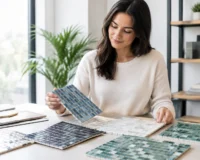
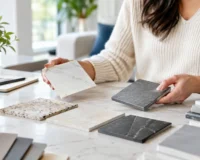
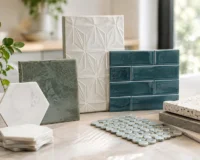
Porcelain is a standout for busy households because it is dense, durable, and easy to clean. Natural stone can be equally compelling but calls for more product-specific care. Ordering samples lets you view texture, color variation, and finish under your home’s changing natural and artificial light before making a final decision.
12. Use color to make the entry feel intentional
Pale tile brightens a dark foyer and gives small entries a more open feel. Deep charcoal, forest green, navy, or near-black tile adds drama and can be more forgiving of outdoor debris. Warm neutrals such as sand, mushroom, tobacco, and soft gray remain versatile foundations for changing furnishings over time.
Do not choose solely from a screen. Place samples beside your door, wall color, and flooring transitions, then view them morning and evening. A tile that appears cool under showroom lighting may reveal a warm undertone at home, and that subtle difference can shape the entire feel of the entry.
How to narrow down entryway tile choices
Start with the experience you want to create on arrival: serene, expressive, historic, coastal, or sharply contemporary. Then consider the practical realities of the space, including direct outdoor exposure, pets, children, and whether the floor will continue into other rooms. These decisions will quickly guide you toward porcelain, stone, terracotta, mosaics, or a layered combination.
Finally, pay attention to the details that make a premium installation feel complete. Plan the tile layout before installation, specify a grout color with purpose, and choose a transition at adjoining floors that feels clean rather than improvised. The right entryway tile is more than a durable landing place – it is the first material gesture of the home, designed to look better every time you walk through the door.