
A mosaic can make a shower feel like a private retreat, give a kitchen backsplash a tailored finish, or turn an ordinary pool edge into a true design feature. Knowing how to select mosaic sheets comes down to more than choosing a color you love. The right choice balances material, scale, finish, slip resistance, installation details, and the way the space is used every day.
Mosaic sheets offer remarkable design freedom because their smaller pieces create texture, movement, and detail that larger-format tile cannot always achieve. But that versatility also means a thoughtful selection process matters. Start with the room, then let performance requirements guide the finish and material before narrowing down the look.
Start With the Room and Its Demands
The most beautiful mosaic is only successful if it suits its environment. A decorative glass mosaic may be a striking choice for a low-impact wall, while a busy shower floor requires a surface that offers dependable traction and tolerates constant moisture.
For kitchen backsplashes, cleaning is often the priority. Glazed ceramic, porcelain, and glass mosaics are popular because they resist stains and can be wiped down easily after cooking. In this setting, you have greater freedom to choose a gloss finish, bold color, or intricate pattern because the surface does not need to manage standing water underfoot.
Bathrooms call for a more considered approach. Wall mosaics can be selected primarily for their visual character, but floors and shower bases need practical grip. Small-format mosaics are especially useful on shower floors because the additional grout joints create more traction. Matte or textured porcelain mosaics are often a confident choice where safety, durability, and a refined look need to work together.
Outdoor areas, pools, and wet commercial environments demand the highest level of performance. Look for mosaics rated for exterior or pool use, with suitable water resistance and slip performance for the intended application. Temperature changes, direct sun, chemicals, and prolonged moisture can all affect how a surface performs, so an indoor wall tile should never be assumed suitable for an exterior or submerged setting.
Choose a Mosaic Material That Matches the Finish You Want
Material shapes both the visual effect and the maintenance story of a mosaic. There is no universal best option. The right material depends on whether you want crisp contemporary polish, natural variation, or a more handcrafted presence.
Porcelain and Ceramic for Everyday Durability
Porcelain mosaic sheets are a versatile choice for bathrooms, kitchens, laundry rooms, and high-traffic spaces. They are typically low maintenance, durable, and available in an extensive range of colors, stone looks, geometric forms, and textured finishes. A porcelain mosaic can create the appearance of natural stone or terrazzo while offering an easier-care surface for active households and commercial projects.
Ceramic mosaics bring equally broad design potential, particularly on walls. Their glazed surfaces can introduce rich color, soft variation, or a glossy handmade-inspired finish. For floors or demanding wet zones, confirm the product is rated for the application rather than choosing based on appearance alone.
Natural Stone for Depth and Character
Marble, travertine, and other natural stone mosaics offer an elevated, organic quality that is difficult to replicate. Each piece carries natural variation in veining, tone, and texture, making the finished surface feel layered rather than uniform. They are particularly compelling in powder rooms, feature walls, luxury bathrooms, and classic kitchen schemes.
Stone does ask more of the owner. Depending on the material and location, it may require sealing and more attentive cleaning to preserve its finish. Acidic products can damage certain stones, and a polished surface may not be the best choice for a wet floor. If you value natural movement and patina, these trade-offs can be well worth it.
Glass and Specialty Finishes for Light
Glass mosaics reflect light beautifully, making them a natural fit for backsplashes, pool interiors, and feature walls. They can bring brightness to compact rooms and add jewel-like depth to a design palette. Metallic, mother-of-pearl, and iridescent finishes create a more decorative effect, so they work best when used intentionally rather than across every surface in the room.
Consider the surrounding lighting before committing to a reflective mosaic. A sample viewed near a window, under warm pendant lighting, and with the room’s existing finishes will reveal much more than an online image alone.
How to Select Mosaic Sheets at the Right Scale
Mosaic scale affects how a room feels. Small chips create detail and visual energy, while larger mosaic pieces produce a calmer, more contemporary rhythm. The sheet itself may be easy to hold, but the individual tile size is what defines the final look.
In a compact bathroom, penny rounds, small hexagons, or slender kit kat-style mosaics can add texture without taking up visual space. They work especially well as a shower floor, niche detail, or vanity splashback. In a larger room, a very small and busy mosaic over a broad expanse can feel overly dense. A larger hexagon, elongated rectangle, or understated stone mosaic may deliver a more balanced result.
Think about distance, too. A richly veined mosaic may read as intricate up close but as one overall tone from across the room. This can be exactly what a calm, layered interior needs. By contrast, a high-contrast pattern will remain visually active from a distance and is often strongest when reserved for a focal point.
Let Grout Be Part of the Design
Grout is not a background decision with mosaics. Because smaller tiles have more joints, grout can shift the overall color, pattern definition, and maintenance requirements of the installation.
A grout close to the mosaic color creates a more continuous, understated surface. It is an elegant option for marble mosaics, tonal ceramics, and schemes where texture should be felt rather than loudly outlined. A contrasting grout emphasizes every shape, making hexagons, herringbone, and penny rounds appear sharper and more graphic.
For shower floors, entry areas, and other hard-working spaces, a mid-tone grout is often more forgiving than bright white. It can still feel fresh while disguising the everyday marks that naturally occur in busy homes. Your installer can also advise on grout types suited to wet areas, narrow joints, and the specific mosaic backing.
Check Sheet Quality and Installation Requirements
Mosaic sheets are commonly mounted on mesh, paper, or another backing to make installation more efficient. Quality matters because the spacing between individual pieces needs to remain consistent once the sheet is on the wall or floor. Poor alignment can create visible lines between sheets, interrupting an otherwise beautiful pattern.
Before ordering, confirm the sheet dimensions, individual tile dimensions, thickness, recommended grout joint, and suitability for the intended room. This is especially important when mosaics will meet larger field tiles, stone slabs, or trim pieces. A thickness difference can be managed during installation, but it should be planned rather than discovered halfway through the project.
Order enough material for cuts, pattern matching, and future repairs. Mosaics can vary between production batches, particularly natural stone and products with purposeful tonal movement. Purchasing a little extra helps preserve a consistent finish and gives you spare pieces if a repair is ever needed.
Use Samples to See the Real Surface
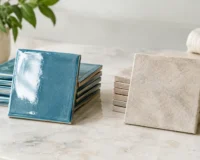
A screen can communicate a general color, but it cannot fully show a mosaic’s texture, sheen, or variation. Samples allow you to see how the material responds to daylight, artificial lighting, cabinetry, countertops, paint, and plumbing finishes. This step is particularly valuable with white, gray, beige, and green mosaics, where undertones can change dramatically from one setting to another.
Place samples vertically if the mosaic is intended for a wall and horizontally if it is intended for a floor. View them in the morning and evening, and do not be afraid to compare two or three options side by side. Mecca Tiles makes this process easier with samples that let you make a premium surface decision with greater confidence before finalizing your order.
A well-selected mosaic does more than fill a surface. It gives a room its point of view, whether that means quiet stone texture underfoot, a luminous pool finish, or a backsplash that brings the entire palette together.