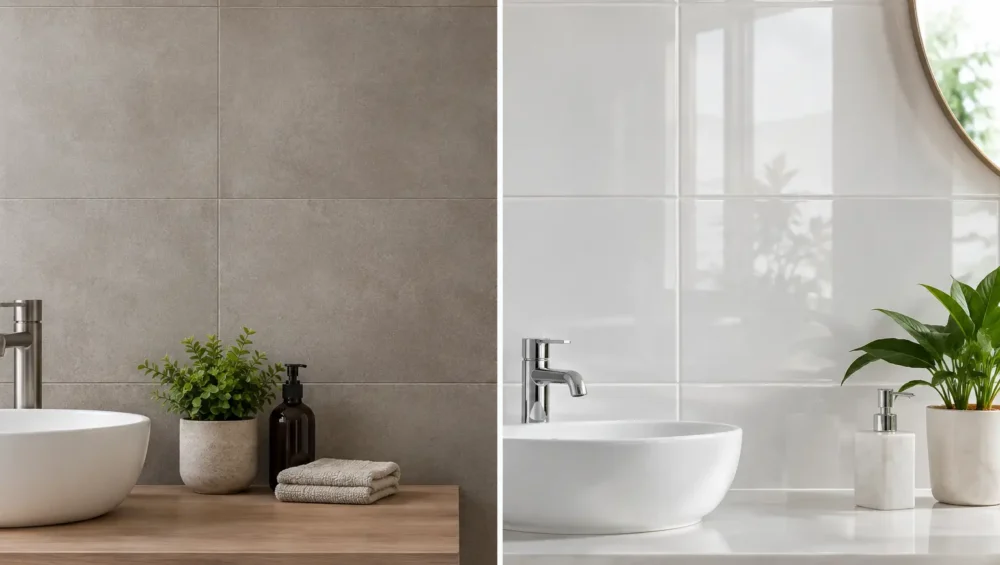
A tile finish changes more than the look of a sample board. It influences how daylight moves through a room, how often marks show, how a floor feels underfoot, and whether the finished space reads as quietly luxurious or brilliantly polished. When weighing matt versus gloss tiles, the right choice is rarely about one finish being better than the other. It is about matching the surface to the room, the light, and the way the space will be used.
For a premium result, start with the feeling you want to create. Gloss tiles can bring light, clarity, and a beautifully tailored sheen. Matte tiles offer depth, softness, and an architectural calm that works across contemporary, classic, and textural interiors. Both can transform a project when selected with intention.
Matt Versus Gloss Tiles: The Practical Difference
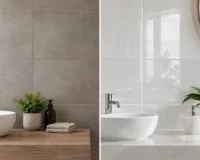
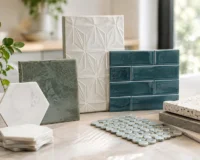
Gloss tiles have a reflective surface that bounces light around the room. This makes them especially effective in smaller or darker spaces, where their sheen can create a more open, luminous impression. A glossy white subway tile, for example, can give a compact kitchen backsplash a crisp, elevated finish. Gloss is also available in richly colored ceramics, jewel-like mosaics, and high-polish porcelain, where reflection adds drama and visual energy.
Matte tiles, sometimes called matt tiles, have a low-sheen finish that absorbs rather than reflects light. Their appeal lies in their understated character. They show the texture, movement, and tonal variation of stone-look porcelain, concrete-look surfaces, and handcrafted-style ceramics with greater clarity. A matte finish can make a large room feel grounded and composed, rather than overly reflective.
The visible difference becomes even more pronounced across larger tile formats. Gloss porcelain slabs can feel sleek and glamorous, particularly on feature walls. Large-format matte porcelain tends to create a more continuous, gallery-like backdrop, with fewer visual interruptions and a natural sense of depth.
Choose by Room, Not Just by Style
The most beautiful finish must still suit daily life. A tile that looks exceptional in a showroom can behave very differently on a busy kitchen floor, a family bathroom, or a sunlit patio.
Bathrooms: Balance light with underfoot comfort
Gloss wall tiles are a natural fit for bathrooms. They brighten vanity walls and shower surrounds, reflect decorative lighting, and make compact ensuites feel more spacious. Their smooth surface is also straightforward to wipe down after splashes from the basin or shower.
For bathroom floors, matte porcelain is often the more considered option. The reduced sheen helps disguise water spots and provides a more grounded visual finish. Many matte floor tiles are designed with enhanced slip resistance, although ratings vary by product. Always confirm that the tile is suitable for wet-floor use rather than choosing solely by appearance.
There is no rule saying a bathroom needs one finish throughout. Pairing glossy wall tiles with matte floor tiles is a refined way to build contrast while keeping the space practical. The walls catch the light; the floor anchors the scheme.
Kitchens: Consider splash zones and foot traffic
A gloss backsplash delivers a clean, light-catching focal point behind a cooktop or sink. It works beautifully with shaker cabinetry, natural stone counters, or darker joinery that benefits from a little reflected brightness. The trade-off is that glossy surfaces can reveal fingerprints, grease splashes, and water marks more readily, especially in darker colors.
Matte tiles suit kitchen floors and can also create a sophisticated backsplash with a more contemporary mood. They are particularly effective in earthy neutrals, terrazzo looks, and handmade-look finishes, where variation is part of the design story. On a heavily used floor, matte porcelain is generally more forgiving of everyday dust, crumbs, and footprints than a high-gloss alternative.
Living areas and entryways: Let scale lead
In open-plan living areas, matte tiles often deliver the most relaxed luxury. They complement timber, upholstery, textured rugs, and natural materials without competing for attention. A warm limestone-look porcelain or a softly veined stone-look tile can establish an elegant, enduring foundation for the entire home.
Gloss can still work in these spaces, particularly when the design calls for a polished, formal effect. It is most successful where there is controlled lighting, less direct glare, and a commitment to regular cleaning. In a high-traffic entryway, consider how the finish will look at different times of day, not just when freshly cleaned.
Outdoor spaces: Prioritize suitability
Outdoor tile selection demands more than a matte appearance. Choose a product specifically rated for exterior installation, including the required slip resistance and weather performance for your climate. Matte or textured porcelain pavers are a popular choice because they offer a more natural visual connection to landscaping while providing a practical surface around pools, patios, and pathways.
A glossy finish is usually best reserved for protected vertical applications outdoors, if the product is approved for that use. On exposed floors, reflection, moisture, and surface grip need more careful consideration.
Light Can Change the Decision
Before committing to either finish, look closely at the room’s natural and artificial light. Gloss tiles amplify brightness, but in rooms with strong direct sun they may produce glare. This is not always a drawback. In a dramatic powder room or a low-light hallway, it can be exactly the intended effect.
Matte tiles diffuse light more gently. They are ideal when you want a calm, layered interior or when large windows already provide ample brightness. They also make it easier to appreciate the tile’s printed detail, mineral movement, or tactile surface without reflections interrupting the pattern.
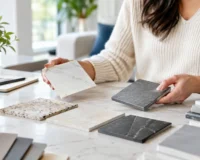
Tile samples are essential here. View them upright and flat, near windows and under evening lighting. A finish that appears warm in a showroom may look cooler beside your cabinetry, paint, or stone countertop. Ordering samples before a full purchase helps protect the integrity of the design and makes the final selection feel much more certain.
Cleaning and Maintenance Expectations
Neither finish is inherently difficult to maintain, but each reveals daily life differently. Gloss tiles have a very smooth surface, so most spills and marks wipe away easily. However, their shine can make streaks, soap residue, and hard-water spotting more visible, especially on dark shades or in high-use bathrooms.
Matte tiles are more forgiving visually because they do not reflect every smudge. Textured or deeply structured matte tiles may need more attention during cleaning, as dirt can settle into the surface relief. Regular sweeping, vacuuming with an appropriate hard-floor setting, and cleaning with a pH-neutral tile product will keep both finishes looking their best.
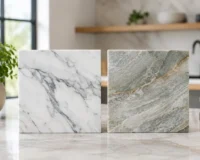
For natural stone, maintenance depends on the specific material and finish. Honed stone has a matte appearance but requires different care from porcelain, including appropriate sealing where recommended. Always follow the supplier’s guidance for the product you select rather than assuming all matte surfaces perform the same way.
Design Pairings That Feel Intentional
Mixing finishes can give a project a more layered, custom feel. Use gloss where you want light and visual emphasis, then introduce matte surfaces where you want texture and balance. A glossy mosaic niche against matte wall tile, for instance, creates a subtle focal point without changing the overall palette.
For a more tonal approach, choose the same color in different finishes. Soft white matte floor tiles paired with glazed white wall tiles feel fresh without becoming clinical. Deep green gloss tiles can add a luxurious note to a bathroom, while a charcoal matte floor keeps the room grounded.
If the goal is a bold, design-led statement, look beyond shine alone. Tile format, grout color, edge profile, and installation pattern all influence the final effect. A modest matte tile laid in a striking herringbone pattern may have more presence than a glossy tile installed in a simple grid.
Make the Finish Work for Your Project
The choice between matte and gloss should support the way a room feels and functions every day. Select gloss for brightness, polish, and a more reflective finish. Choose matte for understated elegance, visual softness, and a practical response to busy floors and naturally lit spaces.
For projects that combine multiple rooms or indoor-outdoor zones, create continuity through color and format, then vary the finish where performance calls for it. Mecca Tiles’ curated collections make it easier to compare premium porcelain, ceramic, stone-look, mosaic, and outdoor surfaces side by side before narrowing the selection.
The most memorable interiors rarely rely on a single rule. Start with the atmosphere you want to live with, test samples in the actual space, and let the finish add the final layer of confidence to your design.