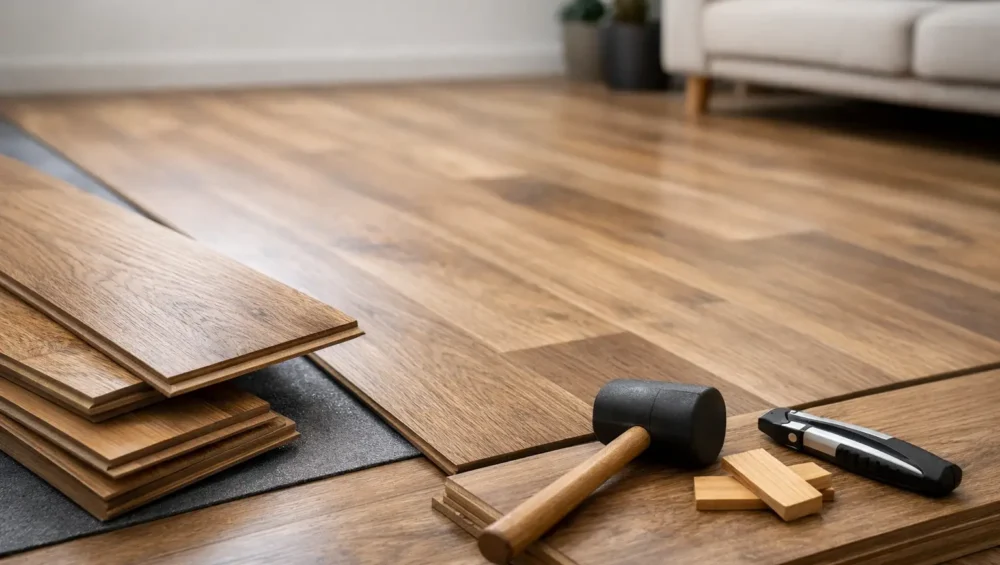
A beautiful floor has to do more than photograph well. It needs to carry a busy household, resist the occasional spill, complement the architecture, and still feel considered years after installation. This hybrid timber flooring review looks at whether this increasingly popular surface delivers the refined wood aesthetic and everyday performance that modern homes demand.
Hybrid timber flooring is often chosen by homeowners and designers who want the warmth of timber without the maintenance concerns that can come with natural wood. It offers a convincing timber-look finish, a stable rigid core, and a practical installation format that suits renovations as well as new builds. Still, it is not the right answer for every project. The best choice depends on the room, subfloor, desired level of authenticity, and how the space will be used.
What Is Hybrid Timber Flooring?
Hybrid timber flooring is a multi-layer flooring product designed to combine the visual appeal of wood with the resilience of modern engineered materials. While construction varies between collections, most hybrid planks feature a protective wear layer, a high-resolution decorative timber layer, a rigid waterproof core, and an attached acoustic backing.
The rigid core is commonly made from stone polymer composite or a similar mineral-based material. This gives the plank stability and helps it perform well through changes in temperature and moisture. The top surface is not solid timber, but premium designs can replicate oak, ash, walnut, and other timber species with impressive grain variation, matte textures, and natural-looking tonal movement.
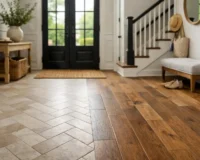
For projects where a clean, continuous floor is central to the interior scheme, hybrid timber creates a polished foundation. Wider planks can make an open-plan living area feel more expansive, while lighter oak-inspired finishes bring softness to contemporary kitchens, coastal homes, and pared-back interiors. Deeper timber tones can add contrast and depth to apartments, dining rooms, and commercial spaces seeking a more tailored look.
Hybrid Timber Flooring Review: The Key Advantages
The strongest case for hybrid flooring is its balance of style and practicality. It is not simply a budget alternative to timber. In the right setting, it is a high-performing design surface with distinct benefits.
Water resistance for everyday living
Hybrid flooring is widely valued for its water-resistant or waterproof core construction. That makes it a compelling option for kitchens, laundry rooms, entryways, and active family spaces, where spills and wet shoes are part of daily life. Unlike many traditional timber floors, it is less likely to swell or distort when exposed to routine moisture.
This does not mean any hybrid floor should be treated as impervious to every water event. Standing water should still be cleaned promptly, and water can enter through perimeter gaps, poorly finished edges, or an unsuitable subfloor. Bathrooms also require careful product selection and installation detail. Always confirm the manufacturer’s room-use guidance before specifying a floor for a wet area.
Durable surface protection
A quality wear layer helps hybrid flooring resist scratches, scuffs, and stains better than many softer natural timber finishes. That matters in homes with pets, children, frequent entertaining, or outdoor access. It is also valuable for commercial interiors where foot traffic is consistent and the floor needs to retain its appearance with straightforward maintenance.
Durability is not identical across all products. Thickness, wear-layer quality, surface coating, and locking mechanism all affect long-term performance. A premium collection is worth considering where visual finish and daily resilience are equally important.
A more forgiving renovation material
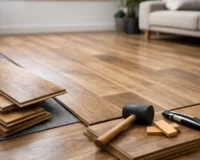
Hybrid planks are typically installed as a floating floor with a click-lock system. This can reduce installation time and, in certain projects, allow the new floor to be laid over an existing stable surface. For renovations, that may mean less demolition, less mess, and a faster visual transformation.
The subfloor still matters. It must be level, dry, structurally sound, and prepared according to the flooring manufacturer’s requirements. Hybrid flooring can disguise neither major unevenness nor moisture issues beneath the surface. Proper preparation protects the look, feel, and lifespan of the finished floor.
Comfort and acoustic appeal
The attached underlayment found on many hybrid products adds a softer feel underfoot than hard tile or polished concrete. It can also help reduce impact sound, which is especially useful in apartments, upstairs rooms, and open-plan homes where acoustics shape the comfort of the space.
Hybrid flooring will not feel exactly like solid wood. It generally has a firmer, more consistent feel because of its rigid core. Yet for many homeowners, the practical comfort, quietness, and low-maintenance finish offer an attractive middle ground between traditional timber and other resilient flooring options.
Where Hybrid Flooring Works Best
Hybrid timber flooring is particularly suited to spaces that need a timber-inspired look without delicate upkeep. Living rooms, bedrooms, hallways, dining areas, kitchens, and laundries are natural candidates. A consistent plank finish across these areas can create a sense of flow, making smaller homes feel calmer and larger spaces feel more connected.
For entry areas and family rooms, choose a mid-tone or textured timber design that can visually soften everyday dust and minor marks. Pale, ultra-smooth finishes can look striking, but they may show dirt more readily in high-traffic zones. In a kitchen, warmer oak tones work beautifully with stone-look counters, handmade-look tiles, and brushed metal fixtures, creating a layered scheme that feels both inviting and elevated.
In commercial settings, hybrid flooring can suit boutique retail, hospitality, office, and multi-residential projects where a welcoming residential character is desired. The final selection should take into account traffic levels, furniture movement, cleaning routines, and any building-specific acoustic requirements.
The Trade-Offs to Consider
A balanced hybrid timber flooring review should acknowledge where the product is less suitable. If your priority is the one-of-a-kind character, reparability, and lasting patina of genuine hardwood, natural timber remains in a category of its own. Real wood can be refinished in many cases, while a damaged hybrid plank is usually replaced rather than sanded back.
Hybrid flooring can also be sensitive to extreme heat. Direct, prolonged sun through large windows may cause expansion, fading, or movement if the correct product, window treatments, expansion gaps, and installation practices are not used. Homes with extensive glazing should discuss this condition before purchasing.
The look has improved dramatically, but close inspection may still reveal the difference between a printed decorative layer and real timber grain. This is where collection quality matters. Seek out designs with realistic embossing, restrained sheen, varied boards, and a palette that complements the wider material selection rather than competing with it.
Finally, do not assume every hybrid product has the same waterproof capability, acoustic rating, warranty, or commercial suitability. Product specifications should guide the decision, not broad category claims.
How to Choose a Premium Hybrid Timber Floor
Start with the atmosphere you want to create. Light oak-inspired planks lend an airy, architectural feel. Neutral blonde and honey tones offer warmth without overpowering the room. Greige timber looks pair easily with stone, plaster, and contemporary cabinetry, while dark brown finishes create a more dramatic, grounded interior.
Then consider plank scale. Wider, longer boards tend to feel more luxurious and reduce visual interruption across large rooms. In compact spaces, they can still work beautifully, provided the color is not overly dark and the layout is thoughtfully planned.
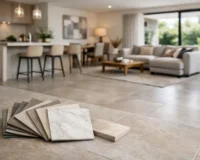
Samples are essential. View them beside cabinetry, wall paint, fabrics, and tile selections, and move them between natural and artificial light. A floor can appear cooler in a bright showroom and warmer at home, particularly in rooms with timber furniture or north-facing windows.
At Mecca Tiles, a curated hybrid timber collection makes it easier to align performance needs with a design-led finish. Ordering samples before committing allows you to assess texture, tone, and scale in the setting that matters most: your own space.
Care That Preserves the Finish
Hybrid flooring is relatively simple to maintain, but it benefits from consistent care. Sweep or vacuum with a hard-floor setting to remove abrasive grit, then clean with a damp microfiber mop and a flooring-safe cleaner. Avoid excessive water, steam mops unless specifically approved by the manufacturer, abrasive pads, and harsh chemical products.
Place protective pads under furniture legs and use mats at exterior doors, taking care not to choose backing materials that could stain or trap moisture. These small details help preserve the surface in the places that receive the most use.
The right hybrid timber floor does not need to imitate natural wood perfectly to be desirable. Its appeal lies in giving a space timber warmth with greater everyday ease, allowing you to specify a refined finish that supports how people actually live, gather, and move through a home.