A plain backsplash can keep a kitchen looking tidy, but it rarely gives the room any real character. An encaustic tile kitchen splashback does the opposite. It introduces pattern, movement, and a sense of design confidence that can shift a kitchen from purely functional to genuinely memorable.
That visual impact is exactly why encaustic-style surfaces continue to appeal to homeowners, renovators, designers, and builders working on kitchens that need more than a safe finish. The right pattern can soften a modern joinery scheme, bring warmth to a minimal palette, or give a renovation a more layered, collected feel. The key is choosing a design that looks intentional rather than overpowering.
Why choose an encaustic tile kitchen splashback?
In a room filled with flat cabinetry, stone countertops, and metal appliances, patterned tile provides contrast. It breaks up large blocks of color and adds detail at eye level, which is where a kitchen often needs it most. Even a compact splashback can become a defining design feature when the pattern, scale, and finish are handled well.
There is also a practical side to the appeal. A kitchen splashback needs to cope with cooking residue, water exposure, and frequent cleaning. Many encaustic-look porcelain and ceramic tiles offer the decorative quality people love with a surface better suited to daily wear. That matters in busy family homes as much as in design-led apartments or hospitality spaces.
Still, this is not a one-size-fits-all choice. Some patterns create a dramatic focal point, while others behave more like texture from a distance. Whether encaustic is the right fit depends on the cabinetry style, countertop movement, lighting, and how bold you want the room to feel.
Real encaustic vs encaustic-look tile
This is where many kitchen decisions become easier. Traditional encaustic cement tiles are admired for their artisanal beauty, soft matte finish, and depth of pigment. They have an unmistakable presence and can make a kitchen feel highly bespoke. But they are also more porous and usually require more careful sealing and maintenance than many homeowners expect.
For a kitchen splashback, encaustic-look porcelain or ceramic is often the more practical option. It captures the decorative character of encaustic patterning while offering easier upkeep and stronger resistance to staining and moisture. For projects where design impact matters but maintenance needs to stay manageable, that balance is hard to ignore.
This does not mean authentic encaustic should be ruled out. In the right kitchen, and with the right understanding of sealing and care, it can be a beautiful investment. The better question is not which material is more prestigious. It is which material suits the way the kitchen will actually be used.
How to make pattern work in the kitchen
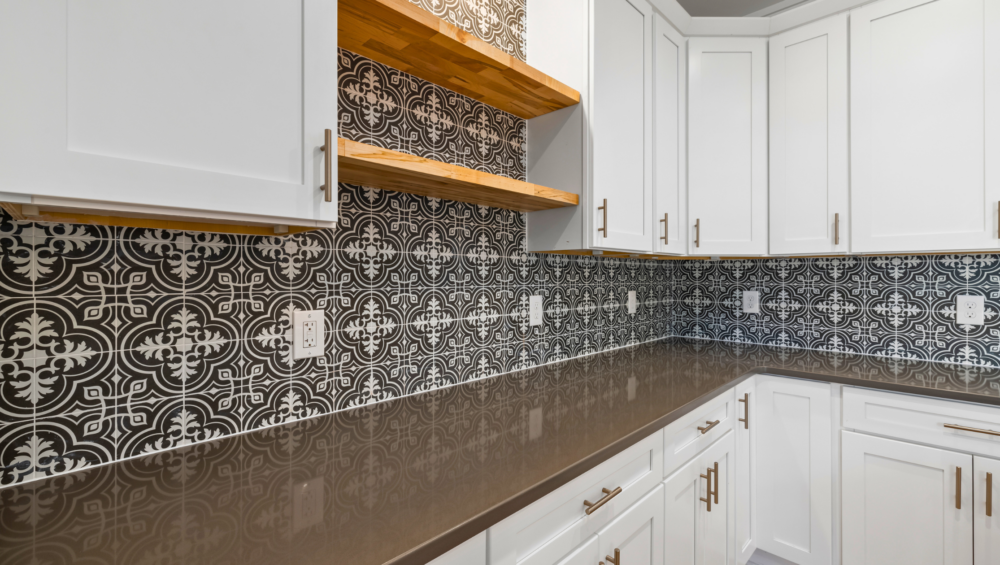
Patterned tile succeeds when the rest of the kitchen knows its role. If your splashback carries a strong motif, the surrounding finishes usually benefit from restraint. Solid cabinet fronts, simple hardware, and a quieter countertop allow the tile to lead without the room feeling crowded.
If the cabinetry already has visual detail, such as pronounced grain, profile doors, or a heavily veined stone, a softer encaustic pattern can be the smarter move. Repeating geometric motifs in muted tones often add richness without competing for attention. The best kitchens feel balanced, not busy.
Scale matters too. Large, open kitchens can often handle a bolder or more intricate pattern because there is enough visual breathing room. In a smaller kitchen, a dense high-contrast print can look stronger than expected once installed across the full wall. Sampling is useful here, but so is stepping back and viewing the design as part of the whole space rather than as an isolated tile.
Color pairing that feels elevated
The most successful encaustic splashbacks usually connect to at least one other finish in the room. That might mean pulling a warm taupe from the countertop, echoing black through tapware and pendant lighting, or using a soft off-white tile background to relate to painted cabinetry. These subtle links give the design a more resolved, premium look.
Neutral palettes remain the easiest route to longevity. Charcoal, ivory, sand, greige, and muted blue-gray encaustic patterns can feel distinctive without dating quickly. More colorful designs can be stunning, especially in eclectic or Mediterranean-inspired kitchens, but they need a little more confidence and a clearer broader scheme.
Where an encaustic tile kitchen splashback works best
The classic application is the full wall area between countertop and upper cabinetry, but that is only one option. In kitchens with open shelving or no upper cabinets, extending the tile higher can create a more architectural result. It gives the splashback greater presence and allows the pattern to read as part of the room rather than as a narrow strip.
Behind a range or cooktop, encaustic tile can also be used as a feature zone within a simpler surrounding finish. This approach suits homeowners who want decorative impact without committing to pattern across every wall. It can be especially effective in larger kitchens where a focal point helps organize the layout.
In smaller spaces, even a modest section of patterned splashback can make a strong impression. A butler’s pantry, coffee station, or bar nook is often an ideal place to introduce encaustic style. These areas invite a little personality and can handle more decorative expression than the main kitchen sometimes allows.
Finish, grout, and edge details matter
A beautiful tile can lose impact if the supporting details are poorly chosen. Matte finishes generally suit encaustic styling well because they preserve that soft, grounded look people are drawn to. They tend to feel more refined than overly glossy alternatives, especially in kitchens designed around natural textures and understated luxury.
Grout color deserves more attention than it usually gets. A contrasting grout can sharpen the geometry of the tile and make every edge more visible, which can be excellent in some schemes and distracting in others. A closely matched grout usually creates a calmer, more cohesive surface. For many premium kitchens, that quieter approach feels more sophisticated.
Trim and termination also affect the final result. Clean tile edges, careful alignment with countertops and cabinetry, and thoughtful transitions around windows or shelves make the splashback feel integrated. This is often the difference between a kitchen that looks professionally resolved and one that simply has nice materials.
Practical considerations before you buy
A patterned splashback should be beautiful, but it also needs to suit everyday life. If low maintenance is a priority, focus on surfaces that are easy to wipe down and less susceptible to staining. If the kitchen receives heavy use, durability and cleaning performance may matter more than artisanal variation.
It is also worth thinking about longevity in aesthetic terms. Encaustic patterns are expressive, which is part of their appeal, but some designs have a broader shelf life than others. If you are renovating for resale or creating a kitchen intended to last for many years, choose a pattern with enough character to stand out and enough restraint to stay relevant.
Budget can shift the decision as well. A full-height patterned splashback creates major impact, but a smaller feature area may deliver the look more efficiently. Premium design is not only about spending more. It is about placing detail where it has the greatest effect.
For clients comparing options online, this is where a curated range makes a difference. A strong selection helps narrow the field to patterns and materials that already meet a higher design and quality standard, which saves time and reduces costly hesitation.
Styling an encaustic splashback without overdoing it
Once the tile is in place, let it breathe. Open shelving should be edited rather than crowded. Countertops look better with fewer, more substantial objects instead of many small items. The splashback already provides visual texture, so the styling around it should feel considered and calm.
Natural materials work particularly well nearby. Timber stools, brushed metal fixtures, linen window treatments, and softly textured ceramics all support the layered look without fighting the pattern. If the tile has a historic or handmade feel, these elements reinforce its warmth. If the pattern is more graphic and modern, keep accessories sculptural and restrained.
For those sourcing a kitchen finish that feels premium, expressive, and durable, an encaustic-style splashback offers a rare mix of artistry and function. The smartest choice is rarely the loudest one. It is the tile that gives the room identity, complements the architecture, and still feels right every morning when the coffee goes on. At Mecca Tiles, that is the kind of surface selection worth taking time over.