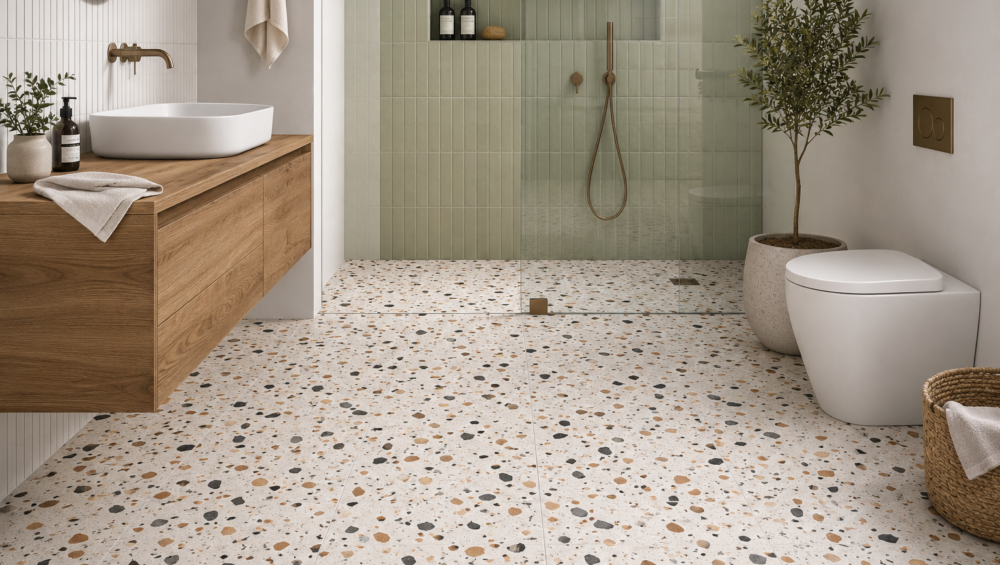
A bathroom floor does more than handle water and foot traffic. It sets the tone for the entire room. If you want a surface that feels architectural, elevated, and built to last, terrazzo tiles for bathroom floor designs deserve a serious look.
Terrazzo has a way of making a bathroom feel considered rather than simply finished. The flecked surface adds movement without visual clutter, and it can shift from soft and understated to bold and statement-making depending on the chip size, base tone, and tile format. That balance is exactly why terrazzo continues to appeal to homeowners, designers, and builders working on bathrooms that need both style and staying power.
Why terrazzo works so well in bathrooms
Bathrooms ask a lot from flooring. The surface needs to manage moisture, support daily wear, and still look refined years after installation. Terrazzo meets that brief with ease when you choose a quality tile suited to wet areas.
Visually, terrazzo offers something many plain tiles cannot. It brings pattern, but not in a way that overwhelms a compact room. The scattered chips create depth and texture, which can make a small bathroom feel more layered and custom. In larger spaces, terrazzo reads as luxurious and architectural, especially when paired with natural stone, brushed metals, or warm timber accents.
From a practical standpoint, terrazzo tiles are known for durability. They are well suited to busy households, guest bathrooms, and even commercial settings where floors need to work hard. The right product and finish can also help you achieve the slip resistance required for a safer bathroom environment.
Choosing terrazzo tiles for bathroom floor performance
Not every terrazzo tile will perform the same way, so selection matters. The best choice depends on who uses the bathroom, how often it gets wet, and the overall design direction of the project.
Start with finish. A polished surface can look striking, but in a bathroom it may not always be the best fit for the floor, especially in family homes or shower zones. Honed, matte, or structured finishes often deliver a more grounded look and better traction. For many projects, that subtle finish also feels more contemporary and easier to live with.
Tile size matters too. Large-format terrazzo can create a sleek, expansive look with fewer grout lines, which many clients love in modern bathrooms. Smaller formats, however, can be more forgiving in rooms with multiple angles or tight layouts. They also make it easier to create falls where needed. If the terrazzo floor extends into a shower area, mosaic or smaller-format options may be worth considering for both drainage and slip performance.
Then there is color. Light terrazzo tiles can brighten a bathroom and make the room feel larger, while deeper tones add drama and boutique-hotel appeal. Mid-tone bases with soft aggregate are often the most versatile because they hide day-to-day dust and water spotting better than very dark or very bright surfaces.
The design appeal of terrazzo bathroom floors
One of terrazzo’s biggest strengths is flexibility. It can anchor a minimalist bathroom, soften a more traditional scheme, or give a clean modern space more personality.
If you prefer a quiet, timeless look, choose terrazzo with a restrained chip pattern in white, ivory, beige, gray, or warm greige. This style works beautifully with floating vanities, frameless glass, and brushed nickel or matte black fixtures. It feels premium without trying too hard.
For bathrooms with more personality, terrazzo opens up far more creative options. Larger chips, contrasting aggregate, and richer base colors can turn the floor into a focal point. Paired with fluted cabinetry, statement mirrors, or sculptural lighting, the effect is sophisticated and highly curated.
Terrazzo also works well when you want cohesion across multiple surfaces. Some designs pair beautifully with plain wall tiles, allowing the floor to carry the visual detail. Others can be matched with terrazzo-look walls or vanity splashbacks for a stronger design statement. The key is restraint. Because terrazzo already has movement, it usually performs best when the rest of the palette gives it room to breathe.
What to know before you buy
Terrazzo is a premium look, but there are still practical questions worth asking before you commit. The first is material composition. Some terrazzo tiles are cement-based, while others are porcelain tiles designed to replicate terrazzo. Both can work in bathrooms, but they offer different benefits.
Traditional terrazzo has an authentic, substantial feel that many design professionals appreciate. It delivers natural variation and a high-end finish that suits luxury interiors. Porcelain terrazzo-look tiles, on the other hand, can offer easier maintenance, excellent water resistance, and strong durability with less ongoing care. For many homeowners, that mix of design impact and convenience is especially appealing.
The second consideration is maintenance. True terrazzo may require sealing depending on the product and finish, while porcelain is generally simpler to maintain. If the bathroom is used heavily by children, guests, or tenants, low-maintenance performance may carry more weight than material purity.
The third is installation. Bathrooms demand precision, and terrazzo deserves it. Pattern alignment, grout tone, substrate preparation, and proper waterproofing all affect the final result. Even the most beautiful tile can look underwhelming if the layout feels rushed or the grout color fights the surface. In a premium bathroom, these details are not secondary. They are part of the finish.
How terrazzo tiles for bathroom floor layouts change the room
Layout has a major impact on how terrazzo reads once installed. The same tile can feel calm and spacious in one bathroom and busy in another depending on spacing, grout choice, and the surrounding materials.
If your bathroom is compact, a larger terrazzo tile with a close-matching grout can create a cleaner visual field. That helps the room feel less interrupted. In a larger bathroom, you have more freedom to introduce bolder chip patterns or stronger color contrast without making the space feel crowded.
There is also the question of continuity. Running the same terrazzo tile across the main floor and into the shower can create a refined, custom look. It makes the room feel larger and more resolved. That said, this approach only works when the selected tile format and finish are appropriate for wet-zone performance. Sometimes the better design decision is to use a coordinating terrazzo on the main floor and a smaller slip-rated format in the shower.
Border details, feature niches, and transitions into adjacent rooms should be considered early. Terrazzo is not a background material you choose at the last minute. It is often the surface that defines the entire bathroom palette.
Pairing terrazzo with other bathroom finishes
A terrazzo floor gives you a strong design starting point, but the supporting finishes determine whether the room feels balanced or overworked.
For a soft luxury aesthetic, pair terrazzo with warm whites, sandy neutrals, oak tones, and brushed brass. This combination feels polished and welcoming. For a cooler, more contemporary look, combine gray terrazzo with crisp white walls, charcoal accents, and streamlined fixtures.
Natural stone can also sit beautifully alongside terrazzo, especially when the tones are connected rather than competing. A quiet marble-look wall tile, for example, can complement a terrazzo floor if the veining is restrained. If both surfaces are bold, the space can start to feel visually crowded.
Texture plays a role as well. Because terrazzo has a naturally animated surface, it often benefits from quieter companions. Ribbed vanity fronts, matte paint, and simple tile profiles can add depth without fighting for attention.
Is terrazzo right for every bathroom?
Not always, and that is worth saying clearly. If you want an ultra-minimal floor with zero visible variation, terrazzo may feel too expressive. If budget is the main driver, some terrazzo options may sit above entry-level tile categories. And if you are renovating a bathroom with many awkward cuts or complicated levels, installation costs can climb depending on the product.
Still, for buyers who want a floor with design presence, long-term durability, and a premium finish, terrazzo remains one of the most compelling options on the market. It carries the visual richness of a custom surface while still feeling practical enough for everyday use.
That combination is exactly why terrazzo continues to appear in high-end residential bathrooms, design-led renovations, and commercial hospitality spaces. It does not chase trends. It holds its own.
When chosen carefully, terrazzo tiles for bathroom floor projects can transform the room from purely functional to genuinely memorable. The best results come from balancing beauty with performance – selecting the right finish, the right scale, and the right tone for the way the space will actually be used. If your goal is a bathroom that feels elevated the moment you walk in, terrazzo is a smart place to start.