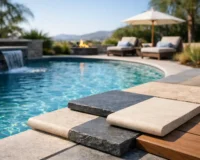
A pool’s waterline may catch the eye, but its coping defines the experience. It is the surface under bare feet, the visual frame around the water, and the transition between the pool shell and the surrounding landscape. Choosing the best pool coping materials means balancing a refined finish with heat resistance, slip performance, water exposure, and the character of the home.
For a contemporary courtyard pool, a coastal retreat, or a resort-inspired entertaining area, the right coping should feel considered rather than decorative alone. A beautiful material that becomes uncomfortable in full sun or difficult to maintain around saltwater will quickly lose its appeal. The most successful selections pair premium design with a surface that works effortlessly in the conditions it will face.
What Pool Coping Needs to Do
Pool coping is the cap installed along the top edge of a swimming pool. It protects the pool structure, directs splash water away from the shell, and creates a clean, finished perimeter. Depending on the design, it may sit flush with the paving, project slightly over the water, or feature a more pronounced bullnose edge.
Unlike standard outdoor paving, coping is constantly exposed to water, pool chemicals, sunscreen, foot traffic, and changing temperatures. That makes technical performance as relevant as color and texture. Look for a material with suitable slip resistance, low water absorption, reliable durability, and an edge profile that feels comfortable and safe.
The surrounding design matters, too. Coping can be specified to blend almost invisibly into large-format pool pavers for a calm, architectural effect. Or it can be used as a contrasting stone border that gives the water a stronger sense of definition. Neither approach is inherently better. It depends on the scale of the pool, the style of the property, and how much visual detail the outdoor space needs.
Best Pool Coping Materials for Style and Performance
Porcelain coping
Porcelain is one of the most versatile choices for modern pool areas. Premium outdoor porcelain offers a crisp, consistent appearance with a low-porosity surface that resists moisture, staining, fading, and common poolside spills. It is particularly appealing for homeowners and designers who want the look of natural stone, concrete, or timber without the same level of ongoing care.
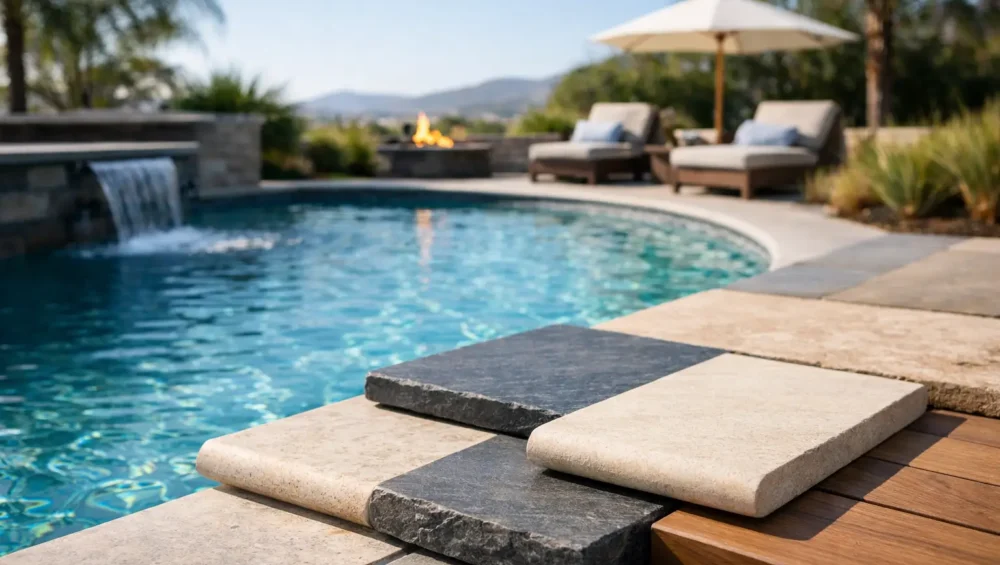
Porcelain coping is available in a broad palette, from pale limestone-inspired finishes to dramatic charcoal stone looks. Matching porcelain pavers can carry the same surface from the pool edge across patios, pathways, and outdoor kitchens, creating a polished, uninterrupted composition.
Choose a textured exterior finish and purpose-made coping pieces rather than cutting standard tiles on site where possible. Factory-finished drop-face, bullnose, or mitred options give the edge a more precise result. Porcelain can become warm in direct summer sun, especially in darker colors, so lighter finishes are often more comfortable for exposed pool decks.
Travertine coping
Travertine remains a favorite for relaxed luxury. Its naturally porous texture, soft movement, and warm neutral tones suit Mediterranean, coastal, and classic outdoor settings exceptionally well. Honed and tumbled travertine coping has an easy, tactile quality that makes a pool feel established and inviting rather than overly formal.
A key advantage is thermal comfort. Lighter travertine can remain comparatively pleasant underfoot in hot conditions, making it a strong option for sun-drenched entertaining spaces. Its natural texture also supports a less slippery feel than a highly polished surface.
The trade-off is maintenance. Travertine requires appropriate sealing and periodic care, particularly where sunscreen, leaf matter, food, and mineral-rich water are common. The material’s natural variation is part of its appeal, but it also means samples should be viewed as an indication rather than an exact promise of every piece. For projects that value organic character, this variation is often precisely the point.
Limestone coping
Limestone brings a quieter, more tailored elegance to a pool surround. Its fine grain and restrained color variation make it especially well suited to contemporary homes, sophisticated garden schemes, and projects where the architecture needs to remain the focal point. Cream, sand, gray, and soft silver tones can create a beautiful relationship between water, planting, and exterior walls.
Not every limestone is appropriate for every climate or pool environment. Density, finish, and porosity vary significantly by variety, so specification should be based on the individual stone rather than the category alone. A properly selected exterior-grade limestone with a suitable finish can deliver a luxurious, enduring pool edge. Like other natural stones, it benefits from sealing and knowledgeable installation.
Granite coping
For strength, depth of color, and a more dramatic architectural statement, granite is difficult to overlook. It is naturally dense and hard-wearing, with excellent resistance to scratching and weathering. Darker granites can produce a striking contrast against pale paving or create a moody, contemporary pool setting.
However, dark stone absorbs more heat. In regions with intense sun, a deep charcoal or black granite coping may look exceptional but feel too hot for bare feet through the middle of the day. A flamed, leathered, or textured finish is generally a more practical choice than a polished surface around water. Granite also needs carefully detailed edges, as its strength and visual weight can make a pool perimeter feel heavy if the proportions are not right.
Cast concrete coping
Cast concrete offers flexibility in shape, color, and scale. It can be formed for curves, broad coping bands, integrated steps, and custom edge details that would be difficult to achieve with cut stone or porcelain. For architectural pools with a monolithic concrete aesthetic, it can create a cohesive, sculptural finish.
The quality of the concrete mix, finish, drainage, and installation is crucial. Concrete can crack over time if movement, substrate preparation, and expansion joints are not properly addressed. It may also need sealing to reduce staining and weathering. When executed well, it delivers a clean, custom look. When rushed, imperfections at the water’s edge become highly visible.
How to Choose the Right Pool Coping Material
Start with the climate and exposure of the site. A bright, open pool deck in a hot climate calls for a lighter surface with good thermal comfort. In areas that experience freezing temperatures, low water absorption and correct installation become even more important, as trapped moisture can lead to damage during freeze-thaw cycles.
Next, consider the pool system. Saltwater pools are popular for their softer swimming experience, but salt can be demanding on certain natural materials, sealers, and installation components. Ask the supplier and installer to confirm that the chosen stone, adhesive, grout, and sealer are appropriate for salt exposure. This is not a detail to leave until after the material has been ordered.
Then assess how the pool will be used. A family pool with frequent splashing, children running between the water and lawn, and regular entertaining needs a forgiving, slip-conscious surface. A formal lap pool may prioritize crisp lines and a more minimal edge. Both can be luxurious, but they require different decisions around texture, profile, and color.
Finally, view samples outdoors. Interior lighting cannot replicate the effect of direct sun, wet feet, reflected water, or surrounding landscaping. Place samples beside the pool finish, exterior paint, and adjacent paving. Look at them dry and wet, morning and afternoon. At Mecca Tiles, ordering samples can make this stage more confident, particularly when selecting between nuanced stone-look porcelains or naturally varied surfaces.
Edge Profiles and Installation Details Matter
Even the best material can disappoint if the coping profile is poorly chosen. A bullnose edge has a soft, rounded finish that works beautifully in traditional and family-friendly settings. A square edge feels more contemporary and suits clean-lined architecture. Drop-face coping creates a substantial framed effect, while mitred porcelain coping can deliver a sharp, visually continuous slab-like edge.
Drainage deserves equal attention. Water should move away from the pool structure and not sit beneath or behind the coping. Proper falls, expansion joints, waterproofing, adhesive selection, and movement allowances should be planned by an experienced pool builder or tiler. These elements are largely invisible once the project is complete, yet they determine how well a premium pool finish performs over the years.
A refined pool edge should invite people to linger: cool enough for a summer afternoon, secure beneath wet feet, and beautiful from every view of the home. Select a material that supports the way the space will actually be lived in, then let the water, paving, and landscape come together as one considered outdoor setting.