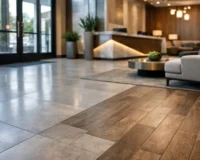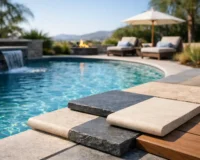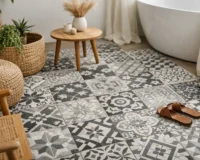
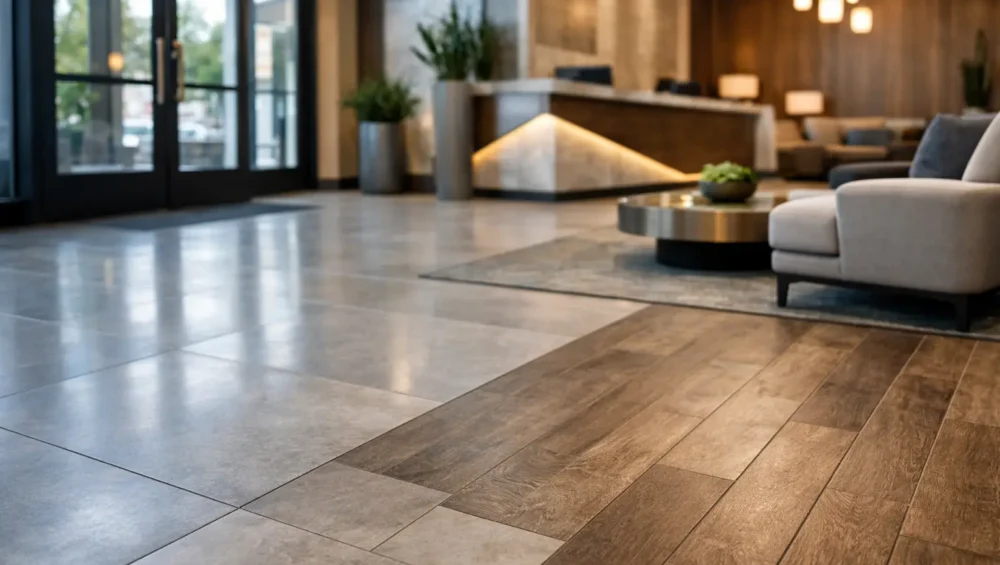
A lobby begins working long before anyone reaches the reception desk. It absorbs wet shoes, rolling luggage, deliveries, furniture moves, and constant foot traffic while setting the visual standard for the entire property. The right commercial lobby flooring does more than survive that pressure. It creates a composed, premium arrival experience that reflects the building, brand, or hospitality concept behind it.
For architects, designers, builders, and property decision-makers, the best choice sits at the intersection of performance and atmosphere. A beautiful surface that stains easily or becomes slippery in wet weather can quickly become a liability. Conversely, a highly durable floor with little visual presence can make even a well-designed lobby feel ordinary. The aim is to specify a finish that remains elegant after thousands of daily arrivals.
Selecting Commercial Lobby Flooring
The first decision should not be color or pattern. Begin with how the lobby is actually used. A boutique hotel entrance, a multifamily residential foyer, a corporate reception area, and a busy medical building all have different traffic patterns, cleaning routines, and expectations of luxury.
Consider the points of entry first. Does the floor receive rain, snow, street grit, or poolside moisture? Is there a covered vestibule and a properly sized entrance matting zone? Will rolling carts, wheelchairs, strollers, or luggage pass through every day? These practical details influence the right tile finish, grout selection, installation method, and maintenance plan.
Scale also changes the specification. Large-format porcelain can create an expansive, calm visual field in a spacious lobby, with fewer grout joints to interrupt the design. In a smaller entry, a patterned tile, mosaic border, or richly veined stone may deliver more impact without overwhelming the room. The floor should support the lobby’s architecture rather than compete with it.
Start with traction, not just appearance
Slip resistance matters most at the entrance, where water and debris are likely to collect. A polished surface can look striking under dramatic lighting, but it may not be appropriate for a primary exterior entry or an area exposed to wet weather. Matte, honed, textured, or grip-rated finishes often offer a more sensible balance of refinement and underfoot security.
This does not mean a lobby floor must look rough or industrial. Many premium porcelain and natural stone options offer soft, sophisticated surface texture that feels intentional rather than utilitarian. The key is to assess the finish in the location where it will be used. Review samples under the lobby’s lighting, and consider how the material looks when wet as well as dry.
Local building requirements, accessibility standards, and project-specific safety obligations should guide the final specification. A qualified designer, contractor, or flooring professional can help confirm that the selected material suits the intended application.
The Best Materials for High-Traffic Lobbies
Porcelain tile is often the leading choice for commercial lobby flooring because it brings together design versatility, durability, and relatively straightforward care. Premium porcelain can capture the character of marble, limestone, terrazzo, concrete, timber, or hand-finished stone while offering reliable resistance to scratching, staining, and moisture. It is particularly compelling for properties that want a luxury look without the maintenance demands of some natural materials.
Large-format marble-look porcelain gives a reception area a crisp, tailored presence. Concrete-look porcelain can suit contemporary offices, mixed-use buildings, and minimalist hospitality settings. Stone-look collections bring warmth and organic variation, while terrazzo-look porcelain offers visual movement without the complexity of a poured terrazzo installation. For an especially distinctive entrance, patterned porcelain can define a reception zone or create a memorable threshold.
Natural stone remains an exceptional choice when authenticity is central to the design. Marble, limestone, travertine, and granite each carry variations in veining, mineral character, and tone that cannot be replicated exactly. A carefully selected stone lobby floor can feel established, exclusive, and deeply connected to the architecture.
The trade-off is care. Many natural stones benefit from sealing and require prompt attention to spills, especially acidic substances that may etch sensitive surfaces. Honed finishes are often more forgiving than polished stone in active public areas, as they soften the appearance of minor wear and offer more practical traction. Stone is a strong choice when the client understands its natural character and is prepared to maintain it accordingly.
Terrazzo is another enduring lobby material, valued for its architectural presence and visual depth. It can range from quiet and tonal to bold and expressive, depending on aggregate size, base color, and joint layout. Terrazzo-inspired porcelain is worth considering where the look is desired alongside a more direct installation process and predictable upkeep.
Mosaic tile has a different role. It is rarely the most efficient option for an entire large lobby, but it can be highly effective for feature panels, inset rugs, decorative borders, reception fronts, and small vestibules. Its many grout joints provide useful traction, while its scale allows for detailed pattern and custom color work.
Grout is part of the flooring system
Grout can either support a polished installation or undermine it. In high-traffic settings, a very light grout paired with a dark tile may show dirt quickly, particularly near entry doors. A closely matched grout creates a quieter, more continuous look, while a contrasting grout can emphasize pattern and geometry.
For busy commercial settings, select a grout that aligns with both the design and the cleaning schedule. High-performance grout options can improve stain resistance, but no grout eliminates the need for regular maintenance. Entrance matting, daily dry debris removal, and prompt spill response will do more for a floor’s appearance than choosing a fashionable color alone.
Design a Floor That Guides the Arrival Experience
A lobby floor can help organize movement without adding signs or barriers. A change in tile direction, format, border, or color can lead visitors from the entrance to reception, elevators, or common areas. This is especially useful in larger commercial buildings where wayfinding needs to feel intuitive and unobtrusive.
For a refined approach, use a primary field tile through the main space and reserve a more expressive material for key moments. A terrazzo-look porcelain inset can frame a reception desk. A mosaic detail can announce an elevator bank. A marble-look tile in a larger format can establish a formal arrival zone, with a complementary textured porcelain used near exterior doors.
Lighting should be considered alongside the flooring. Glossy tiles and polished stone reflect light beautifully, which can make a lobby feel brighter and more expansive. They also reveal smudges, water spots, and surface imperfections more readily. Matte finishes diffuse light and tend to be more forgiving, making them a practical option for active buildings with limited daytime cleaning.
Color has operational value as well. Pale floors can make a lobby feel airy and premium, but may require more frequent attention near a street-facing entrance. Very dark floors can conceal some dirt while revealing dust and lint. Mid-tone neutrals, layered stone visuals, and gently varied terrazzo patterns often provide the most practical visual balance for high-use spaces.
Sample Before You Specify
A small sample is one of the most useful tools in a commercial flooring decision. Place it next to the wall finish, reception joinery, metalwork, and upholstery. View it in daylight and under the planned artificial lighting. If possible, test it against a shoe sole, a rolling bag, and the cleaning products intended for the site.
It is also worth ordering more than one option. Materials that appear similar online can differ significantly in undertone, surface texture, and pattern variation once they are in the room. Comparing samples side by side makes it easier to identify the finish that feels most aligned with the project.
At Mecca Tiles, curated premium surface collections make it easier to compare porcelain, stone, terrazzo, mosaics, and statement tile designs for elevated commercial interiors. A considered sample selection can turn a broad design direction into a confident material decision.
Plan for Long-Term Care
The most successful lobby floors are specified with maintenance in mind from the start. A porcelain floor may need regular sweeping and mopping, while natural stone requires a cleaner suitable for its composition and periodic resealing where recommended. Abrasive cleaning tools and harsh chemicals can dull finishes or damage grout, even on durable materials.
Entrance matting is not an afterthought. It is one of the most effective ways to limit abrasion from grit and moisture at the door. Specify enough matting length for visitors to take several steps before reaching the finished floor, then maintain it consistently. This small detail protects the surface and helps preserve the premium impression the lobby was designed to create.
Choose a floor that earns its place every day: one that feels memorable at first glance, handles real traffic with confidence, and continues to represent the property well long after opening day.