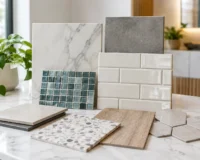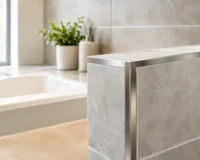

A tile can look quietly elegant on a screen, then completely change character when it meets the light in your kitchen, bathroom, or entryway. That is why learning how to order tile samples online is one of the smartest early decisions in any renovation or new-build project. A sample turns a promising image into something you can see, touch, place beside your cabinetry, and assess in the room it will transform.
For homeowners and design professionals alike, the aim is not simply to find a beautiful tile. It is to select a surface with the right color, scale, finish, and performance for the way a space will be used. Ordering samples gives you the clarity to make that decision with confidence before committing to a larger purchase.
Start With the Room, Not the Product Image
Before adding samples to your cart, define where the tile will live. A polished marble-look porcelain may bring a refined finish to a powder room wall, while a textured porcelain or natural stone option may be better suited to an outdoor entertaining area. The same shade can feel dramatically different depending on whether it is used across a large floor, as a kitchen backsplash, or as a feature wall.
Think about practical conditions alongside the look you want to create. Bathrooms and pool surrounds call for careful attention to slip resistance and moisture suitability. Kitchen backsplashes must balance visual impact with easy cleaning. High-traffic entryways and commercial spaces need surfaces that can maintain their appearance under regular wear.
It also helps to identify the other fixed elements in the room before you begin. Cabinet finishes, countertops, paint, window frames, plumbing fixtures, and timber flooring all influence which tile will feel considered rather than competing. A sample is most valuable when it is assessed against the materials that are actually staying.
How to Order Tile Samples Online Efficiently
The best online sample order begins with a focused shortlist. Browse by room, material, color family, finish, or format, then narrow your selection to options that genuinely suit the project brief. Rather than ordering every tile that catches your eye, choose a small group with distinct strengths: perhaps one warm neutral, one cooler alternative, one textured finish, and one statement option.
Read the product details before placing the order. Product imagery is useful for inspiration, but specifications provide the information that protects the final result. Check the tile material, dimensions, finish, recommended application, thickness, and any relevant rating for wet areas, outdoor settings, or heavy traffic. For natural stone, review the expected variation and sealing requirements. For patterned tile, consider whether the design works as a full field or is better reserved for a smaller feature area.
When you order, keep your sample selection organized. Label each piece as it arrives with its product name, color, and size. This matters once several similar neutrals are spread across a table, especially when you are comparing ivory, almond, greige, sand, and soft gray tones. Save the product details for your finalists so you can quickly return to the specifications when it is time to purchase.
Order Enough Variety, but Avoid Decision Fatigue
Three to six samples is usually a productive range for one area. It gives you meaningful comparison without creating a crowded collection of near-identical choices. If you are selecting tile for multiple rooms, order and review samples by room rather than attempting to resolve the entire home at once.
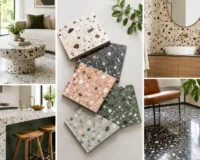
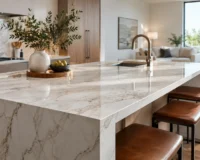
For a coordinated project, include one or two supporting materials in the sample order. If you are considering a terrazzo floor for a bathroom, for example, place it next to the wall tile, vanity finish, and metal fixtures. If you are choosing a large-format porcelain slab for a kitchen, compare it with the cabinet door and flooring sample. Great surface schemes are built through relationships, not isolated products.
Evaluate Samples in the Light That Matters
Lighting has a greater effect on tile than most people expect. A soft beige may read warm and creamy under afternoon sunlight, then appear more gray beneath cool LED lighting. Gloss tiles can reflect windows and pendants beautifully, but their sheen can also emphasize glare in certain settings. Matte finishes tend to feel more restrained and tactile, although they may reveal texture or tonal movement differently across the day.
Place samples in the intended room and review them at several times: morning, midday, evening, and under artificial light. Hold them vertically if they will be used on a wall, then lay them flat if they are intended for the floor. This simple change can alter the way a finish reflects light.
Do not evaluate from only one angle. Step back a few feet, then look closely at the surface. Premium tile often has details that a product image cannot fully communicate: gentle veining, granular texture, hand-made character, or subtle shifts in tone. These qualities can make a surface feel layered and sophisticated across a larger installation.
Check Color Against the Full Space
A single sample cannot show the complete visual effect of a tiled room, but it can reveal whether the color direction is right. Place it next to walls, cabinetry, countertop pieces, paint swatches, and textiles. If the tile is for a renovation, compare it with the existing finishes you cannot change.
Keep in mind that tiles with variation are designed to show movement from piece to piece. This is especially relevant for natural stone, terrazzo, terracotta, encaustic-inspired designs, and timber-look porcelain. A sample represents the collection, not every individual tile in a future order. If a highly consistent look is essential, choose a product with minimal shade variation. If depth and character are the priority, embrace the variation as part of the design.
Test Texture, Finish, and Everyday Practicality
The right tile should feel as good in use as it looks in a mood board. Run your hand across the sample and notice whether the texture suits the location. A softly structured finish can add depth to a shower wall or exterior space. A smooth, satin surface may be ideal for a contemporary kitchen. Highly polished finishes can bring a luxurious sense of light, though they may be less forgiving of water marks or footprints in busy areas.
For floor tiles, consider how the surface will perform in real life. Is the room likely to see wet feet, pets, children, dining chairs, or outdoor debris? A beautiful finish is only successful when it supports the way the space functions. Product suitability should always guide the decision, particularly in wet zones, external areas, and commercial environments.
If you are deciding between a small mosaic and a large-format tile, consider maintenance as well as appearance. Mosaic can create intricate detail and provide more grout lines for certain wet-area applications. Large-format porcelain can deliver a clean, expansive look with fewer grout joints. Neither is universally better – it depends on the room, the desired visual effect, installation conditions, and your preference for upkeep.
Confirm Scale Before You Commit
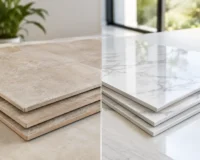
Scale is one of the easiest details to misjudge online. A 24-by-24-inch floor tile and a 4-by-4-inch wall tile may share the same color, yet create entirely different atmospheres. Larger formats can make a room feel calm and architectural, while smaller pieces introduce rhythm, detail, and a more decorative finish.
Use painter’s tape or paper cut to the listed dimensions to map tile size on the floor or wall. This gives you a clearer sense of grout layout, pattern direction, and how the tile will sit with key features such as a vanity, island, fireplace, or doorway. For a feature wall, consider the full repeat of the pattern rather than judging one piece alone.
Also factor in grout. The grout color and joint width can make a tile installation feel crisp, continuous, graphic, or deliberately rustic. A matching grout lets the tile surface take the lead, while a contrasting grout can highlight shape and layout. Bring a few grout color chips into the comparison if your final choice depends on a precise tonal balance.
Make the Final Selection With a Project-Level View
Once you have lived with your samples for a few days, return to the project goals. Ask which option complements the architecture, supports the room’s daily demands, and creates the feeling you wanted from the beginning. The most striking sample in isolation is not always the right choice. Often, the strongest selection is the one that makes the cabinetry, light, furnishings, and surrounding finishes look more intentional.
Before purchasing, recheck coverage calculations, recommended application, lead times, and the quantity needed for cuts, waste, and future repairs. Your installer can help confirm layout, substrate requirements, and the appropriate allowance for the chosen format or pattern. For natural materials and tiles with pronounced variation, reviewing a larger representation or discussing the expected blend can provide additional reassurance.
Mecca Tiles makes it easier to move from inspiration to a considered surface selection, with premium options designed for everything from expressive bathrooms to enduring outdoor spaces. Order samples with a clear room plan, view them in their true setting, and give the final choice enough time to prove itself. The tile you keep reaching for in changing light is often the one that will make the finished room feel complete.