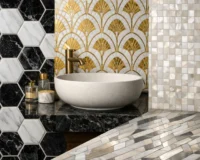
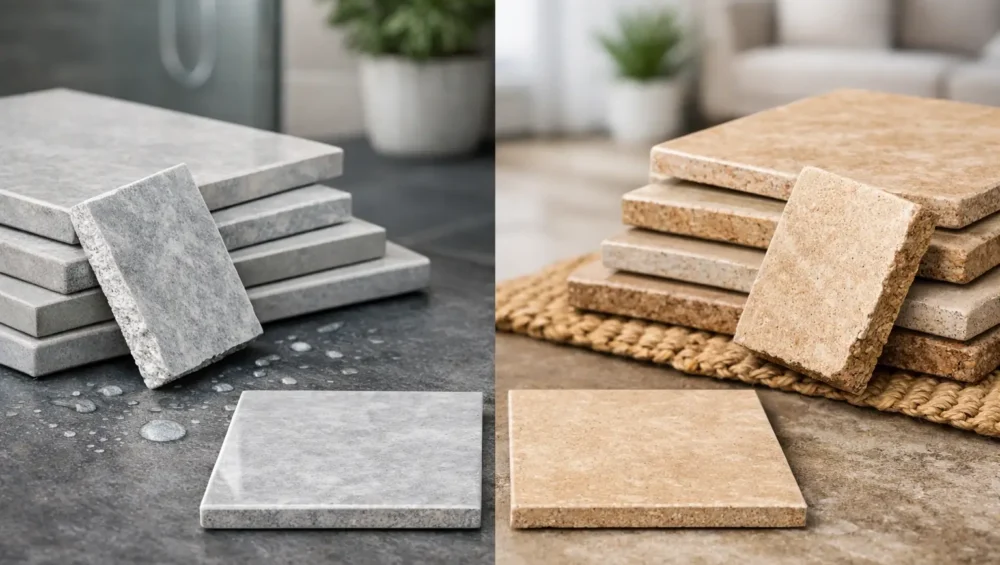
A beautiful tile can change the entire character of a room, but the wrong material in the wrong setting can create unnecessary maintenance, installation, and replacement costs. When comparing porcelain vs ceramic tiles, the decision is less about choosing a “better” tile and more about selecting the surface that suits your space, design vision, and level of daily wear.
Both options offer exceptional decorative potential, from quiet neutral walls to richly patterned floors and large-format contemporary schemes. Their differences become most meaningful in high-moisture rooms, busy family homes, commercial interiors, and outdoor areas where performance matters just as much as appearance.
Porcelain vs Ceramic Tiles: The Core Difference
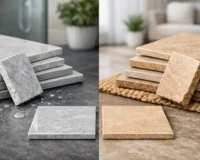
Porcelain and ceramic are both fired clay tiles, but porcelain is made from finer, denser clay and fired at higher temperatures. The result is a tile with very low water absorption, a compact body, and excellent resistance to wear. In industry terms, porcelain typically has a water absorption rate of 0.5% or less.
Ceramic tile is also durable and practical, but it is generally more porous and lighter than porcelain. It is often easier to cut and install, particularly in smaller formats or detailed wall applications. A glazed ceramic tile can still be an outstanding choice for many interiors, especially where it will not face constant moisture, impact, or heavy foot traffic.
The distinction matters because tile is not simply a finish. It is a working surface. A kitchen backsplash, a shower wall, a hotel lobby floor, and an exposed patio all demand very different things from the material beneath their glaze.
Choose Porcelain for Demanding Spaces
Porcelain is the natural choice when durability, moisture resistance, and long-term performance lead the brief. Its dense composition makes it especially well suited to floors that experience regular traffic, splashes, spills, and temperature changes.
For bathrooms, porcelain is an elegant, reliable option for floors, shower walls, and wet-room applications. It performs beautifully in designs that call for a continuous look from floor to wall, whether you prefer a soft stone aesthetic, dramatic marble veining, or a modern concrete finish. In a shower, correct waterproofing and installation remain essential, but porcelain provides the resilient surface layer that makes daily upkeep easier.
Kitchens also benefit from porcelain flooring. It stands up well to dropped utensils, tracked-in dirt, food spills, and frequent cleaning. For households with pets, children, or a busy entertaining calendar, a quality porcelain floor can offer peace of mind without compromising on a refined finish.
Porcelain is particularly valuable outdoors. Patios, pool surrounds, entryways, and exterior entertaining areas need tiles that can tolerate weather exposure and moisture. Select a porcelain tile specifically rated for exterior use, with an appropriate slip-resistant finish for the location. A smooth polished tile may look striking indoors, but it is rarely the right choice around a wet pool deck or uncovered terrace.
Commercial projects are another strong fit. Retail spaces, hospitality settings, offices, and high-traffic public areas often require a surface that holds its appearance under sustained use. Porcelain offers a broad range of premium looks, including timber, terrazzo, natural stone, metal, and concrete effects, while delivering the practical consistency commercial specifications demand.
When Ceramic Tile Is the Smarter Choice
Ceramic tile should never be viewed as the lesser option. It is a design-forward material with an enormous range of colors, glazes, shapes, and handmade-inspired finishes. Where its performance profile suits the application, ceramic can deliver more character and visual warmth than a more utilitarian choice.
Wall applications are where ceramic truly shines. Kitchen backsplashes, powder rooms, laundry walls, fireplace surrounds, and feature walls are ideal settings for glossy subway tiles, textured surfaces, irregular zellige-style pieces, and delicate decorative formats. Since walls do not face the same abrasion and impact as floors, you can prioritize color, shape, sheen, and tactile detail.
Ceramic can also be a thoughtful choice for low-traffic residential floors, depending on the product rating and installation area. A guest bathroom or lightly used powder room may not need the density of porcelain. The key is to check that the specific tile is rated for floor use rather than assuming every ceramic format can be installed underfoot.
Budget can also influence the decision. Ceramic is often more affordable to purchase and may be simpler for installers to cut around outlets, corners, and fixtures. That said, price should be weighed against the life of the surface. Choosing a lower-cost tile for a demanding floor can become expensive if it does not suit the environment.
Consider Water, Wear, and Slip Resistance
The most useful way to choose between porcelain and ceramic is to assess the room before considering the color palette. Ask how often the surface will get wet, how much traffic it will receive, and whether shoes, pets, furniture, or rolling equipment will cross it regularly.
In wet spaces, look beyond the material name. A tile’s finish is equally important. Matte, structured, and purpose-designed grip surfaces generally offer better traction than glossy finishes. For floors that will be wet underfoot, such as shower floors, mudrooms, pool surrounds, and commercial entries, check the slip-resistance rating and follow the relevant local building requirements.
For glazed tiles, wear ratings can help indicate suitability for floors. A wall tile may have a beautiful finish but lack the surface strength required for regular foot traffic. Your selection should be based on the exact product, not just whether it is labeled porcelain or ceramic.
Design Differences That Shape the Final Look
Porcelain is often associated with large-format, architectural surfaces. It can create expansive floors with fewer grout lines, or replicate the subtle movement of limestone, travertine, oak, and marble with impressive realism. Rectified porcelain tiles, which have mechanically finished edges, can be installed with narrower grout joints for a crisp, contemporary appearance.
Ceramic often brings a more expressive, artisanal quality. Its glaze can have depth, variation, crackle, gloss, or a gently uneven surface that catches the light. In a kitchen or bathroom, these details can turn a practical wall into the visual focal point of the room. Small-format ceramics also make it easier to introduce curves, herringbone layouts, framed niches, or color-blocked compositions.
Neither look is limited to one material. Porcelain can be richly decorative, and ceramic can be beautifully minimal. The difference is that porcelain tends to offer more freedom in demanding floor and exterior applications, while ceramic provides exceptional opportunity for decorative interior walls.
Installation Is Part of the Material Decision
A premium tile deserves installation that protects its performance and visual impact. Porcelain’s density can make it more challenging to cut, especially in large-format pieces or thick outdoor pavers. It may require specialized blades, leveling systems, and experienced installers. Large tiles also demand a very flat substrate to avoid lippage, where one tile edge sits higher than the next.
Ceramic is generally easier to handle, but it still requires careful preparation. Walls must be properly supported, wet areas need a compliant waterproofing system, and grout selection should complement both the tile finish and the practical needs of the space.
For either material, do not overlook grout. A light grout can emphasize a clean, continuous surface but may need more routine care in a busy kitchen. A deeper tone can frame the tile pattern and be more forgiving in high-use areas. In showers and floors, consider quality grout and sealant choices as part of the complete surface specification.
Maintenance and Everyday Living
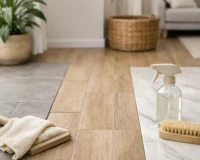
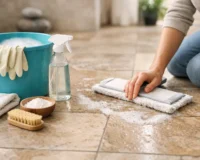
Both porcelain and glazed ceramic are straightforward to maintain. Regular sweeping or vacuuming removes abrasive grit, while a pH-neutral cleaner is usually sufficient for routine washing. Avoid harsh acidic products unless the manufacturer specifically approves them, as they can affect grout, finishes, or nearby natural stone.
Porcelain’s low absorption makes it especially forgiving around spills and moisture. Ceramic walls are also easy to wipe down, making them a practical choice behind cooktops, vanities, and laundry sinks. In either case, grout lines will usually require more attention than the tiles themselves.
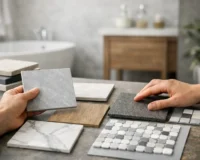
If you are selecting a tile with pronounced texture, consider how it will feel and clean in real life. Texture can add welcome depth and grip, but heavily structured surfaces may hold more soap residue or outdoor debris. Ordering samples and viewing them in the project’s natural light can make this decision far easier.
The Right Tile Is the One That Fits the Room
Choose porcelain when the project calls for high durability, low water absorption, floor-ready strength, or outdoor performance. Choose ceramic when you want expressive color, glaze, shape, and texture for walls or lower-demand interior applications. For many homes, the most considered design uses both: porcelain underfoot for enduring performance and ceramic on the walls for personality.
Start with the room’s practical demands, then let the finish set the mood. The most successful surface schemes feel luxurious not because every tile is the same, but because every tile has been chosen with purpose.