A floor with fewer grout lines changes more than the surface underfoot. It gives a room visual quiet, lets natural light travel farther, and makes carefully chosen furnishings feel more intentional. Large format porcelain tiles bring that sense of scale to bathrooms, kitchens, living areas, and commercial interiors, with the practical strength porcelain is known for.
For a renovation with a premium brief, they offer an especially compelling balance: the expressive look of stone, concrete, timber, or marble, with a surface designed for real life. The right tile can make a compact bathroom feel more open, give a kitchen a refined architectural foundation, or create continuity from an interior living area to a covered patio.
Why Large Format Porcelain Tiles Make an Impact
Large format tiles are generally larger than traditional tile sizes, commonly beginning around 24 by 24 inches or 24 by 48 inches. Formats such as 32 by 32 inches, 48 by 48 inches, and large porcelain slabs take that visual effect even further. Because each piece covers more area, the grout grid recedes and the finish becomes the feature.
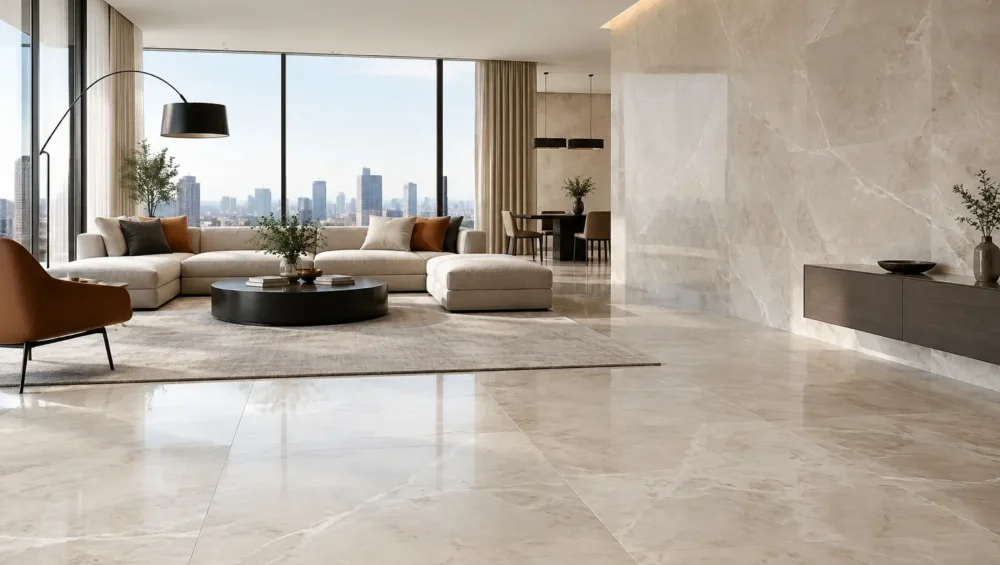
This is the appeal for design-led projects. A soft limestone-look porcelain can read as a continuous mineral surface. A marble-look design has room for bolder veining to unfold across each tile. Concrete-look porcelain feels more convincing when it is not broken into dozens of small sections.
The scale also supports a clean, contemporary aesthetic without limiting your design direction. Warm travertine looks, dramatic Calacatta-inspired veining, understated terrazzo, and industrial cement finishes all work beautifully in larger formats. The goal is not always to make a room look bigger, though that can be a welcome result. It is to make the room feel calmer, more resolved, and more expensive.
Porcelain is also a practical choice for high-use spaces. It is dense, low-absorption, and resistant to staining and scratching when correctly specified. That makes it well suited to active family kitchens, busy entryways, hospitality settings, retail environments, and bathrooms where moisture is part of daily life.
Where Large Format Porcelain Tiles Work Best
Open-plan living spaces are a natural match. Running one tile selection through a kitchen, dining room, and living area creates a strong visual connection between zones while allowing cabinetry, lighting, and furniture to take center stage. A neutral stone or concrete look can create a composed backdrop for almost any palette.
In bathrooms, large tiles can make the most practical room in the home feel like a private retreat. Using the same porcelain on floors and walls reduces visual interruption, particularly in a walk-in shower. For shower floors, however, scale needs more thought. Large tiles are often ideal for shower walls, while smaller coordinating tiles may be preferable on the floor where additional grout lines support drainage and traction.
Kitchens benefit from porcelain’s everyday durability. Large format floor tiles bring polish to the room, while porcelain slabs or carefully selected large tiles can also create a striking backsplash. If you are considering large tiles for a countertop, confirm the material’s thickness, edge detailing, fabrication requirements, and suitability for that specific application before committing.
For commercial projects, large-format surfaces offer a refined finish with maintenance advantages. Fewer grout joints can simplify routine cleaning across lobbies, boutiques, restaurants, and workplace interiors. Yet commercial specifications should go beyond appearance. Traffic levels, slip resistance, cleaning products, expansion requirements, and local code compliance all deserve early attention.
Choosing the Right Size, Finish, and Color
The largest tile is not automatically the best choice. Proportion matters. In a generously sized living room, 24 by 48 inch tiles or larger can feel balanced and sophisticated. In a smaller room, the same format may still work exceptionally well, provided the layout is planned around the space rather than forced into it.
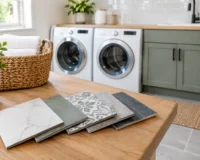
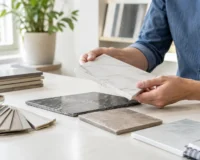
Start by considering what you want the surface to do visually. A pale, matte limestone-look porcelain can soften a sun-filled kitchen. A deep charcoal concrete look may ground a loft-style living space. Marble-look porcelain adds formal elegance, but the drama of the veining should be considered alongside cabinetry, wall color, and fixtures. Samples are invaluable here. View them in the room, at different times of day, and next to the finishes that will remain.
Finish is equally important. Matte and honed-look surfaces tend to feel relaxed, tactile, and forgiving in high-traffic areas. They are often a strong choice for family homes, bathrooms, and indoor-outdoor transitions. Polished porcelain delivers reflected light and a more glamorous finish, making it especially appealing for feature walls and formal interiors. In wet areas or entrances exposed to rain, a polished surface may not provide the traction needed for safe daily use.
For outdoor spaces, choose a porcelain specifically rated for exterior installation and suited to your climate. A textured or grip finish helps improve underfoot traction, while the appropriate thickness and installation system will depend on whether the tile is being installed over a prepared concrete base, pedestal system, or another substrate. Never assume an indoor finish can simply continue outside.
The Installation Details That Protect the Finish
Large format porcelain rewards careful installation and exposes shortcuts. Its crisp scale leaves little room to disguise an uneven floor, inconsistent grout joint, or poorly planned cut. This is not a reason to avoid it – it is a reason to plan the project properly from the beginning.
A qualified tile installer should assess the substrate for flatness before tiles arrive on site. Large tiles need a notably flat surface so they can be fully supported and aligned. If the subfloor or wall is uneven, preparation may include patching, grinding, or self-leveling work. Skipping this stage can lead to lippage, where adjacent tile edges sit at different heights, as well as poor adhesive coverage and a less refined final result.
Layout deserves the same attention. A professional dry layout identifies the best starting point, balances cuts at opposite walls, and considers doorways, islands, drains, and focal points. This is particularly valuable with directional veining or timber-look planks, where the pattern needs to flow naturally rather than appear random.
Rectified edges allow for narrow, elegant grout joints, but they do not mean grout-free installation. Grout accommodates small variations and is part of the system that protects the tiled surface. A grout shade close to the tile color will emphasize continuity; a contrasting color creates a more graphic grid. For most large-format designs, a tonal grout is the quieter, more luxurious choice.
Expansion and movement joints are another essential detail, especially across broad floor areas, at changes in plane, and in spaces exposed to temperature variation. Your installer should follow the tile manufacturer’s instructions and applicable local requirements for adhesive, grout, movement accommodation, and substrate preparation.
Living With Porcelain Day to Day
Porcelain is refreshingly low-maintenance, but its appearance still benefits from the right care. Sweep or vacuum grit regularly, then clean with a pH-neutral tile cleaner and a soft mop. Avoid harsh acids, abrasive powders, and products that leave a waxy residue, as these can dull the surface or make it harder to clean over time.
The porcelain itself typically does not need sealing, unlike many natural stones. Grout, however, may benefit from a suitable sealer depending on its type and the location. For kitchens, wiping up oil, wine, and strongly colored foods promptly is good practice, even on highly stain-resistant surfaces.
The real advantage is confidence. You can select the look of pale marble or richly textured stone for a hardworking room without building your daily routine around delicate maintenance. That is luxury with staying power.
A Surface Worth Planning Around
Large format porcelain tiles are not simply a finishing choice made late in a project. Their size, tone, and texture influence the room’s proportions, the lighting scheme, the cabinetry palette, and even the way spaces connect. Select the finish early, order samples before making final decisions, and give the installation the preparation it deserves. When those details align, the result is a surface that feels considered from the first step and continues to perform long after the renovation is complete.