A richly veined wall can make a compact powder room feel considered, give a kitchen backsplash a gallery-like finish, or bring calm, hotel-inspired character to a master bath. Marble look wall tiles deliver that elevated effect without asking your project to take on the care requirements, variation, or cost profile of natural marble. They offer a highly practical route to a luxury finish, particularly where water, splashes, and daily use are part of the picture.
The appeal is not simply that these tiles resemble stone. The best designs capture marble’s depth: soft clouding, directional veining, mineral-like movement, and the layered tones that prevent a wall from feeling flat. Available in polished, matte, and textured finishes, they can be specified for restrained contemporary interiors, classic homes, hospitality spaces, and everything between.
Why Choose Marble Look Wall Tiles?
Natural marble has enduring beauty, but it is a porous stone that can require ongoing sealing and thoughtful maintenance. Marble look porcelain and ceramic tiles recreate its visual character in a surface that is generally easier to clean and better suited to busy households and commercial settings. For a shower wall, a family kitchen, or a café restroom, that distinction matters.
Porcelain is often the premium choice where performance is a priority. It is dense, durable, and well equipped for wet areas when the product and installation are specified correctly. Ceramic wall tile can also be an excellent choice for dry walls and decorative applications, often offering a broad range of formats and finishes. The right material depends on the room, the substrate, and whether the tile will be exposed to direct water.
There is also a design advantage in consistency. Natural marble varies from slab to slab, which is part of its charm but can make the final result harder to predict. Marble-effect tile allows designers and homeowners to select a defined color direction and vein style, then carry it confidently across larger wall areas. That makes it easier to create a polished, cohesive scheme.
Select the Right Marble Effect for Your Space
Not all marble-inspired surfaces create the same mood. Before selecting a tile, consider the amount of light in the room, the surrounding finishes, and whether the wall should act as a quiet backdrop or the main visual feature.
Soft white marble for light-filled interiors
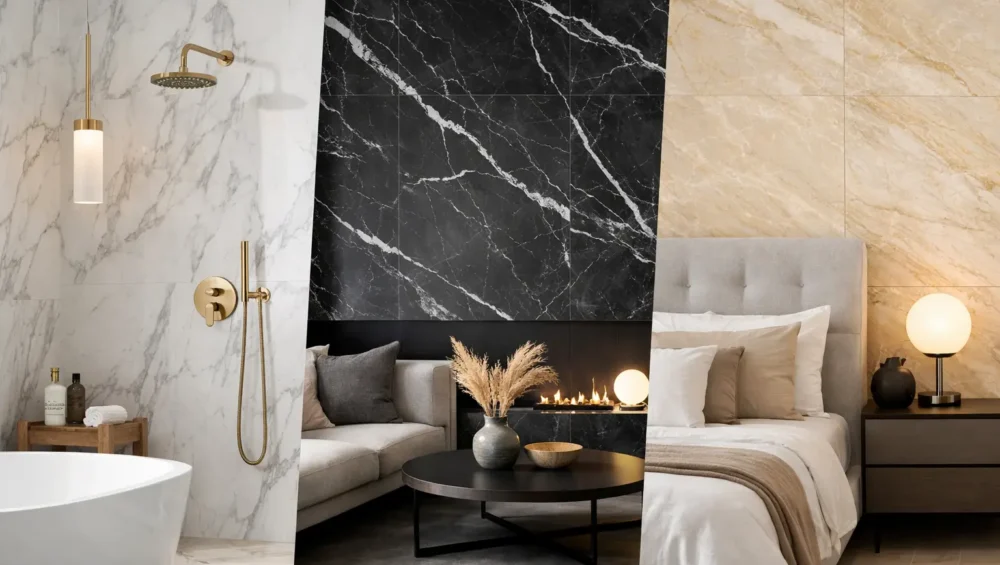
White and off-white marble looks remain a natural choice for bathrooms, laundries, and kitchens. Fine gray veining brings definition without overwhelming a room, while warmer ivory or cream bases pair beautifully with brass, brushed nickel, oak cabinetry, and natural linen textures.
For a smaller bathroom, a pale tile can extend the sense of space, especially when it is continued from the vanity wall into the shower. A polished finish reflects light and adds formality, while a matte surface offers a softer, more contemporary interpretation. Neither is automatically better. Choose polished when you want luminous glamour; choose matte when you prefer a tactile, understated finish with reduced visible water spotting.
Dramatic veining for feature walls
Large, expressive veins create a stronger architectural statement. These designs are particularly effective behind a freestanding tub, at a reception desk, around a fireplace, or as a full-height kitchen backsplash. Darker marble looks in charcoal, black, green, brown, or deep burgundy can bring a sense of intimacy and exclusivity to powder rooms and commercial interiors.
The trade-off is scale. Bold veining needs room to read well. In a very small space, it can be striking, but it should be balanced with simpler cabinetry, restrained hardware, and warm lighting. Ordering a sample lets you see how the color and movement behave under your own lighting conditions before committing to a full wall.
Warm marble tones for layered, livable design
Cool gray marble is no longer the only option. Beige, sand, taupe, and warm brown marble effects are increasingly favored for interiors that feel relaxed rather than clinical. They sit naturally alongside travertine looks, timber, terracotta, creamy paint colors, and aged-metal finishes.
This palette is especially useful when a project needs luxury without high contrast. A warm marble look tile can make a bathroom feel composed and inviting while maintaining the clean-lined performance of porcelain or ceramic.
Tile Size Changes the Entire Look
Format affects both the visual scale of the stone pattern and the amount of grout visible on the finished wall. Large-format tiles create a more continuous marble effect because there are fewer grout joints interrupting the veining. They are a strong choice for shower walls, expansive bathrooms, and commercial feature walls where a refined, slab-like result is desired.
Large tiles do require suitable wall preparation and experienced installation. Walls must be flat, and handling oversized pieces takes planning. In return, the finished surface can feel exceptionally luxurious.
Smaller formats offer their own design value. Subway-shaped marble-effect tiles bring a tailored rhythm to kitchen backsplashes, while mosaics can introduce detail to niches, curved walls, and compact areas. A herringbone or finger mosaic pattern adds texture and visual movement, even when the palette stays quiet.
Think about grout early. A close color match creates a more monolithic effect and lets the marble pattern lead. A contrasting grout makes the layout more graphic, which can be ideal for a contemporary backsplash but may compete with dramatic veining. For most full-height marble-effect walls, a complementary grout is the more timeless direction.
Where Marble Look Tiles Work Best
Bathrooms are the obvious setting, but the material is far more versatile than a shower-wall finish. In kitchens, it offers an elegant, wipeable backsplash that can be extended to the range hood or wrapped around a butler’s pantry. In laundries, it turns a hardworking room into a considered part of the home rather than an afterthought.
In living spaces, marble-look tiles can frame fireplaces, create a refined bar backdrop, or bring a tailored finish to an entry feature wall. They are also well suited to hospitality, retail, and workplace projects where a natural-stone appearance supports a premium brand experience but maintenance needs to stay practical.
For wet zones, confirm that the selected tile, finish, adhesive, grout, waterproofing system, and installation method are appropriate for the application. Wall suitability does not automatically mean a tile is suitable for floors, shower bases, or exterior installations. Product specifications should guide the decision, particularly in commercial projects or areas subject to heavy moisture.
Pairing Marble Walls With Other Finishes
A marble-look wall does not need an all-marble room around it. In fact, the most memorable spaces often rely on contrast. Pair white veined tile with fluted oak cabinetry for warmth, black fixtures for a crisp contemporary edge, or brushed brass for a more classic finish. Deep green marble effects look sophisticated beside walnut, creamy plaster walls, and aged bronze.
If the wall tile has pronounced movement, keep adjacent surfaces quieter. A plain porcelain floor, textured neutral tile, or restrained timber-look finish will give the marble room to shine. Conversely, a subtle marble-effect wall can sit comfortably alongside patterned floor tile, provided the colors share a common undertone.
Lighting deserves equal attention. Side lighting can emphasize a polished finish and draw out the veins, while warm, layered lighting softens cooler stone palettes. In a bathroom, illuminated mirrors and wall sconces often show the tile more beautifully than a single overhead fitting.
Plan Before You Purchase
A premium result begins before the first tile is installed. Measure every wall carefully, including returns, niches, windows, and areas behind vanities or appliances. Allow for cuts, pattern matching, and a sensible overage. With strongly veined designs, discuss the desired layout with your installer so veins can be aligned or book-matched where appropriate.
Samples are essential for any surface that carries variation or sheen. View them vertically, not only flat on a table, and assess them in morning, afternoon, and artificial light. A tile that appears crisp white in a showroom may read warmer at home, while a subtle gray vein may become much more visible after dark.
Mecca Tiles makes it easier to compare premium finishes before you commit, helping homeowners and trade professionals move from an initial concept to a considered material selection. Choose the tile that works with your room’s light, scale, and daily demands, then let the wall become the detail that gives the entire space its lasting sense of luxury.