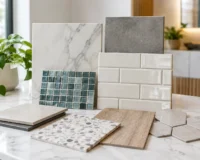
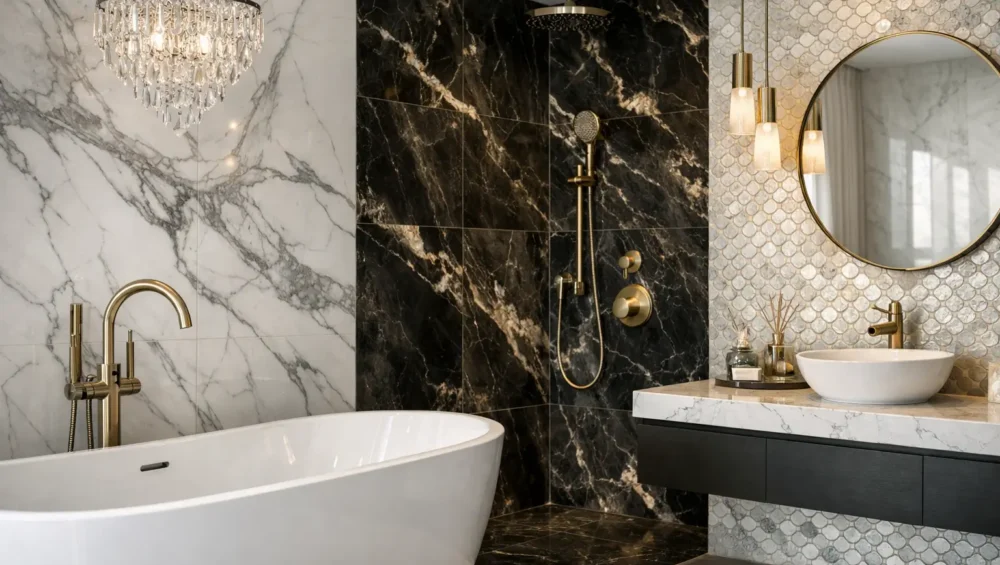
A luxury bathroom is rarely defined by one expensive fixture. It is created through the way surfaces meet: a vein continuing from wall to floor, a mosaic catching light inside a shower niche, or a large-format porcelain tile making a compact room feel beautifully composed. The best luxury bathroom tile design examples balance visual impact with the practical demands of water, steam, cleaning, and daily use.
For a renovation with lasting appeal, begin with the atmosphere you want to create. Some bathrooms call for the quiet grandeur of warm stone, while others suit sculptural marble-look porcelain or a striking patterned floor. The goal is not to fill every surface with a feature. It is to select materials with enough depth, texture, and detail to transform the room.
1. Floor-to-ceiling marble-look porcelain
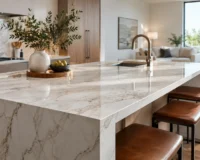
Marble remains a classic reference point for luxury bathrooms, but porcelain offers a highly practical way to achieve its movement and elegance. Large-format marble-look porcelain across floors and walls creates a continuous, tailored finish with fewer grout lines. The effect is especially impressive in a primary bathroom, where a soft white base, fine gray veining, and chrome or brushed nickel fixtures feel enduring rather than trend-driven.
Choose a rectified tile with realistic variation and veining that flows naturally between pieces. A bookmatched feature wall behind a freestanding tub can elevate the design further, creating the appearance of a custom stone slab without the maintenance considerations of some natural marbles.
This approach works particularly well in smaller bathrooms, too. Running the same tile from floor to wall reduces visual interruption and gives the room a more expansive feel. For shower floors, select a coordinating mosaic or smaller-format tile with appropriate slip resistance, rather than extending a polished large-format finish into every wet zone.
2. Warm travertine tones for a quiet, spa-like retreat
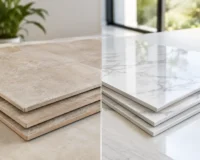
Luxury does not have to mean bright white and high gloss. Warm beige, sand, cream, and soft taupe tiles bring a calm, architectural quality to bathrooms designed for restoration. Travertine-look porcelain is an elegant choice for this direction, offering the character of natural stone alongside excellent durability and easier care.
Use a vein-cut look in large rectangular formats for a more contemporary expression, or select subtle pitted detailing for a relaxed Mediterranean influence. Pair the surface with timber cabinetry, aged brass tapware, linen-toned towels, and softly diffused lighting. The result feels curated and serene, not overly styled.
Natural travertine can be equally beautiful for projects seeking authentic material variation. It does, however, require sealing and more attentive maintenance than porcelain. In a busy family bathroom or a shower that sees constant use, porcelain can be the more forgiving choice. In a powder room or a carefully maintained primary suite, natural stone delivers an unmistakable tactile richness.
3. A dramatic stone feature wall behind the vanity
For homeowners who want a bathroom with immediate presence, a feature wall is one of the most effective luxury bathroom tile design examples. A richly veined porcelain slab, deep green marble-look surface, or moody charcoal stone can turn the vanity wall into the focal point of the room.
The strongest versions of this look are disciplined. Let the feature material lead, then keep adjacent walls in a quieter tile that shares one undertone. For example, a dark green slab with pale mineral veining can sit beside warm off-white wall tile and a honed-look porcelain floor. Add a floating timber vanity and integrated lighting to bring warmth to the composition.
Porcelain slabs are particularly suited to this application because their generous scale minimizes grout lines. They create a clean backdrop for mirrors, wall-mounted faucets, and sculptural basins, while offering the performance needed around splashing water. When choosing a darker slab, consider the room’s natural light and lighting plan. In a windowless bathroom, a dramatic surface benefits from layered illumination rather than a single overhead fixture.
4. Mosaic details that feel custom-made
Mosaic tile can make a luxury bathroom feel personal and considered, especially when used in focused areas rather than across every wall. A mosaic shower floor, recessed niche, vanity splashback, or arched feature creates a change in scale that draws the eye closer.
Stone mosaics in honed finishes bring a refined, organic texture. Glass mosaics can introduce subtle luminosity, while porcelain mosaics offer dependable performance in high-use wet areas. Consider soft scallops, finger mosaics, penny rounds, or slim kit kat tiles for a more contemporary design language.
Color matters here. A tonal mosaic in shades of cream, sage, blue-gray, or dusty rose reads as elevated because it works with the entire palette. A high-contrast mosaic can be striking, but it needs restraint elsewhere. If the shower niche features a patterned mosaic, choose a simple field tile for the walls and let the detail do its work.
5. Terrazzo floors with modern architectural character
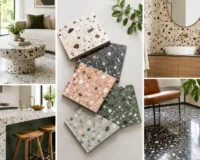
Terrazzo has moved beyond its retro reputation and become a defining surface for design-led bathrooms. Its flecked composition brings movement without the directional veining of marble, making it ideal for floors in rooms where you want personality without visual clutter.
A large-scale terrazzo pattern in warm neutral tones can anchor a bathroom with fluted cabinetry and brushed brass finishes. For a fresher, more playful space, choose a pale base with muted blue, green, or terracotta chips and repeat one of those tones in accessories or painted joinery.
Porcelain terrazzo-look tiles offer a durable, lower-maintenance option and make it easier to carry the look into showers or laundry spaces. Genuine terrazzo has exceptional appeal, but the right specification, sealing, and installation expertise are essential. The decision depends on the desired authenticity, maintenance tolerance, and project budget.
6. Patterned tile in a tailored powder room
A powder room is a rare opportunity to be more expressive. Because it is usually smaller and less exposed to water than a full bath, this room can carry a bolder patterned, encaustic-look, or geometric tile with confidence. A patterned floor paired with smooth wall tile and a statement mirror creates a memorable guest experience without overwhelming the wider home.
For a more immersive approach, take a single patterned tile from floor to wainscot height, then finish the upper walls in a complementary paint color. Deep navy, forest green, clay, and warm mushroom tones can make the room feel intimate and luxurious. Keep the grout color close to the tile background to maintain a polished finish.
Authentic encaustic cement tiles have beautiful depth and a handcrafted character, but they need sealing and can develop a lived-in patina. Porcelain patterned tiles offer a similar visual impact with less maintenance, making them a smart choice for clients who want the look without additional upkeep.
7. Soft vertical tile for a contemporary boutique-hotel look
Vertical stacked tile brings height and rhythm to a bathroom, particularly around a vanity or within a shower. Long, narrow porcelain or ceramic tiles in a satin finish can create a boutique-hotel atmosphere when installed in a precise grid with color-matched grout.
This design works beautifully in muted colors: warm white, almond, pale sage, misty blue, or charcoal. A vertical layout makes lower ceilings feel taller, while a horizontal stack can visually widen a narrow room. The tile profile also matters. Slightly undulating handmade-look ceramics add light-catching variation, while crisp flat tiles feel more architectural.
Use this look with restraint. If the walls carry a strong vertical rhythm, a quieter stone-look floor creates balance. A floor with too much pattern, movement, or contrast can compete with the wall installation and diminish the sense of calm.
How to choose tiles that look luxurious and perform well
A premium bathroom should be beautiful on installation day and practical years later. Before falling for a surface, consider where it will be used. Shower floors need a smaller tile format or textured finish to support grip and drainage. Highly polished tiles can be glamorous on a vanity wall, but may not be the right choice underfoot in a wet area.
Grout selection deserves the same attention as tile. Matching grout creates a more monolithic, expansive look, while a contrasting grout highlights pattern and layout. In a luxury scheme, a close tonal match is often the more timeless choice. Use quality grout and allow for appropriate movement joints, particularly with large-format porcelain and slab installations.
Always view samples in the actual room where possible. Natural and artificial light can shift white, beige, gray, and green undertones significantly. Compare the tile beside cabinetry, countertop material, paint, and tapware before making a final decision. This small step helps turn a collection of beautiful finishes into one cohesive bathroom.
The most successful luxury bathroom is not the one with the most materials. It is the one where every tile has a purpose: to add warmth, create scale, guide the eye, or make the daily ritual of getting ready feel distinctly more considered.