A home gym asks more of a floor than almost any other room. It needs to absorb the impact of a dropped dumbbell, feel secure under a lunge, handle sweat and cleaning, and still belong with the rest of your home. The best flooring for home gyms balances performance with a finish you will be happy to see every day.
For some spaces, that means thick rubber throughout. For others, it means a considered combination of resilient workout flooring and premium porcelain tile. The right answer depends on what you train, what sits beneath the room, and whether you want your gym to feel like a dedicated training zone or a polished extension of your interior.
What a Home Gym Floor Needs to Handle
Start with the workout, not the look. A yoga and Pilates room has very different demands from a garage strength gym or a compact spare-room setup with a treadmill. Weight training introduces concentrated impact and abrasion. Cardio equipment can create vibration and point pressure. Mobility work calls for a stable, comfortable surface with enough grip to move confidently.
A successful gym floor should offer traction without feeling overly rough, resist dents and moisture, and be simple to keep clean. Sound and vibration matter too, particularly in an upstairs room, apartment, or shared household. Even the most beautiful surface can become a frustrating choice if it transfers every dropped kettlebell through the ceiling below.
The subfloor is equally important. Concrete is strong but unforgiving, so it often benefits from a resilient layer above. Timber subfloors can flex and transmit noise, making proper underlayment and equipment placement especially worthwhile. Before choosing a material, measure the room, identify thresholds and doors, and note where heavy machines or racks will sit.
The Best Flooring for Home Gyms by Workout Style
Rubber flooring for strength and high-impact training
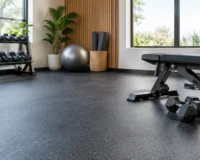
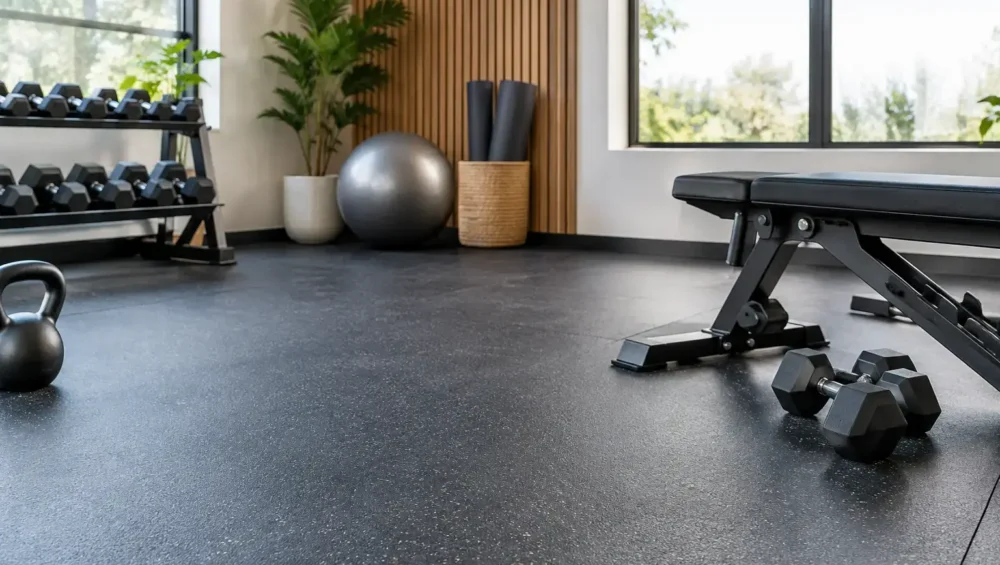
Rubber is the leading practical choice for free weights, functional training, and equipment-heavy setups. Available in rolls, interlocking tiles, and dense mats, it provides dependable grip, shock absorption, and protection for both the floor and your equipment. Thicker rubber is generally the better choice where weights may be dropped, while lower-profile options can suit cardio zones and lighter training.
Its trade-off is visual. Black flecked rubber has a purposeful, commercial-gym character that does not suit every interior. It can also have an initial odor, particularly in enclosed rooms, and cheaper products may vary in density or leave marks under heavy equipment. Choose a quality, low-odor option, and let it acclimate before installation.
For a refined result, reserve rubber for the working zone rather than covering every inch of the room. A clean border of tile or another hard surface can make the layout feel intentional while keeping the training area properly protected.
Luxury vinyl for versatile, lower-impact spaces
Luxury vinyl plank or tile is a strong option for home gyms centered on cardio, stretching, bodyweight work, or light dumbbells. It is warmer and quieter underfoot than many hard surfaces, easy to clean, and available in timber, stone, and concrete-look designs that can complement the wider home.
Vinyl is not the material to choose for Olympic lifting or repeated heavy impacts. Point loads from equipment feet, bench frames, and racks can leave impressions, while dropped weights may damage the surface. Protective equipment mats are essential if you use vinyl beneath a treadmill, rowing machine, or stationary bike.
This material works particularly well in a multipurpose room where the gym needs to transition back into an office, guest room, or family space. It delivers a more residential finish than wall-to-wall rubber without demanding the maintenance associated with natural timber.
Porcelain tile for a polished, durable foundation
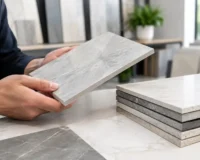
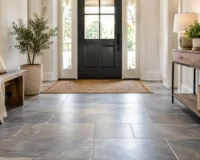
Porcelain tile brings a distinctly elevated finish to a home gym, especially where the room connects to a pool area, outdoor living zone, basement, or contemporary interior. It is exceptionally resistant to moisture, stains, and scratching, and it will not absorb sweat or odors. Large-format concrete-look porcelain, soft stone looks, and subtle terrazzo-inspired designs can turn a functional workout room into a considered architectural space.
Tile is hard, so it is best used thoughtfully. It is excellent beneath lighter cardio equipment, in entry and refreshment areas, or across a low-impact studio. For strength training, add substantial rubber mats or a dedicated lifting platform over the tile. That combination protects the surface and gives you the performance benefits that tile alone cannot provide.
Slip resistance deserves close attention. A matte or textured finish is preferable to high-gloss tile in a room where perspiration and cleaning products are part of the routine. Grout selection matters as well. A mid-tone grout can be more forgiving than bright white, while a high-quality grout helps maintain a crisp finish with less upkeep.
Carpet tiles for comfort and acoustic control
Carpet tiles can suit a quiet cardio or stretching space, particularly above living areas where noise reduction is a priority. They soften the room visually, reduce echo, and feel pleasant for floor exercises. Individual tiles are also easier to replace if one section becomes stained or worn.
Still, carpet is not ideal around sweaty, high-intensity training or heavy equipment. It can retain odor and moisture, and its cushioned surface is less stable for lifting. If you choose it, use dense commercial-grade carpet tiles and place hard protective mats under equipment.
Foam tiles for gentle movement only
Foam tiles are inexpensive, soft, and useful for children’s activity zones, yoga, and light mobility sessions. They are not a long-term solution for most adult home gyms. Heavy equipment can compress or tear them, their interlocking seams can shift, and they tend to look worn quickly in high-traffic areas.
Use foam as a temporary or specialized layer rather than as the main floor in a premium, permanent gym.
Design a Gym That Belongs in Your Home
The most attractive home gyms avoid the all-or-nothing approach. Instead of treating the room like a commercial facility, define zones. A porcelain-tiled perimeter can create a clean, luxurious base, with rubber tiles or a platform placed precisely where lifting happens. Vinyl can carry through from an adjacent room, while a large performance mat creates a flexible workout area without a full remodel.
Color also changes the feel of the room. Charcoal rubber grounds bright spaces and disguises scuffs. Warm gray, limestone-look, or taupe porcelain can make a gym feel calmer and more residential. Terrazzo-look surfaces bring subtle movement without competing with equipment, mirrors, or feature lighting.
If the gym opens to an outdoor area, selecting compatible interior and exterior porcelain can create a visual connection between the two spaces. This is particularly effective for training rooms beside a patio, pool, or wellness area, where continuity makes the footprint feel larger and more intentional.
Installation Details That Protect Your Investment
A great material can still underperform with poor preparation. The subfloor must be clean, dry, level, and suitable for the chosen installation method. Rubber rolls and tiles need a stable base so seams remain neat and edges do not curl. Porcelain tile requires careful substrate preparation and movement joints where needed, especially over large areas or in spaces exposed to temperature changes.
Avoid placing heavy gym equipment directly on tile without a protective layer. Even durable porcelain can crack if a loaded barbell is dropped onto it. Equipment mats should be sized beyond the machine footprint to catch movement, sweat, and vibration. For racks and lifting stations, a purpose-built platform or thick rubber system offers far better protection than a thin mat.
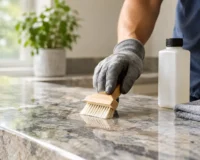
Think about cleaning before the room is complete. Smooth, low-porosity surfaces are easy to wipe down, while textured materials may need more frequent vacuuming or mopping. Good ventilation, a washable mat at the entrance, and sensible storage for shoes and chalk will preserve the finish for longer.
Make the Choice Around How You Actually Train
If your training revolves around heavy barbells, choose quality rubber as the primary performance surface. If your gym is built for cycling, mobility, or light weights, luxury vinyl or porcelain with protective mats can deliver a more design-led result. For a multipurpose wellness room, a zoned combination often provides the best balance of luxury, durability, and everyday function.
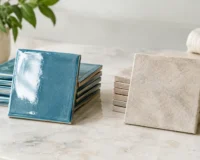
Order samples where possible and view them in the room at different times of day. Walk on them in training shoes, place a mat over them, and consider how the finish relates to nearby walls, cabinetry, and lighting. The most satisfying home gym floor is not simply tough enough for the workout – it makes returning to the room feel like part of the reward.