A fireplace can be perfectly functional and still feel unfinished. The firebox may be sound, the mantel may be in place, yet the room lacks the visual anchor that makes people stop and look. Fireplace tiles change that equation. With the right material, scale, and layout, the hearth becomes an architectural feature that brings warmth, texture, and a sense of intention to the entire room.
This is not simply a matter of choosing a color you like. A fireplace surround works harder than many decorative surfaces. It sits beside heat, soot, ash, cleaning products, and daily traffic, particularly when a hearth extends onto the floor. The most successful selection balances a refined look with the practical requirements of your specific fireplace and installation.
Start With How the Fireplace Is Used
Before settling on a tile style, establish what kind of fireplace you have and where tile will be installed. A wood-burning fireplace, gas fireplace, electric unit, and decorative non-working fireplace can have very different heat exposure and clearance requirements. The firebox opening, surround, hearth, mantel, and chimney breast may each call for a different approach.
For an active fireplace, always follow the appliance manufacturer’s installation instructions and local building requirements. These details determine suitable materials, clearances, backing boards, adhesives, grout, and the extent of noncombustible protection around the opening. A beautiful tile is only a good choice when it is appropriate for the temperature and conditions it will face.
The floor hearth also deserves separate consideration. It may receive dropped firewood, ash, pet traffic, and the occasional muddy shoe. A low-porosity, durable surface with a finish that is practical underfoot is generally a better long-term choice than a delicate material selected purely for appearance.
Choosing Fireplace Tiles by Material
The best material depends on the look you want, the fireplace type, and how much maintenance suits your household. Premium surfaces offer distinct visual effects, so it helps to choose based on both character and performance.
Porcelain for confident everyday durability
Porcelain is a versatile choice for contemporary, traditional, and commercial-inspired interiors. It is dense, low-maintenance, and available in an exceptional range of stone, concrete, timber, terrazzo, and hand-crafted looks. Large-format porcelain can create a calm, monolithic surround with fewer grout lines, while smaller porcelain mosaics bring pattern and movement to a hearth.
For busy homes, porcelain is particularly appealing because it handles routine cleaning well and offers strong resistance to staining. A matte or textured porcelain may be especially useful on a floor hearth, where a highly polished surface can show dust and marks more readily.
Natural stone for depth and permanence
Marble, limestone, travertine, slate, and other natural stones bring variation that cannot be replicated exactly. Their veining, fossils, mineral shifts, and softened edges give a fireplace a collected, architectural quality. A honed marble surround can feel quietly luxurious in a formal living room, while tumbled travertine or slate creates a more relaxed, organic presence.
Stone asks for more care than porcelain. Many options require sealing, and acidic or abrasive cleaners can damage their surface. Natural variation is part of the appeal, but it also means samples should be viewed as a guide rather than a guarantee of every tone and vein. If your design relies on a very consistent finish, porcelain may offer a more controlled result.
Ceramic and handmade-look tile for character
Ceramic tile brings color, gloss, and artisanal appeal to a fireplace surround. Think deep green subway tile, a softly irregular off-white square, or a glazed tile with subtle surface undulation that catches firelight. These finishes are especially effective on vertical areas where their tactile quality can be appreciated up close.
The trade-off is that some glazed ceramic tiles may be better suited to a surround than a hard-working hearth floor. Confirm the tile’s intended application before committing to the design, particularly where impact resistance and slip considerations matter.
Mosaic and patterned tile for a focal point
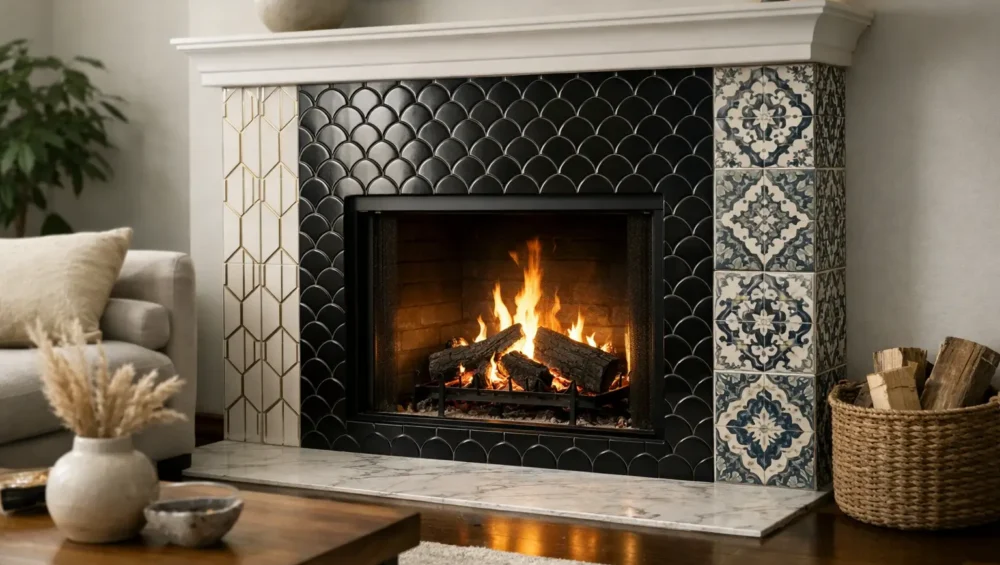
A fireplace is one of the few places where an expressive mosaic or patterned tile can feel completely at home. A geometric design can frame the firebox with precision, while marble mosaic adds elegance without requiring a large expanse of stone. Encaustic-inspired porcelain patterns can introduce a tailored, heritage feel to a simple room.
Use visual energy with restraint. If the floor, kitchen backsplash, or nearby rugs already carry strong pattern, a quieter surround may create a more polished interior. Conversely, in a neutral room, patterned fireplace tiles can provide the defining layer of personality.
Scale Shapes the Entire Fireplace Design
Tile size has a major influence on whether a fireplace feels expansive, intimate, classic, or contemporary. Large-format pieces reduce grout lines and make a chimney breast feel taller and more architectural. They are well suited to sleek plaster-style interiors, minimal mantels, and rooms where the fireplace should feel integrated rather than heavily decorated.
Smaller formats create more texture and detail. Kit Kat mosaics, penny rounds, stacked squares, and slim subway tiles can add rhythm to a compact surround. They are also helpful when a fireplace has corners, returns, niches, or an uneven original structure that would require numerous cuts in a large format.
Layout matters as much as size. Vertical stacking draws the eye upward and can emphasize ceiling height. A horizontal stack gives a wider, calmer impression. Herringbone introduces movement, while a simple grid feels clean and enduring. If the tile has a directional vein or pattern, plan the layout before ordering so the final composition looks deliberate rather than accidental.
Match the Finish to the Room’s Mood
A fireplace often sets the emotional temperature of a room even when it is not lit. The finish you choose should support the wider interior rather than compete with it.
For a warm, layered home, consider honed stone, terracotta-inspired porcelain, handmade-look ceramic, or earthy mosaics. Their texture works beautifully with timber, linen, leather, and aged metals. For a more tailored setting, marble-look porcelain, polished stone, or deep glossy ceramic can add a crisp, elevated contrast against clean-lined furniture.
Color deserves the same level of attention. Soft white fireplace tiles can brighten a dark room, but a warm off-white is often more forgiving than stark brilliant white. Charcoal, black, forest green, and navy create drama, especially in rooms with generous natural light. Sandy neutrals and taupes give a fireplace longevity, allowing artwork, furnishings, and seasonal styling to evolve around it.
Order samples where possible and view them at different times of day. Firelight, daylight, and warm evening lamps can all shift how a tile reads. Place samples near the mantel, adjacent flooring, and paint colors rather than assessing them in isolation.
Details That Separate a Good Installation From a Great One
The finishing details are where premium materials truly earn their place. Consider how exposed tile edges will be resolved, whether the hearth will sit flush with the floor, and how the grout color will support the overall look. A grout close to the tile color creates a quieter plane, while contrast grout highlights each individual piece and makes a pattern more graphic.
Trim choice is equally important. Mitered stone edges can create a crisp, sculptural effect. Purpose-made tile trims offer a neat, durable finish in contemporary installations. A traditional mantel can conceal some edges, while a frameless design places every cut and transition in full view, making experienced installation essential.
Do not treat the existing fireplace as an afterthought. Older surrounds may be uneven, and new tile can exaggerate those irregularities if the substrate is not properly prepared. A qualified installer can assess the wall, confirm noncombustible requirements, and ensure the finished surface is flat enough for the chosen tile format.
Create a Fireplace Worth Gathering Around
The strongest fireplace designs are not necessarily the loudest. They pair a material with the home’s architecture, give practical demands the respect they deserve, and use proportion to make the room feel more complete. Whether your vision is a sculptural slab surround, a richly veined stone hearth, or a handcrafted ceramic statement, choose a surface that looks considered from across the room and feels exceptional up close.
Take time with samples, installation details, and the way the tile connects to neighboring finishes. A fireplace is a lasting focal point, and the right surface gives every gathering around it a more beautiful place to begin.