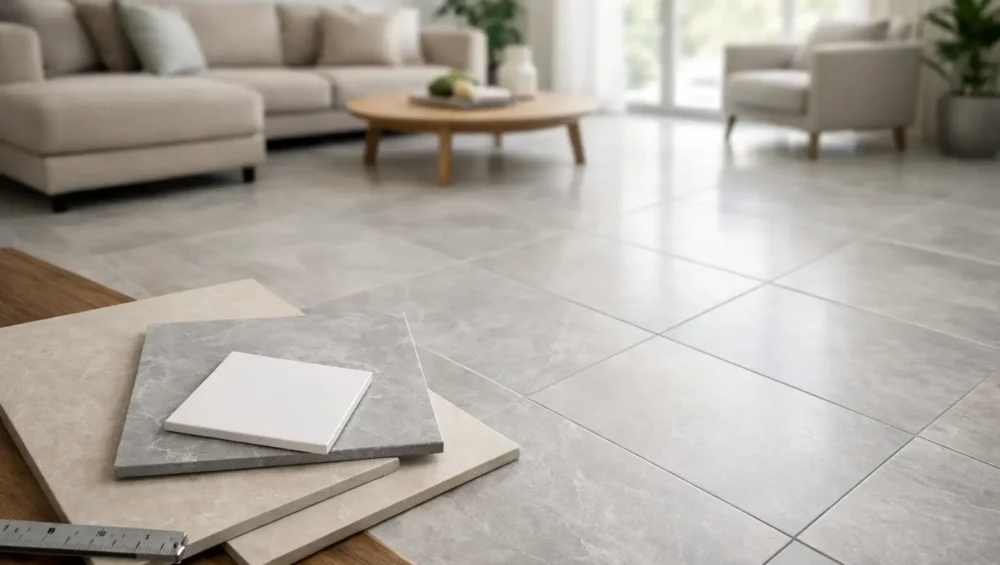
A small room rarely feels small because of square footage alone. More often, it feels tight because too many visual breaks chop up the surfaces. That is why homeowners and designers keep asking what tile size makes room look bigger – the answer has less to do with a single magic measurement and more to do with how scale, grout lines, layout, and finish work together.
If you want a room to read as more open, calmer, and more expensive, larger-format tile is usually the strongest place to start. Fewer grout joints create a cleaner visual field, which helps the eye travel across the floor or wall without stopping. That uninterrupted look can make a bathroom feel broader, a narrow laundry feel less boxed in, and a compact kitchen feel more architectural.
What tile size makes room look bigger in most spaces?
In most cases, larger tiles make a room look bigger than smaller ones. Sizes like 12×24, 24×24, and even larger formats can visually expand a space because they reduce the number of grout lines and create a more continuous surface. The effect is polished and modern, and it suits the premium, spacious look many renovations aim for.
That said, bigger is not always better in every room. A tile that is too large for the dimensions of the space can lead to excessive cuts around edges, corners, niches, or fixtures. Once that happens, the clean look you were hoping for can start to feel forced. Proportion matters.
For a small bathroom floor, a 12×24 porcelain tile often strikes the right balance. It feels generous without becoming awkward to install. In slightly larger spaces, 24×24 can look refined and expansive, especially when paired with a narrow grout joint and a simple layout. On walls, larger rectangular formats can help elongate the room and make it feel taller or wider depending on orientation.
Why larger tiles create a more open look
The visual logic is simple. Every grout line acts like a boundary. The more boundaries you see, the more segmented the room feels. Smaller mosaics or petite square tiles introduce a lot of detail, which can be beautiful, but they also create movement and visual density. In a compact room, that density can shrink the space rather than open it up.
Larger tiles simplify the surface. They allow finishes, texture, and tone to speak without interruption. This is especially effective in premium interiors where the goal is not just to make a room feel bigger, but to make it feel more composed.
There is also a luxury factor at play. Larger-format porcelain and stone-look tiles tend to deliver a tailored, contemporary finish that feels elevated. In the right setting, they can make a modest room feel far more intentional.
The grout line matters almost as much as the tile
If you are choosing tile purely by size, you are only looking at half the equation. Grout color and grout width have a major impact on how spacious the room feels.
A tight grout joint in a tone close to the tile color helps the surface read as one continuous plane. That continuity is what creates the visual expansion. By contrast, high-contrast grout emphasizes every tile edge. That can be great for a patterned or graphic look, but it tends to highlight the grid rather than soften it.
If your goal is to make the room feel larger, matching grout is usually the smarter choice.
What tile size makes room look bigger on floors versus walls?
Floors and walls play different roles, so the right tile size may shift depending on where it is installed.
On floors, larger tiles usually have the strongest enlarging effect. They create a broad, uninterrupted base that makes the entire room feel calmer. This is especially useful in bathrooms, powder rooms, and laundries where floor area is limited and every visual trick matters.
On walls, the answer depends on the dimension you want to emphasize. A horizontally laid rectangular tile can make a room feel wider. A vertically stacked tile can draw the eye upward and give the impression of height. Full-height tiling also helps. When tile runs all the way to the ceiling, the walls feel taller and more complete.
Using the same tile on both floor and wall can be especially effective. It blurs the boundaries of the room and creates a seamless, architectural finish. This approach works beautifully in compact bathrooms and wet areas where continuity enhances both style and spaciousness.
Best tile sizes for small rooms
There is no one-size-fits-all answer, but a few ranges consistently perform well.
For small bathrooms, 12×24 is a reliable choice for floors and even walls. It offers enough scale to reduce visual clutter without overwhelming the room. For ensuite bathrooms or powder rooms, 24×24 can also work well if the layout allows for clean placement and limited awkward cuts.
For small kitchens or laundries, 24×24 can give the floor a refined, open look, particularly in minimalist or contemporary schemes. If you prefer a rectangular format, 12×24 or 24×48 can add direction and elongation.
For shower walls, larger-format tiles often outperform small formats if your goal is spaciousness. They minimize grout maintenance and create a cleaner look. Smaller mosaics still have their place, especially on shower floors where slip resistance and drainage matter, but on vertical surfaces they generally make the space feel busier.
When small tiles still make sense
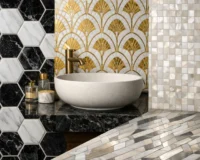
Small tiles are not a design mistake. In fact, they can be stunning in the right application. Mosaic, finger, kit-kat, and zellige-inspired formats bring texture, craftsmanship, and personality. They are ideal when you want a decorative focal point or a more layered, boutique feel.
The trade-off is that they usually do not make a room feel larger. They make it feel richer in detail. If spaciousness is your priority, reserve smaller tiles for accents rather than the dominant surface.
Layout direction can change the proportions of a room
Tile size matters, but layout is what tells the eye where to go.
In a narrow room, laying rectangular floor tile lengthwise can emphasize the longest dimension and make the room feel extended. In a short or boxy room, a diagonal layout can soften rigid boundaries and create a sense of movement beyond the walls. On walls, vertical stacking can enhance height, while horizontal lines can reinforce width.
This is where expert planning makes a visible difference. Even a premium tile can lose impact if the layout creates too many small cuts or awkward transitions. A room looks bigger when the tile installation feels balanced and intentional.
Finish, color, and variation also affect perceived size
If you are asking what tile size makes room look bigger, it is worth looking beyond dimensions alone. Light-reflective finishes, soft neutral tones, and low-contrast variation can all contribute to a more expansive feel.
Light-colored tile tends to open up a room because it reflects more light. Warm whites, soft beiges, pale greiges, and subtle stone looks are especially effective. A matte finish can feel understated and sophisticated, while a polished finish can bounce light and add another layer of openness. The right choice depends on the room, the amount of natural light, and the level of slip resistance you need.
Heavy patterning or dramatic tonal shifts can make a floor feel more active. That is not necessarily a drawback, but it does create more visual movement. If your goal is a quiet, larger-looking room, restrained variation is usually the safer path.
The common mistake: choosing tile in isolation
One of the biggest mistakes in tile selection is treating size as a standalone decision. The room will not feel bigger simply because the tile is large. It will feel bigger when the tile size, grout color, finish, layout, and surrounding materials all support the same visual story.
Vanity style matters. Wall color matters. Even threshold transitions into adjacent spaces matter. If the flooring changes abruptly from room to room, the home can feel more segmented. If the same or complementary tones carry through, spaces tend to feel more connected and generous.
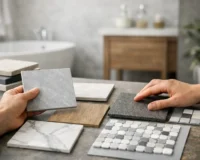
That is why sample viewing is so valuable. A tile can look perfect on a screen and read completely differently in your home, under your lighting, next to your joinery and fixtures. Premium tile selection is about proportion as much as beauty.
The best approach for a bigger-looking room
If your goal is to make a room feel larger, start with a larger-format tile in a light or mid-tone color, pair it with minimal grout contrast, and use a layout that suits the room’s shape. In many homes, that means a 12×24 or 24×24 porcelain tile is the sweet spot. It feels elevated, practical, and visually expansive without becoming difficult to integrate.
For those designing a more luxurious finish, larger porcelain surfaces and coordinated wall-to-floor applications can create an especially open effect. This is where a curated product selection becomes useful. At Mecca Tiles, many premium porcelain and stone-look options are designed to deliver exactly that kind of clean, high-end continuity.
The right tile does more than cover a surface. It changes the way a room is read the moment you step into it. Choose scale with intention, and even a compact space can feel calm, generous, and beautifully resolved.