A flat painted wall can disappear the moment furniture, art, and lighting move in. Textured wall tiles living room designs do the opposite. They catch light, create depth, and give the room a finished architectural quality that feels considered rather than decorated.
For homeowners and designers chasing a more elevated interior, texture is often the missing layer. It brings movement without relying on loud pattern, and it can shift a living room from standard to distinctly high end. The key is choosing the right material, scale, and placement so the result feels intentional.
Why textured wall tiles work in a living room
Living rooms ask a lot from their surfaces. They need warmth, visual interest, and durability, but they also need restraint. Too much detail can compete with furnishings. Too little can leave the space feeling underdesigned. Textured wall tiles solve that balance well because they add dimension through shadow and surface variation rather than through busy prints.
This is especially effective in open-plan homes where the living area connects to the kitchen or dining zone. A textured tiled wall can define the lounge area without adding a physical divider. It creates a subtle focal point and makes the room feel more layered.
There is also a practical advantage. Unlike painted feature walls, tile surfaces are more resilient in busy family spaces. They are easier to maintain, less prone to scuffs, and better suited to homes where durability matters just as much as appearance.
Where textured wall tiles living room designs make the biggest impact
Placement shapes the entire effect. In most living rooms, one well-chosen feature wall will outperform tiling every vertical surface. Behind a sofa, around a fireplace, or on the TV wall are the most common applications because they already anchor the room visually.
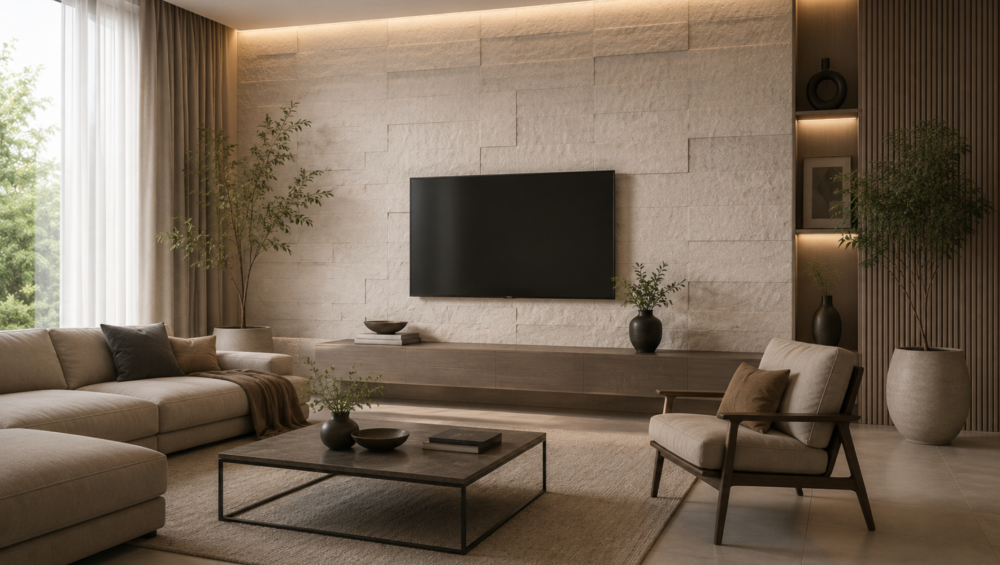
A fireplace wall benefits from texture because the material can emphasize the vertical height and make the hearth feel more integrated into the architecture. On a TV wall, the right tile can soften the visual dominance of a large screen by adding depth around it. Behind a sofa, textured tile works almost like built-in paneling, giving the room a tailored backdrop.
If the room is compact, it pays to be selective. Heavy relief across a small space can feel visually crowded, especially if the furniture is also substantial. In that setting, finer textures and lighter tones usually deliver a more refined result.
Choosing the right tile material
Not all textured tiles read the same way. Material affects everything from light reflection to mood.
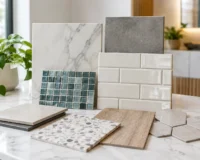
Porcelain is one of the most versatile choices for living rooms. It offers a clean, premium finish and can replicate stone, concrete, or handcrafted surfaces with excellent consistency. For households that want low maintenance with a luxury look, porcelain is often the most practical fit.
Natural stone brings a more organic and exclusive character. Split-face stone, travertine, and certain limestone finishes can create beautiful tonal variation and tactile depth. The trade-off is that stone usually requires more consideration around sealing, ongoing care, and installation detail.
Ceramic can work beautifully too, particularly in sculpted or handmade-look profiles. It tends to deliver a softer decorative feel, which suits living rooms leaning coastal, contemporary, or artisanal rather than sharply architectural.
The best option depends on the style of the home and the level of upkeep the client is comfortable with. Premium results come from matching the material not only to the aesthetic, but also to how the room is actually used.
Texture types that feel current, not trendy
The most successful textured wall tiles living room schemes tend to rely on surface depth rather than novelty. That distinction matters. Texture should still look relevant years from now.
Linear fluted tiles remain a strong choice because they add rhythm while staying clean and architectural. They work particularly well in modern interiors with curved furniture, timber finishes, and soft neutral palettes.
Stacked stone and split-face profiles create a more dramatic surface. They suit living rooms with strong natural materiality, especially where fireplaces, timber beams, or large-format flooring are part of the design story. Used well, they feel grounded and luxurious. Used too heavily, they can start to feel rustic or visually dense.
Soft undulating surfaces are another refined option. These tiles play beautifully with directional lighting and can give a minimalist room much more character. They are ideal when the goal is elegance with subtle movement rather than a bold statement.
Geometric relief patterns can also be effective, but they require more restraint. In a living room, strong geometry is best balanced with simpler furnishings and a more edited palette so the wall remains sophisticated rather than overpowering.
Color, light, and scale matter more than people expect
Texture is never just about touch. It is about shadow. That means color and lighting have a major influence on the final look.
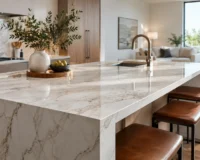
Lighter tiles tend to emphasize shadow lines gently, which creates a calm and expansive feel. Whites, warm ivories, soft taupes, and sandy stone tones are especially effective in living rooms because they keep the texture elegant and easy to style.
Darker tones can be striking, but they need the right setting. Charcoal, deep gray, or rich stone finishes often look best in larger rooms with generous natural light or carefully planned artificial lighting. Otherwise, the texture can disappear and the wall may read as simply dark.
Tile scale is equally important. Large-format textured tiles can make a room feel more contemporary and reduce grout interruption. Smaller modules or mosaics create a more intricate, decorative surface. Neither is inherently better. It depends on whether the room needs bold simplicity or finer detail.
How to style around a textured tile wall
Once a wall has strong surface character, the rest of the room should support it rather than compete with it. This does not mean everything has to be plain. It means each element should have a role.
If the tile is highly tactile, upholstered pieces with softer silhouettes usually create a more balanced composition. Think boucle, linen, velvet, or leather in shapes that feel generous rather than rigid. Timber furniture also pairs well with textured tile because it adds warmth without introducing visual noise.
Artwork can work on a tiled wall, but it depends on the texture depth. On flatter relief surfaces, a few carefully scaled pieces may look polished. On heavily dimensional walls, the tile often does enough on its own. In those cases, sculptural lighting, a fireplace surround, or a beautifully proportioned sofa can carry the space more elegantly.
Rugs, drapery, and cushions should echo the tile’s tone or material mood. This creates cohesion and makes the room feel designed as a whole rather than built around a single feature.
Common mistakes to avoid
The first mistake is choosing texture without considering light. A wall that looks dramatic in a showroom may appear flat or harsh at home depending on the room orientation and lighting plan.
The second is overcommitting. Tiling too many living room walls can reduce the sense of contrast that makes a feature wall effective in the first place. One focal application is often more luxurious than an all-over approach.
The third is ignoring installation quality. Texture draws attention to every alignment, edge, and transition. Premium tile deserves premium installation, especially on feature walls where shadows can highlight inconsistencies.
Finally, there is the issue of style mismatch. A very rustic stone profile in a sleek urban interior can feel disconnected. A highly sculptural modern tile in a traditional home can do the same. The wall should extend the architecture and furnishings, not fight them.
Finding the right finish for your project
The best textured wall tile is the one that makes the room feel complete. Sometimes that means a restrained fluted porcelain in a warm neutral. Sometimes it means dramatic stone around a fireplace. Sometimes it means a softly handmade ceramic surface that adds quiet depth to a relaxed, livable interior.
For renovators and design professionals, sampling is worth the extra step. Texture needs to be seen in real light and alongside flooring, paint, and upholstery selections. A premium surface is not only about how it looks on its own. It is about how confidently it works with the rest of the scheme.
At Mecca Tiles, this is where the selection process becomes more rewarding. A curated range makes it easier to compare elevated options, narrow in on the right finish, and choose a tile that delivers both design impact and long-term practicality.
A living room should feel layered, welcoming, and unmistakably intentional. When the wall itself brings depth, light play, and material richness, the entire space starts to hold itself with more confidence.