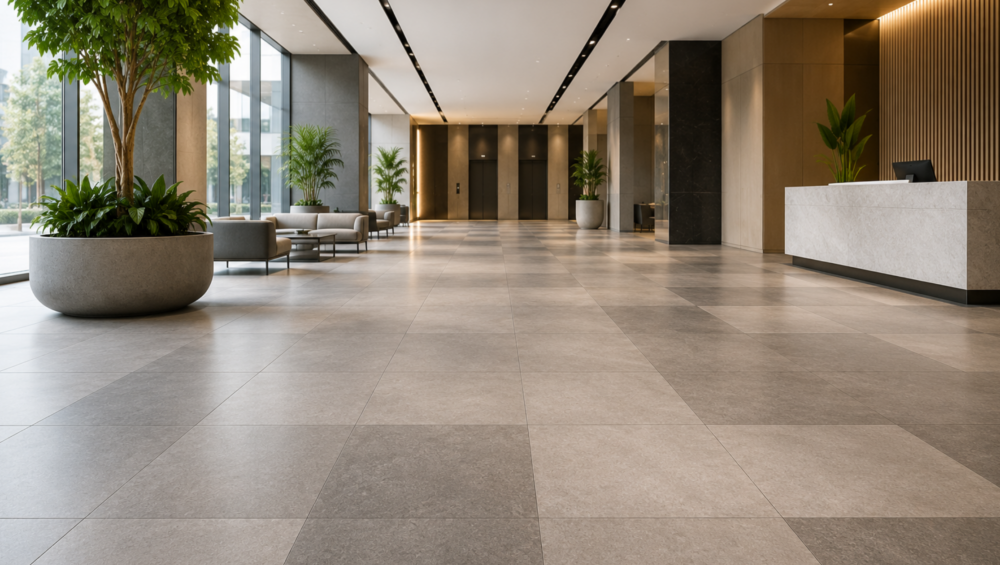
A lobby can look immaculate on opening day and tired six months later if the floor was chosen for appearance alone. In busy retail stores, hospitality venues, offices, schools, and multi-unit developments, commercial floor tiles high traffic spaces require are doing more than covering a slab. They are carrying brand image, safety standards, cleaning demands, and years of daily wear.
That is why tile selection in commercial settings needs a sharper lens than residential design. The right surface has to hold its finish, resist staining, manage slip risk, and still feel considered from a design perspective. A floor in a high-use environment should never look purely utilitarian, but it also cannot be precious.
What high-traffic commercial floors really need
When people talk about durability, they often mean hardness alone. In practice, high-traffic performance is broader than that. A commercial floor has to deal with constant footfall, rolling loads, moisture at entry points, regular machine or chemical cleaning, and the visual impact of dirt being tracked in all day.
That changes the criteria. Scratch resistance matters, but so does the tile body, surface finish, edge quality, and ease of maintenance. A polished tile may read as premium in a showroom sample, yet in a busy public-facing environment it can highlight dust, water spots, and abrasion more quickly than a matte or textured alternative. Likewise, a heavily textured tile may improve grip but create a more demanding cleaning routine.
The best specification usually sits in the balance between visual refinement and practical endurance. It depends on the setting, the expected traffic volume, and what the maintenance team can realistically support over time.
Best materials for commercial floor tiles high traffic projects
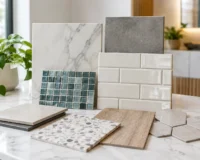
Porcelain is often the front-runner for a reason. It is dense, hard-wearing, and well suited to demanding commercial interiors. High-quality porcelain tiles can offer the look of natural stone, concrete, terrazzo, or timber while delivering better stain resistance and lower maintenance than many porous materials. For storefronts, restaurants, offices, and common areas, porcelain usually gives the strongest mix of performance and design flexibility.
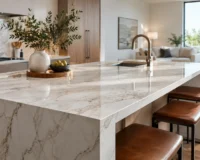
Natural stone can create a powerful luxury impression, especially in hospitality, premium retail, and high-end shared spaces. But stone is not one category. Granite performs very differently from marble or limestone, and each requires a different level of sealing and care. In a truly high-traffic zone, stone can work beautifully when the maintenance commitment is understood from the start. If that commitment is low, a stone-look porcelain often delivers the same design ambition with less risk.
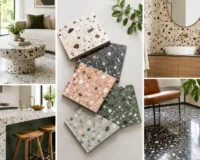
Terrazzo-look porcelain has become a smart choice for commercial projects that want visual depth without excessive upkeep. It hides daily debris better than many flat solid tones and feels elevated without becoming overly formal. Concrete-look porcelain brings a more restrained architectural finish and can be especially effective in offices, galleries, and contemporary retail.
Ceramic can suit lighter commercial applications, but for demanding public areas, porcelain is typically the stronger long-term investment. The traffic load, cleaning frequency, and expected lifespan usually justify stepping up to a more durable specification.
Finish matters as much as the tile itself
One of the most common mistakes in commercial flooring is choosing by color and pattern first, then treating finish as a secondary detail. In reality, finish has a major effect on both safety and appearance over time.
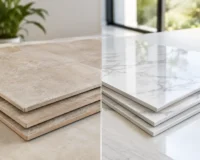
Polished surfaces can feel elegant and high-end, but they are rarely the easiest option for very busy entries or spill-prone interiors. They tend to show marks more readily, and in some settings they can create slip concerns. Matte finishes are often the most versatile. They offer a sophisticated, contemporary look while being easier to maintain visually throughout the day.
Textured or grip finishes are especially valuable in areas exposed to water, weather, or frequent spills. Entryways, cafes, restrooms, pool-adjacent zones, and certain healthcare or education settings may need a higher slip-resistant surface. The trade-off is that a stronger texture can hold more dirt and require more attentive cleaning. That does not make it the wrong choice. It simply means the finish should match the cleaning plan, not just the design board.
Design choices that wear well
Not every beautiful tile is beautiful after two years of commercial use. In high-traffic projects, the smartest designs are often the ones that wear gracefully.
Mid-tone colors generally perform better than very dark or very light floors because they disguise dust, scuffs, and routine debris more effectively. Pattern can also help. Subtle variation, terrazzo visuals, stone movement, and concrete-inspired shading tend to be more forgiving than flat monochrome finishes.
Large-format tiles create a streamlined, premium look and reduce grout lines, which many designers and property owners prefer. They can be an excellent choice in open commercial interiors. At the same time, smaller formats or mosaics may be more practical in wet zones where extra grout lines improve slip performance. There is no universal winner. Scale should support the use of the space.
Grout color deserves more attention than it usually gets. In busy interiors, the wrong grout can age a floor faster than the tile itself. A grout tone that sits close to the tile body often creates a cleaner, more resilient visual result over time.
Where commercial floor tiles high traffic performance is most critical
Some spaces experience wear in obvious ways, such as retail aisles and restaurant floors. Others fail more quietly, like apartment corridors, office reception areas, or mixed-use lobby entries where dirt, moisture, and repeated foot traffic create gradual visual decline.
Entry points are usually the harshest test. They deal with grit, water, and the first impression of the entire property. Common areas in multifamily developments also need extra care because the floor must satisfy appearance, durability, and maintenance efficiency at once.
Hospitality environments have their own pressures. The floor needs to look premium under constant use, often while dealing with chair movement, spills, and frequent cleaning. In these settings, commercial-grade porcelain with a refined matte or lightly textured finish is often a very strong answer.
Specification details that should never be an afterthought
A premium tile can still underperform if the specification around it is weak. Slip rating, tile thickness, grout type, substrate preparation, movement joints, and installation quality all influence the result.
This is where commercial buying decisions benefit from a full-project view. A tile selected for a cafe floor may need a different rating than one used in a corporate office. A covered interior mall tenancy may not need the same surface profile as an exposed entry vestibule. The right choice is always tied to the conditions, not just the category label.
Installation is equally important. Poor leveling, inconsistent grout joints, or unsuitable adhesives can undermine even the best material. In high-traffic spaces, longevity is built as much by correct installation as by product quality.
Long-term value is not the cheapest square foot
Budget matters in every commercial project, but low upfront cost can become expensive if the floor shows wear too quickly or requires constant attention to stay presentable. The better measure is lifecycle value.
A tile that holds its finish, resists staining, and simplifies cleaning can lower maintenance pressure and preserve the appearance of the space for longer. That has real commercial value. It protects tenant appeal, customer experience, and the overall impression of the property.
This is often where premium porcelain stands out. It offers design sophistication with practical resilience, which is exactly what many commercial projects need. For buyers trying to balance aesthetics, performance, and manageable maintenance, that combination is hard to ignore.
For design-led commercial spaces, the goal is not simply to find a floor that survives. It is to choose one that continues to represent the quality of the environment after thousands of footsteps. Mecca Tiles approaches that decision with a curated view of materials that feel elevated, durable, and genuinely suited to the way commercial spaces are used.
The strongest commercial floor is the one that still looks intentional long after the opening photos are taken. Choose for traffic, cleaning, finish, and visual longevity, and the space will keep giving back every day.