A bathroom floor has to do more than look beautiful under a vanity or beside a freestanding tub. It needs to feel secure under bare feet, tolerate daily moisture, and hold its finish through years of real life. Knowing how to choose bathroom floor tile means balancing that performance with the color, scale, and texture that will make the room feel considered from every angle.
The best choice is rarely just the tile that looks most striking in a showroom photo. Light levels, grout lines, shower placement, cleaning habits, and the size of the room all influence the final result. Start with the way the bathroom will be used, then select a surface that supports the design vision without asking you to compromise on practicality.
How to choose bathroom floor tile for daily life
Begin with the bathroom itself. A guest powder room experiences very different conditions from a busy family bathroom or a primary suite with a walk-in shower. Floors near a shower, bathtub, or exterior entry are more likely to get wet, while children, older family members, and guests may need a surface with more underfoot grip.
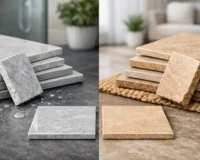
Porcelain is often a standout choice for bathroom floors because it is dense, durable, and highly resistant to moisture. It can create the look of natural stone, concrete, terrazzo, or timber while offering straightforward maintenance. Ceramic can also suit lower-traffic bathrooms, particularly when you want a refined wall-and-floor story, though porcelain is generally the stronger option for hard-working floors.
Natural stone brings unmistakable depth and individuality. Marble, travertine, limestone, and slate each have variations that cannot be replicated exactly, making the floor feel genuinely bespoke. The trade-off is care: natural stone may require sealing and more thoughtful maintenance, so it is best for homeowners who value its character and are prepared to protect it.
For any bathroom floor, prioritize a finish with appropriate slip resistance. A highly polished surface can look luxurious, but it may not be the right fit in a wet zone. Matte, honed, textured, or grip-rated finishes often offer a more confident footing while still delivering an elevated look. Always review the product specifications and consider where water is most likely to land.
Choose the right tile size for the room
Tile size changes the visual rhythm of a bathroom. Large-format porcelain tiles can make a compact room feel calmer and more expansive because there are fewer grout joints interrupting the floor. They are particularly effective in contemporary bathrooms where a clean, architectural finish is the goal.
That said, larger is not automatically better. A small bathroom with multiple angles, a tight toilet zone, or a sloping shower area may need more cuts with oversized tile. This can affect both the layout and installation cost. In these spaces, a medium-format tile may offer a more balanced result.
Smaller formats have their own advantage: more grout lines can provide additional grip underfoot. Mosaic tiles are especially well suited to shower floors because they can follow falls toward the drain more easily than large tiles. A mosaic floor can also introduce color, texture, or a fine pattern that gives a simple bathroom a tailored finish.
Think about visual scale, not just measurements
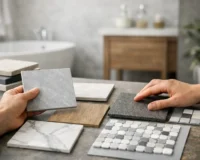
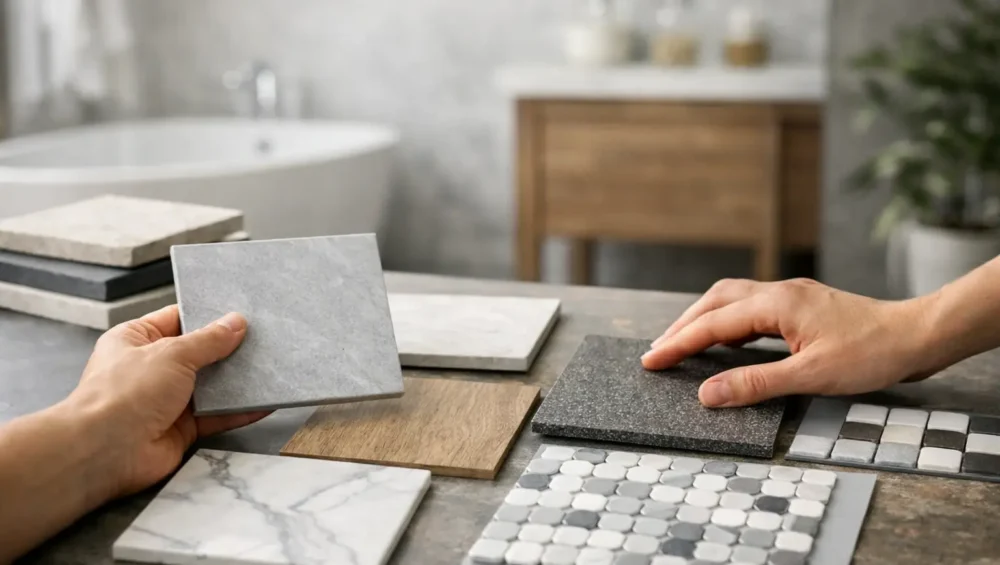
Before committing, view a sample in the actual room. A tile that appears softly neutral in a bright showroom may read cooler in a bathroom with limited natural light. Likewise, a bold-veined stone look can feel elegant in a spacious primary bath but visually busy in a compact powder room.
Lay samples beside cabinetry, paint swatches, plumbing finishes, and countertop materials. This is where the floor begins to become part of a complete palette rather than an isolated purchase. Ordering samples gives you the opportunity to see how the surface responds to your home’s lighting throughout the day.
Select a color and pattern that will age well
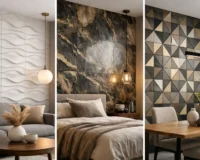
Bathroom floors set the mood. Pale limestone looks and warm ivory porcelains can create a quiet, spa-like retreat. Charcoal, deep green, or richly patterned encaustic-inspired tiles deliver more drama and can make a compact space feel intentional rather than overlooked. Terrazzo brings movement and personality without relying on a single dominant color.
A light floor can make a small bathroom feel open, but it is not always the lowest-maintenance choice. White or pale grout may show makeup, hair color, and everyday marks more readily. Conversely, an extremely dark floor may reveal dust and water spotting. Mid-tone tiles, soft gray, mushroom, sand, and warm stone shades are often forgiving choices for high-use bathrooms.
Pattern deserves the same practical consideration. Geometric and decorative tiles can create a memorable focal point, especially in a powder room, but they work best when the surrounding finishes are restrained. If the vanity stone, wall tile, and fittings already have strong visual character, a quiet floor may give the room the breathing space it needs.
Coordinate the floor with wall tile and fixtures
You do not need to use the same tile everywhere. In fact, mixing formats and finishes often creates a more layered, premium result. A large-format stone-look porcelain on the floor paired with handmade-look ceramic walls can feel warm and composed. A small mosaic shower floor can sit beautifully beside larger tiles in the main bathroom area when the colors relate.
Aim for connection rather than exact matching. Repeating one tone from the floor in the vanity, wall tile, or grout can make a mix of materials feel deliberate. Consider the finish of your fixtures, too. Warm brass tends to complement cream, clay, terracotta, and warm stone tones, while chrome or black can sharpen a cooler concrete, marble, or monochrome palette.
Do not treat grout as an afterthought
Grout has a major influence on the final appearance of a bathroom floor. A grout close to the tile color creates a quieter, more continuous effect. A contrasting grout emphasizes each tile, which can be ideal for a classic checkerboard, subway-inspired layout, or graphic mosaic.
For busy bathrooms, choose a grout color with everyday life in mind. Soft gray, taupe, and mid-tone shades are often easier to live with than bright white. The width of the grout joint matters as well. Rectified porcelain can be installed with tighter joints for a sleek look, while handmade, rustic, or natural stone tiles may need wider joints that become part of their character.
Speak with your installer before finalizing the selection. They can confirm whether the tile size, thickness, finish, and intended layout are suitable for the subfloor and wet-area requirements. Good installation is what turns a beautiful tile into a floor that performs properly.
Plan for maintenance before you fall in love
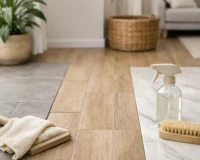
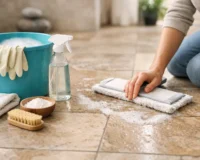
Every premium bathroom deserves a finish that fits the household behind it. If easy cleaning is a priority, porcelain with a matte or lightly textured finish is a smart, design-led choice. It delivers the visual appeal of more delicate materials with less ongoing care.
Natural stone, terracotta, and cement-based decorative tiles can be extraordinary, but they require a more attentive approach. Sealing, suitable cleaning products, and prompt care around spills will help preserve their surface. This is not a reason to avoid them – it is simply a reason to choose them with clear expectations.
Avoid selecting a tile based on appearance alone. Ask how it handles water, whether it needs sealing, what cleaning products are recommended, and whether the finish is appropriate for the location. These details protect both your investment and the look you were drawn to in the first place.
Build a bathroom floor that feels complete
The most successful bathroom floors bring performance and personality into the same frame. A subtle porcelain can give a serene, hotel-inspired bathroom its foundation. A veined stone or patterned tile can turn an ordinary renovation into a space with presence. Neither approach is inherently better – the right choice depends on how you want the room to feel and how you need it to function.
Take the time to compare samples, check specifications, and picture the tile in motion: wet feet after a shower, morning light across the floor, the vanity and fittings installed around it. When those practical and visual details align, the bathroom becomes more than a finished room. It becomes a lasting part of the home you will enjoy using every day.