A flat wall can carry beautiful color, but dimensional tiles give it something more compelling: light, shadow, and a surface that changes as you move through the room. Whether used behind a vanity, across a kitchen backsplash, or on a hospitality feature wall, dimensional tiles bring an architectural quality that paint and standard flat tile cannot replicate.
For homeowners and design professionals, the appeal is not simply visual. A well-chosen textured tile can make a compact powder room feel considered, give a restrained kitchen a focal point, or introduce warmth and movement into a contemporary commercial interior. The key is treating relief tile as a finish with presence, then selecting the right scale, material, and placement for the space.
What Makes Dimensional Tiles Different?
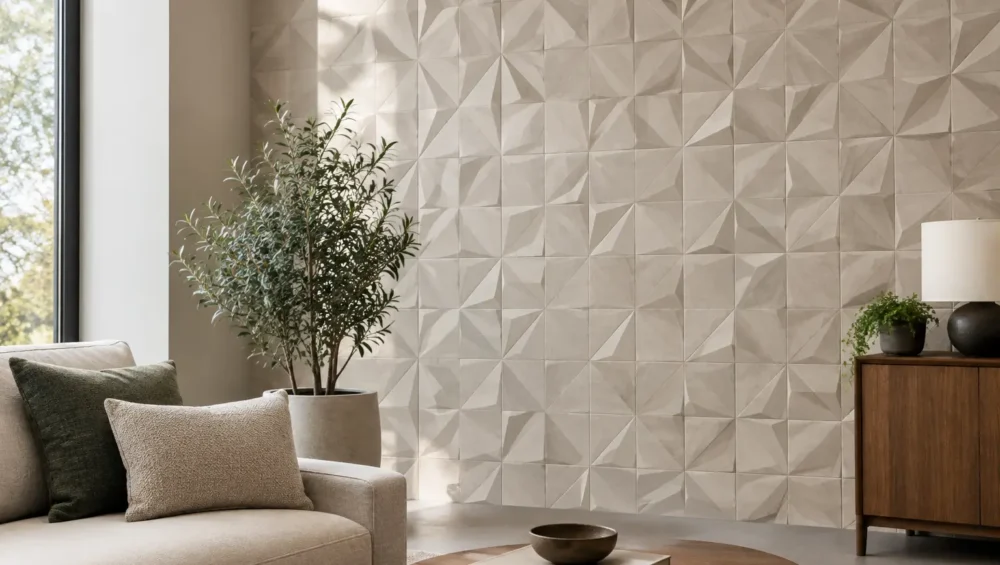
Dimensional tiles are manufactured or formed with a raised, recessed, fluted, ribbed, scalloped, faceted, or wave-like surface. Instead of reflecting light evenly, their contours catch it from different angles. The result is a shifting play of highlights and shadows that brings depth to a wall even in a single neutral tone.
This is why white, cream, charcoal, and soft stone-look dimensional tile can feel far more expressive than a flat alternative in the same color. The visual interest comes from form rather than pattern, allowing the finish to remain refined rather than overly decorative.
The effect does depend on lighting. Natural daylight will reveal texture differently throughout the day, while wall sconces, pendant lights, and directional downlights can create stronger shadows after dark. Before committing to a large installation, order a sample and view it on the intended wall. A tile that looks subtly textured in a showroom may appear dramatically sculptural beneath grazing light at home.
Where Dimensional Tiles Make the Greatest Impact
Relief tiles are usually most successful where they can be viewed from the front or at a gentle angle. They need room for their profile to be seen. A feature wall opposite an entry, the wall behind a freestanding bathtub, or a backsplash visible from an island are all strong candidates.
Bathrooms That Feel Like a Private Retreat
Bathrooms are a natural setting for textured tile because the surfaces are often close enough to appreciate. Consider vertical fluting behind a vanity to draw the eye upward in a room with lower ceilings. Gentle waves or rounded profiles can soften a bathroom with sharp-lined fixtures, glass, and stone.
For a quieter luxury look, keep the dimensional tile in one tonal family and pair it with a simple floor tile. A satin ivory fluted wall with warm limestone-look porcelain flooring, for example, creates contrast through texture without competing colors. In a shower, confirm that the selected tile is rated for wet-wall applications and consider where soap residue may collect. Highly intricate relief is often better suited to a vanity wall than the inside of a heavily used shower.
Kitchen Backsplashes With Character
A dimensional backsplash can transform a kitchen that relies on streamlined cabinetry and a minimal countertop. Finger tiles, kit-kat mosaics, slim vertical ribs, and softly undulating profiles offer movement while maintaining a clean palette.
Scale matters here. Smaller relief formats suit compact backsplashes and can follow curves or detailed joinery more easily. Larger-format sculptural tiles create a bolder, more architectural result, particularly when run from countertop to ceiling behind open shelving or a range.
Think practically about cleaning. A glazed porcelain or ceramic surface is generally the easier choice around cooking zones, especially in a medium or glossy finish that can be wiped down readily. Deeply recessed handmade-look tiles can be beautiful, but they may require more attention near a cooktop where oils and splashes are frequent.
Living Areas and Commercial Feature Walls
In living rooms, entryways, reception areas, and restaurants, dimensional tile can provide the permanence of stonework with more controlled color, repeat, and maintenance. It adds interest without relying on artwork alone and works particularly well on fireplaces, behind a reception desk, or along a passage wall that benefits from rhythm.
This is also where darker tones can shine. A charcoal ribbed porcelain tile may feel moody and sophisticated under warm ambient lighting, while a sand-toned stacked relief tile can bring quiet depth to a coastal or organic-modern interior. For commercial settings, prioritize products suited to the installation conditions and specify an experienced installer who understands alignment across large wall areas.
Choosing the Right Profile, Finish, and Scale
The best dimensional tile is not automatically the most pronounced one. It should support the room’s proportion and the broader material palette. A compact ensuite may need a fine ribbed texture that adds detail without making the walls feel busy. A double-height lobby can accommodate deeper channels or a larger geometric profile.
Consider the character you want to create. Linear fluting and ribs bring order, height, and a tailored finish. Curved and wave-like forms feel softer and more organic. Geometric facets add a contemporary, gallery-like edge, while handmade or irregular surfaces offer warmth and individuality.
Finish is equally influential. Glossy dimensional tiles amplify light and make contours more visible, which can be ideal for a darker powder room or a kitchen needing brightness. Matte and satin finishes produce a quieter, more tactile effect, often pairing beautifully with natural timber, brushed metal, and honed stone. Neither is universally better. It depends on how much contrast, reflection, and maintenance the room calls for.
Color should be assessed against the tile profile, not in isolation. A deep green tile may read almost black in its recessed sections, while a pale tile can reveal every line in strong side lighting. Samples make these shifts easier to understand before ordering.
Installation Details That Protect the Finished Look
Dimensional tiles demand careful layout. Their relief makes inconsistencies more noticeable, especially with linear profiles where a misaligned joint can interrupt the visual rhythm. Plan the starting point around the wall’s focal area, not simply the nearest corner. Centering a feature behind a vanity, mirror, fireplace, or range often produces a more balanced result.
Grout selection deserves the same consideration as tile selection. A closely matched grout keeps the installation cohesive and lets the texture lead. A contrasting grout emphasizes each tile shape and can create a more graphic appearance. On highly sculptural surfaces, grout should be applied with care and cleaned thoroughly from raised edges before it cures.
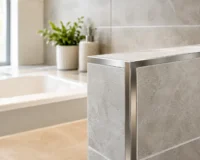
Always review edge treatment in advance. Some collections offer matching trim pieces, while others may need a discreet metal profile or a return into an adjacent wall. This small decision has an outsized effect on whether the finished installation looks custom and complete.
Because each product has different tolerances, profiles, and fixing requirements, use a qualified tile installer for complex layouts. Ask them to inspect the batch, confirm the wall substrate is flat and suitable, and dry-lay any pattern or directional tile before adhesive is applied.
Styling Textured Tile Without Overworking the Room
Dimensional tile is a feature, so let it have breathing room. If the wall is strongly sculptural, balance it with calm cabinetry, simple paint colors, and streamlined fixtures. Repeating every surface treatment at once can make even a large room feel visually crowded.
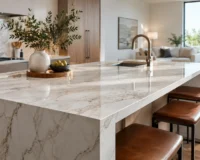
That does not mean the room has to be plain. Pair a ribbed tile with a veined porcelain slab, warm oak, aged brass, or a natural stone floor to create layered luxury. The materials will feel connected when they share an undertone, such as warm beige, earthy gray, or soft white, even if their textures differ.
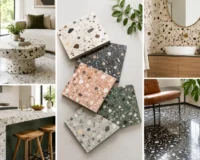
For designers building a more expressive scheme, a dimensional wall can sit beautifully alongside patterned floor tile. The successful approach is contrast with control: allow one surface to supply movement through relief and the other through color or pattern, rather than asking both to dominate at equal volume.
A Surface Worth Seeing in Person
Texture is difficult to judge from a screen alone. The depth of a profile, the feel of a glaze, and the way a tile responds to light become clear when you hold a sample against your cabinetry, paint, and stone selections. Mecca Tiles makes it easier to compare premium surface options before moving from concept to installation.
Choose a dimensional tile that suits how the room will be used, not just how it photographs. When profile, scale, and lighting are considered together, the wall becomes more than a backdrop – it becomes the detail people remember long after they leave the room.